
Medical Equipment Service Contract Kenya: What to Know
Short answer: a medical equipment service contract in Kenya is a written agreement where a facility pays a supplier or biomedical engineering firm, either a flat annual fee or per-visit charges, to maintain, calibrate, and repair its equipment on a defined schedule. The right structure depends on how much equipment you have, how critical it is to daily operations, and whether you already have in-house biomedical capacity. There is no single mandated contract format in Kenya, so the terms below are what to look for and negotiate, not a regulatory checklist.
On this page
The main types of medical equipment service contract
Service contracts for medical equipment generally fall into a handful of structures, and most facilities end up using more than one type across their equipment inventory rather than picking a single model for everything.
| Contract type | How it works | Best suited to |
|---|---|---|
| Comprehensive (full-service) | Fixed annual fee covers all scheduled maintenance, calibration, and most repairs including parts | High-use, high-criticality equipment where downtime is expensive (theatre equipment, imaging, lab analysers) |
| Preventive maintenance only | Fixed fee covers scheduled inspections and calibration; repairs and parts billed separately | Equipment with a good reliability history where the facility can absorb occasional repair costs |
| Time and materials (per-call) | No standing fee; pay for each service visit, labour, and parts as needed | Lower-criticality or older equipment with infrequent issues |
| Shared/partial coverage | In-house team handles routine checks; contract covers only the annual deep service and major repairs | Facilities with an existing biomedical engineer who can absorb daily and weekly checks |
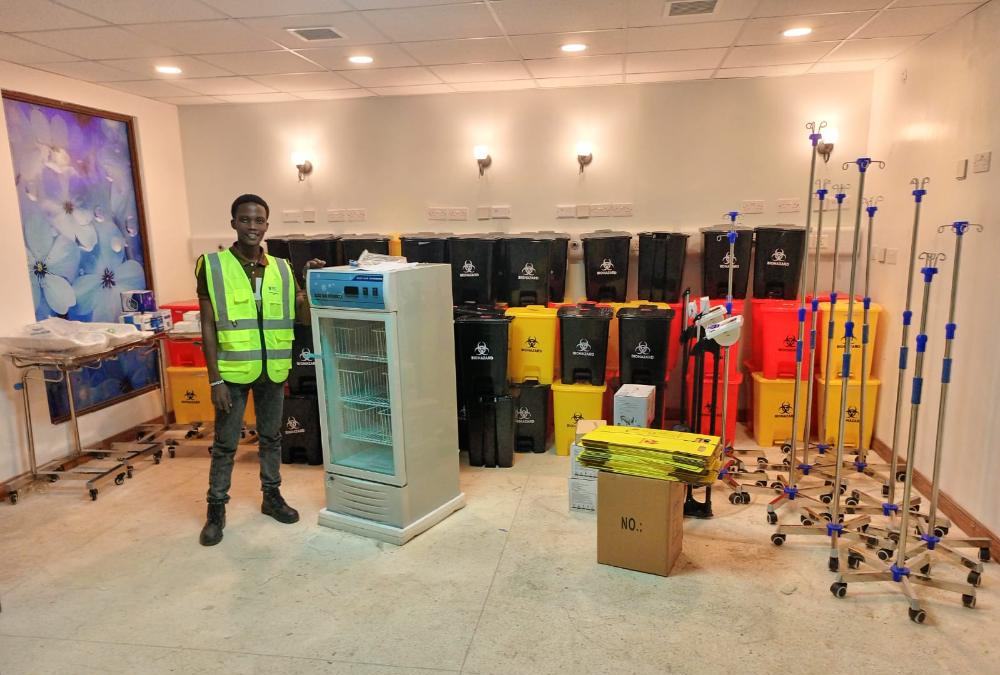
A facility with a mix of equipment, sterilizers, dental chairs, an x-ray unit, an anaesthesia machine, a chemistry analyser, will often put its highest-criticality items on a comprehensive contract and leave lower-risk equipment on time-and-materials, rather than paying comprehensive rates across the board.
What a proper contract should actually cover
Regardless of contract type, a service agreement worth signing should spell out these terms explicitly rather than leaving them to a verbal understanding:
- Equipment list by serial number. Not “all lab equipment”, a named, serialised list of exactly what is covered, since disputes usually start with ambiguity about scope.
- Response time for breakdowns. A number of hours or business days for the provider to respond to a fault report, and a separate number for on-site arrival, these are not the same commitment.
- Scheduled maintenance frequency and scope. What gets checked, how often, and what “checked” actually means, referencing the equipment’s own service manual where one exists.
- Parts policy. Whether genuine manufacturer parts are used, who pays for them under a preventive-only contract, and expected lead time for parts that must be imported.
- Documentation delivered per visit. A written service report with what was checked and what was found, not just a signature confirming “serviced”.
- Escalation path. What happens if the assigned technician cannot resolve a fault, is there a named senior engineer or manufacturer escalation route.
- Exclusions. What voids coverage (unauthorised repairs by other parties, physical damage, power surges without surge protection) stated plainly rather than buried.
The WHO’s own guidance on medical equipment maintenance programmes frames this the same way: a maintenance programme is only as good as its documentation and its defined response commitments, not the existence of a contract on paper. A signed agreement that never specifies response time or maintenance scope is not meaningfully different from having no contract at all when equipment actually fails.
What service contracts cost
We could not find published, verifiable KES pricing for medical equipment service contracts in Kenya from any provider, and we are not going to repeat a number here that we cannot trace to a source. A commonly cited industry rule of thumb outside Kenya puts annual comprehensive maintenance cost at roughly 6 to 10 percent of an equipment item’s replacement value, but we could not verify this figure against an authoritative source and could not confirm it holds in the Kenyan market specifically, so treat it as a rough planning reference at best, not a quote.
The only reliable way to know what a contract will cost your facility is to get itemised quotes against your actual equipment list from more than one provider.
Kenya’s equipment maintenance landscape
Kenya’s Managed Equipment Services (MES) programme, launched in 2015, is the most visible example of a structured national maintenance framework: a roughly USD 432 million arrangement covering equipment across 98 hospitals in 47 counties, bundling supply, installation, and maintenance under a single long-term service arrangement rather than facility-by-facility procurement. It illustrates the scale at which the government has treated maintenance as a defined, budgeted line item rather than an afterthought, though MES itself is a specific national programme, not a template every private facility can replicate directly.
Outside MES, professional bodies including the Association of Medical Engineering of Kenya (AMEK) and the National Union of Biomedical Engineers of Kenya (NUBEK) represent the biomedical engineering profession in Kenya, though we could not confirm either body operates a formal accreditation or certification scheme for service contracts or individual technicians that facilities can check against before signing. Independent biomedical equipment service providers operate across the market; Biocare Health Systems is one such named provider, and we are noting it as an example of the competitive landscape rather than a recommendation, since we could not independently verify their specific service scope or track record from publicly available sources.
Jodroc supplies and supports medical and dental equipment for clinics and hospitals, and structures maintenance arrangements around what a facility’s specific equipment inventory actually needs rather than a one-size template.
In-house, contracted, or a mix
The decision usually comes down to three factors: equipment volume, in-house biomedical capacity, and how critical the equipment is to daily patient care.
- A small clinic with a handful of devices and no in-house engineer is usually better served by time-and-materials or a light preventive contract than paying for comprehensive coverage it will rarely use.
- A busy hospital running theatre equipment, imaging, and a lab around the clock typically justifies comprehensive coverage on its highest-criticality items, since an unplanned outage on an autoclave, an anaesthesia machine, or an x-ray unit has a direct clinical and revenue cost.
- A facility with its own biomedical engineer can often run a shared model: in-house staff handle daily and weekly checks and first-line troubleshooting, while a contract covers the deeper annual service and anything requiring manufacturer-specific parts or training.
Red flags in a service contract
- No named equipment list, just a vague category description
- No stated response time, or a response time with no consequence if missed
- No mention of what parts are genuine versus generic substitutes
- Verbal-only service confirmation with no written report per visit
- Auto-renewal with no defined price review or termination window
- A provider unwilling to name the technicians who will actually be doing the work or their qualifications on your specific equipment brands
Equipment categories this usually covers
A medical equipment service contract in a typical Kenyan clinic or hospital usually spans several distinct equipment categories, each with its own maintenance rhythm. Sterilizers need their own validation and cycle logging discipline, separate from general repair coverage, and facilities that have had recurring sterilizer problems should also read why autoclaves fail. Dental practices need handpiece maintenance and lubrication handled on its own schedule, distinct from dental chair repair.
Facilities running anaesthesia should see our guide to who actually services anaesthesia machines in Kenya. Diagnostic imaging needs its own calibration cycle, covered in how often medical equipment should be calibrated. A well-structured contract treats each of these as its own line item with its own schedule rather than one generic “maintenance” clause covering everything identically.
For x-ray equipment specifically, see our guide to x-ray machine calibration in Kenya.
A contract should also name who is doing the compliance side of the work, not just the repairs. See electrical safety testing for medical equipment in Kenya for the IEC 62353 checks a comprehensive contract should include, and sterilizer validation beyond the autoclave for what proves an indicator failure was handled correctly rather than just logged.
For the life-critical devices on a comprehensive contract, patient monitors, ECG machines, defibrillators, and infusion pumps, see patient monitor and ECG calibration, defibrillator testing and compliance, and infusion pump and syringe driver accuracy testing for what each check actually covers.
Need help structuring a maintenance plan for your facility? Jodroc supplies and supports medical and dental equipment in Nairobi and can help put together a service arrangement matched to your actual equipment inventory.
Frequently asked questions
What is a comprehensive service contract?
A fixed annual fee that covers all scheduled maintenance, calibration, and most repairs including parts for the listed equipment, as opposed to a preventive-only or time-and-materials arrangement where repairs are billed separately.
How much does a medical equipment service contract cost in Kenya?
We could not find published, verifiable KES pricing for this in Kenya. Cost depends heavily on equipment type, volume, and coverage level, and should be obtained as an itemised quote against your actual equipment list rather than estimated from a generic figure.
Should a small clinic sign a comprehensive contract?
Not necessarily. A small clinic with few devices and low usage often gets better value from time-and-materials or a light preventive contract, reserving comprehensive coverage for equipment where downtime is genuinely costly.
What should be included in the equipment list on a contract?
Each covered device listed individually with its serial number, not a general category description, so there is no ambiguity later about what is and is not covered.
Can a facility mix in-house maintenance with a service contract?
Yes. A common model has an in-house biomedical engineer handle daily and weekly checks while a contract covers the deeper annual service and manufacturer-specific repairs.
What is Kenya’s Managed Equipment Services programme?
A national programme launched in 2015 bundling equipment supply, installation, and maintenance across 98 hospitals in 47 counties under long-term service arrangements. It is a government programme rather than a template every private facility can replicate directly, but it illustrates a structured, budgeted approach to equipment maintenance.
Sources: WHO Medical Equipment Maintenance Programme Overview; Kenya’s Managed Equipment Services programme documentation; Association of Medical Engineering of Kenya (AMEK) and National Union of Biomedical Engineers of Kenya (NUBEK) as recognised professional bodies. Where a claim, including cost benchmarks, could not be verified against a published source, that gap is stated explicitly above rather than filled with an estimate.