
Patient Monitor and ECG Calibration in Kenya
Short answer: patient monitor calibration checks that every vital sign a monitor displays, heart rate, SpO2, blood pressure, respiration, and temperature, matches a traceable reference value instead of only an internally consistent number on the screen. ECG calibration does the same for the electrical signal itself: amplitude, timing, and lead configuration checked against a calibrated ECG simulator. The two overlap but are not identical, since a multi-parameter patient monitor carries far more measurement channels than a dedicated ECG machine. Standalone ECG equipment falls under IEC 60601-2-27, multi-parameter patient monitors under IEC 80601-2-49, and which calibration schedule applies depends on which device you actually have.
On this page
- What patient monitor and ECG calibration actually checks
- The standards behind it: IEC 60601-2-27 and IEC 80601-2-49
- How often a patient monitor or ECG machine needs calibration
- Signs a monitor is reading inaccurately
- What Kenya does and doesn’t mandate here
- Who handles patient monitor calibration for Jodroc clients
- Frequently asked questions
What patient monitor and ECG calibration actually checks
A patient monitor is only useful if the numbers on its screen reflect what is actually happening to the patient. Calibration confirms that with a reference signal source rather than trusting the device’s own self-test, since a monitor can pass its internal diagnostics and still drift out of true on one or more channels. For a typical multi-parameter monitor, that covers:
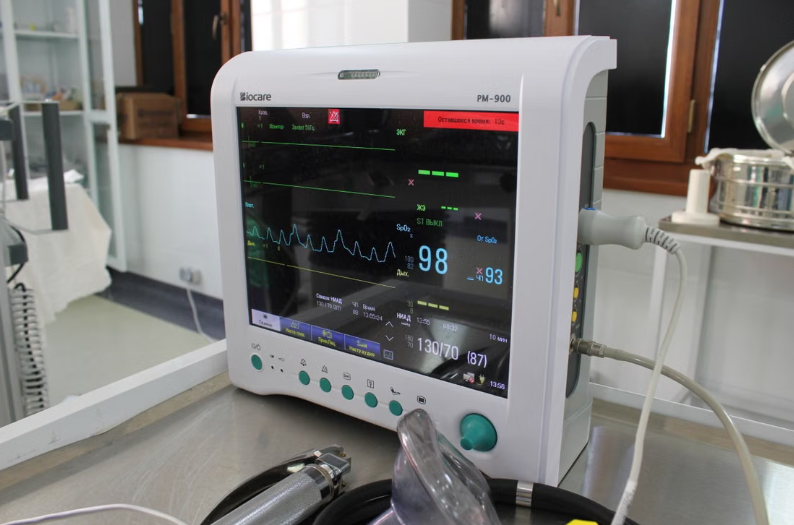
- ECG amplitude and timing: a simulator injects a known waveform at a known voltage and heart rate, and the monitor’s displayed rate and trace are checked against it
- SpO2 accuracy: checked against a pulse oximetry simulator or functional tester across a range of saturation values, since SpO2 probes and sensors drift with age and repeated sterilisation cycles
- Non-invasive blood pressure (NIBP): the cuff and pressure transducer checked against a calibrated pressure source across several pressure points rather than one
- Respiration rate: checked where the monitor derives this from impedance pneumography or a separate capnography channel
- Temperature: checked against a calibrated reference probe at clinically relevant temperatures
- Alarm limits and lead-off detection: functional checks confirming the monitor actually alarms when a value crosses the set threshold or a lead disconnects, since an accurate reading that fails to alarm is still a patient safety failure
A dedicated diagnostic ECG machine, the kind used to print a 12-lead trace rather than continuously monitor a bedside patient, is calibrated on a narrower set of parameters: lead configuration accuracy, gain and paper speed, and the frequency response of the amplifier, since its job is a single accurate snapshot rather than continuous multi-parameter tracking.
| Device type | What gets checked | Reference equipment used |
|---|---|---|
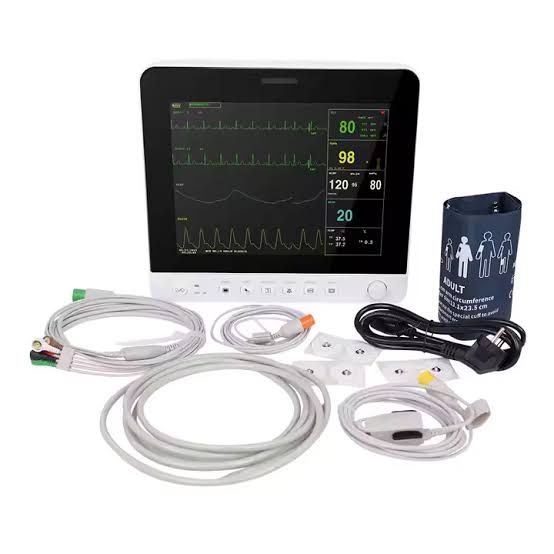
| Multi-parameter bedside monitor | ECG, SpO2, NIBP, respiration, temperature, alarm thresholds across all channels | Multi-parameter patient simulator |
| Standalone diagnostic ECG machine | Lead configuration accuracy, gain, paper speed, amplifier frequency response | ECG simulator |
| Pulse oximeter (standalone) | SpO2 accuracy across a saturation range, pulse rate derived from the plethysmograph | SpO2 functional tester |
The standards behind it: IEC 60601-2-27 and IEC 80601-2-49
IEC 60601-2-27, “Particular requirements for the basic safety and essential performance of electrocardiographic monitoring equipment,” covers the ECG-specific performance requirements: signal fidelity, lead fault detection, and arrhythmia alarm behaviour. It applies whether the ECG function sits inside a standalone machine or as one module within a larger monitor.
IEC 80601-2-49, “Particular requirements for the basic safety and essential performance of multifunction patient monitoring equipment,” is the newer, broader standard covering the monitor as a whole: how it handles multiple simultaneous parameters, alarm prioritisation across channels, and the essential performance expected of the combined device rather than each measurement in isolation. A facility buying or maintaining a bedside monitor is dealing with both standards at once, IEC 60601-2-27 for the ECG channel specifically and IEC 80601-2-49 for the monitor as a system.
How often a patient monitor or ECG machine needs calibration
Our general guide to calibration intervals for medical equipment places continuous bedside patient monitors in the life-critical category, calibrated roughly every six months given their constant use and direct role in detecting a deteriorating patient. A standalone diagnostic ECG machine sits in the diagnostic/imaging category in that same guide, typically calibrated annually, since it produces a single assessed trace rather than running continuously on a patient who cannot afford an undetected drift.
That split matters in practice: a theatre or ICU bedside monitor running around the clock on critically ill patients should not be left on the same annual cycle as a clinic’s occasional-use ECG cart, even though both devices measure the same underlying electrical signal. Usage intensity, not device category alone, should set the actual interval for a specific unit.
Signs a monitor is reading inaccurately
A handful of warning signs are worth pulling a monitor out of service for rather than waiting on the calendar: SpO2 readings that disagree noticeably with a second monitor on the same patient, a heart rate that lags or jumps in ways not matched by the visible ECG trace, NIBP cuff readings that are consistently out of step with a manual check, or any alarm that fails to trigger when it clearly should have. None of these proves a calibration fault by itself, a tingling heart rate reading could just as easily be a lead artifact, but each one is a reason to check rather than assume.
What Kenya does and doesn’t mandate here
We could not find a Kenya-specific regulation that sets a mandated calibration interval for patient monitors or ECG machines by name. What exists is the general equipment registration and importation framework run by the Pharmacy and Poisons Board (PPB), and facility licensing through the Kenya Medical Practitioners and Dentists Council (KMPDC), neither of which specifies an in-service calibration schedule for this category of device.
Where calibration does get formally documented in Kenya, it is typically against Kenya Accreditation Service (KENAS) accredited labs working to ISO/IEC 17025, the same accreditation route covered in our x-ray machine calibration guide. A facility that wants a defensible paper trail for an inspection, insurer, or tender should ask for a certificate referencing that accreditation rather than a generic in-house sign-off.
Who handles patient monitor calibration for Jodroc clients
Jodroc supplies and services patient monitors and anaesthesia monitoring equipment as part of our calibration and compliance testing service, carried out on schedule and documented with a certificate per machine. Where a specific inspection or tender requires accredited calibration, we coordinate with KENAS-accredited providers rather than issuing our own accreditation, since Jodroc supplies and services the equipment, it does not itself run an accredited calibration laboratory.
If a monitor also needs an electrical safety check alongside calibration, which is common since both are usually due around the same time, our electrical safety testing guide covers what that involves and why it is a separate exercise from the measurement accuracy work described here.
Need your patient monitors or ECG machines calibrated? Jodroc supplies and services medical equipment in Nairobi and can schedule calibration across your monitoring fleet.
Frequently asked questions
What is checked in patient monitor calibration?
ECG amplitude and timing, SpO2 accuracy, non-invasive blood pressure, respiration rate, temperature, and alarm/lead-off functionality, each checked against a calibrated reference source rather than the monitor’s own self-test.
What is the difference between IEC 60601-2-27 and IEC 80601-2-49?
IEC 60601-2-27 covers ECG-specific performance, signal fidelity and arrhythmia alarms. IEC 80601-2-49 covers the multifunction patient monitor as a whole, including how it manages several parameters and alarms together. A bedside monitor’s ECG channel falls under both at once.
How often should a patient monitor be calibrated?
Roughly every six months for continuous bedside monitors given their life-critical, round-the-clock use. A standalone diagnostic ECG machine used occasionally can typically run on an annual cycle instead.
Can a monitor pass its self-test and still need calibration?
Yes. A self-test checks the device’s internal electronics are functioning, not that its displayed values match an external reference. Only a calibration check against a traceable simulator confirms that.
Does Kenya require patient monitor calibration by law?
We could not find a Kenya-specific regulation mandating a fixed interval for this equipment category. Calibration is carried out as standard biomedical practice and documented against KENAS-accredited labs where a facility needs a defensible certificate.
Sources: IEC 60601-2-27:2011, “Medical electrical equipment: particular requirements for the basic safety and essential performance of electrocardiographic monitoring equipment” (International Electrotechnical Commission); IEC 80601-2-49:2018, “Particular requirements for the basic safety and essential performance of multifunction patient monitoring equipment” (International Electrotechnical Commission). Where a Kenya-specific mandated interval could not be verified against a current official source, that gap is stated explicitly above rather than filled with an estimate.
Shopping for a new unit rather than calibrating an existing one? See our guide to patient monitor prices in Kenya.