
Autoclave Validation and Cycle Logging in Kenya: What Actually Needs to Happen
Autoclave validation is the documented process of proving a sterilizer reliably kills microorganisms under its actual operating conditions, usually done at installation and re-checked at least once a year. Cycle logging is the everyday record of what happened in each run: load, temperature, pressure, time, and indicator result. Validation proves the machine can sterilize. Cycle logs prove that a specific load actually was sterilized. A clinic needs both, and they are not the same document.
On this page
- Autoclave validation vs. cycle logging: what each one proves
- Installation, operational, and performance qualification
- How often an autoclave needs revalidating
- Biological and chemical indicators: how often to run them
- What belongs in a sterilization cycle log
- Does Kenya require any of this?
- What happens when a sterilization cycle fails
- Who handles validation and logging for Jodroc clients
- Frequently asked questions
Autoclave validation vs. cycle logging: what each one proves
Validation is a project. It happens when a sterilizer is installed, after it is relocated or repaired, and on a recurring schedule after that, and it produces a report proving the machine, running its standard cycles, reaches and holds sterilizing conditions throughout a real loaded chamber. Cycle logging is a routine. It happens every single time the autoclave runs, and it produces a record for that one load: what was in it, what parameters the cycle used, and what the chemical or biological indicator showed.
The confusion is understandable because both involve the same equipment and the same indicators. The distinction that actually matters for a clinic is this: validation is evidence the sterilizer is capable of sterilizing. A cycle log is evidence that a specific pack of instruments, on a specific day, actually went through a cycle that met the conditions validation proved were sufficient. A sterilizer can be validated and still produce a failed load, if a pack was overloaded, wrapped wrong, or placed against the chamber wall. That is exactly what the cycle log is there to catch.

Installation, operational, and performance qualification
A full validation is usually broken into three stages, commonly referred to by their initials: IQ, OQ, and PQ.
| Stage | What it checks | When it happens |
|---|---|---|
| Installation Qualification (IQ) | The sterilizer was delivered and installed to specification: correct utility connections, calibrated instruments, correct software version | Once, at installation |
| Operational Qualification (OQ) | The empty chamber reaches and holds correct temperature across multiple sensor points, steam quality is acceptable, alarms trigger correctly, and (for pre-vacuum machines) the Bowie-Dick test passes | At installation, then repeated at each revalidation |
| Performance Qualification (PQ) | A fully loaded chamber, run three times, with thermocouples placed at the load’s coldest point and a biological indicator confirming zero microbial growth on all three runs | At installation, then repeated at each revalidation |
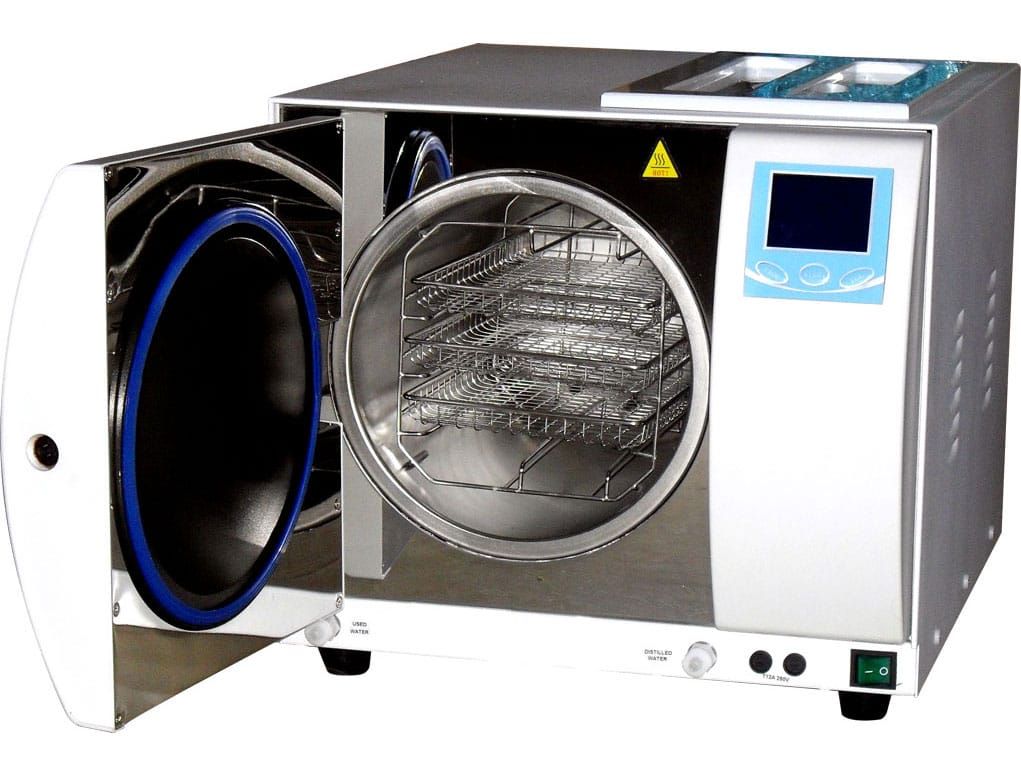
Large hospital sterilizers are typically validated against EN 285, which specifies temperature mapping using at least five sensors for smaller chambers and eleven for larger ones. Tabletop autoclaves common in dental and outpatient clinics are more often built and tested to EN 13060, the standard most manufacturers of small steam sterilizers reference on their own product documentation. Both trace back to the same underlying goal in ISO 17665: proving the process delivers a sterility assurance level of 10-6, meaning no more than one in a million items processed should carry a surviving organism.
A full IQ/OQ/PQ revalidation is not something a busy clinic needs to redo from scratch every time. What does require it: the sterilizer is relocated, a cycle parameter is changed, the packaging or wrap material changes, or a major component is repaired or replaced. Smaller events, a software update, a sensor swap, a minor steam adjustment, usually only call for repeating the OQ and PQ stages, not the full three-stage process.
How often an autoclave needs revalidating
Once a sterilizer has passed its initial validation, the common practice is a single loaded performance run, thermocouple mapping plus a biological indicator challenge, repeated annually to reconfirm the machine still performs the way it did at installation. That interval is a practice convention rather than a fixed law everywhere, and some frameworks set it by facility risk category: a general dental practice validating once a year, a hospital sterile processing department validating more often because of higher throughput and higher-risk loads.
Outside the annual schedule, these events should trigger a fresh validation regardless of how recently the last one happened:
- The autoclave was moved to a new location or reconnected to a different water or steam supply
- A cycle program or parameter (temperature, hold time, vacuum pulses) was changed
- The wrap, pouch, or packaging material used for instruments changed
- A major component was replaced: the door seal, the chamber, the steam generator, or the control board
- A biological indicator has come back positive on a routine test
Biological and chemical indicators: how often to run them
A biological indicator (BI) is the only test that shows actual microbial kill. It contains a standardized dose of heat-resistant spores, commonly Geobacillus stearothermophilus, and a positive result after the cycle means the load did not reach sterilizing conditions. A chemical indicator (CI) only shows that the load was exposed to the right combination of heat, steam, and time; it does not confirm anything actually died. Both have a role, and they run on different schedules.
| Check | How often |
|---|---|
| Physical/mechanical monitoring (reading the printout: temperature, pressure, time) | Every cycle |
| External chemical indicator (the strip or tape on the outside of each pack) | Every pack |
| Internal chemical indicator (placed inside the pack, near the instruments) | Every load, or a representative pack in every load |
| Bowie-Dick test (pre-vacuum, Class B sterilizers only) | Daily, before the first load of the day |
| Biological indicator, routine loads | At least weekly |
| Biological indicator, implants or invasive surgical instruments | Every load, and the load is held back until the result reads negative |
| Biological indicator, after any repair or a failed cycle | Before the sterilizer returns to service |
The Bowie-Dick test is specific to pre-vacuum sterilizers, the type most dental and small clinical autoclaves are, since they pull air out of the chamber before injecting steam. The test confirms that air removal step is actually working, because trapped air pockets are one of the most common ways a load fails to reach sterilizing temperature even though the display shows the cycle completed normally. Gravity-displacement sterilizers, an older design, do not need this test since they do not rely on a vacuum stage.
Manufacturers building to EN 13060, the small-sterilizer standard, have started building this documentation directly into the machine. W&H’s Lisa autoclave, for one example, logs every cycle’s temperature, pressure, and indicator data automatically and stores it without needing separate software, specifically so a practice does not have to reconstruct this from memory during an inspection.
What belongs in a sterilization cycle log
A cycle log that would actually hold up if someone asked to see it needs to capture, for every single run:
- The date and the operator who ran the cycle
- What was in the load: instrument type, pack count, or a batch/lot reference
- The cycle program used and its parameters (temperature, pressure, hold time)
- The physical monitoring printout or reading from the machine itself
- The chemical indicator result for that load
- On biological-indicator testing days, the BI result and its matching control result
Keep this log separate from general maintenance records. An inspector, an insurer, or a patient’s lawyer asking “was this instrument sterile” wants the cycle log for that specific date, not a service history. Most practices keep these logs for several years; how long depends on your facility’s own record retention policy, but treating it as a permanent record rather than something to discard after a season is the safer default.
For dental instruments specifically, what goes into the autoclave matters as much as the cycle itself. See dental handpiece maintenance and lubrication for the reprocessing steps that happen before a handpiece ever reaches the sterilizer.
Does Kenya require any of this?
We looked for a Kenyan regulation that specifically mandates autoclave validation, a biological indicator testing schedule, or a defined set of cycle-log fields, and we could not find one. KMPDC’s published facility licensing material covers fees and the application process, not sterilizer performance standards. The Ministry of Health’s National Infection Prevention and Control Policy (2021) does address reprocessing of reusable devices, it lists acceptable sterilization methods and the correct concentrations for chemical sterilants, but it stops short of specifying a validation interval or a cycle-logging standard.
That is not the same as saying none of this matters in Kenya. It means a practice here is largely deciding its own standard rather than following a locally published one, which is exactly why borrowing a recognised framework, EN 13060 for the sterilizer itself, and a documented cycle log for every run, is worth doing even without a Kenyan regulator requiring it line by line. If you know of a KMPDC procedure manual that does specify this, we would genuinely like to see it and will correct this section.
What happens when a sterilization cycle fails
A documented case from a university dental clinic in Hong Kong shows what the absence of cycle logging actually costs. In October 2012, unsterilized instruments were used on patients after an autoclave cycle was not properly started or verified. Staff only discovered the failure when the indicator tape on the surgical packs showed no colour change, days after the fact. The clinic had to trace and recall 127 source patients and investigate exposure in around 250 more, offering bloodborne pathogen testing, hepatitis B vaccination where needed, and six months of follow-up.
No patient ultimately tested positive as a result, but the root cause the investigation identified was blunt: the facility had no documented proof that sterilization cycles had actually run and passed. The fix that followed was procedural, not technical: date every package, sign every autoclave printout, and record every chemical indicator result, which is precisely the cycle-logging discipline described above.
Who handles validation and logging for Jodroc clients
We are not going to claim to be an accredited validation laboratory, because we are not one, and in researching this piece we could not find a Kenyan company whose core, advertised business is autoclave IQ/OQ/PQ validation specifically. What we do: as part of a maintenance arrangement, we track your sterilizer’s service and revalidation dates, run and record the daily and weekly indicator checks your staff need on file, and bring in a qualified third party for the periodic performance testing rather than skip it because nobody local specializes in exactly that.
If your autoclave has been running for a while with no validation record and no cycle log at all, that is common and fixable, not a reason to panic, but it is worth sorting out before an inspection or an incident forces the question.
This sits alongside the other side of autoclave reliability we have written about separately: why autoclaves fail and what it costs to ignore the maintenance schedule, and the broader question of how often the rest of your equipment should be calibrated, since a sterilizer sitting in a lab or theatre is rarely the only device on that same due-date list.
Cycle logging and validation runs confirm the sterilizer itself is working. What they do not cover on their own is what each chemical or biological indicator result actually proves, and what to do the moment one fails. See sterilizer validation beyond the autoclave for the ISO 11140 indicator classes and a failure-response plan by class.
The same documented-schedule discipline applies to other theatre-critical equipment. If you are also responsible for anaesthesia machines, see our guide to who actually services anaesthesia machines in Kenya for how that servicing chain works and what to check before trusting a provider.
If you are weighing whether to handle this in-house or bring in outside help, see our overview of medical equipment service contracts in Kenya for how sterilizers typically fit into a broader maintenance agreement.
Get your sterilizer’s paperwork in order
Tell us what autoclave you run and how long it has been since its last validation. We will tell you honestly whether it needs a full revalidation, a routine service, or just a proper cycle log going forward.
Call us on 0705 213 438 or WhatsApp us to get started.
Frequently asked questions
What is autoclave validation?
Autoclave validation is the documented process of proving a sterilizer reliably reaches and holds sterilizing conditions in a real, loaded chamber, done through installation, operational, and performance qualification (IQ/OQ/PQ), then repeated on a schedule, usually annually.
How often should an autoclave be validated?
A single loaded performance run with thermocouple mapping and a biological indicator, repeated annually, is common practice once the initial IQ/OQ/PQ is complete. A full revalidation is required sooner if the sterilizer is moved, repaired, or has a cycle parameter or packaging material changed.
What is the difference between autoclave validation and routine cycle monitoring?
Validation proves the machine is capable of sterilizing under its normal operating conditions. Cycle monitoring and logging proves that one specific load, on one specific day, actually went through a cycle that met those conditions. A validated machine can still produce a failed individual load if it is packed or loaded incorrectly.
What should a sterilization cycle log include?
Date, operator, load contents, the cycle program and its parameters, the physical monitoring printout, the chemical indicator result, and, on testing days, the biological indicator result with its control.
What is a Bowie-Dick test and when is it required?
It is a test specific to pre-vacuum (Class B) sterilizers that confirms the vacuum stage is successfully removing air from the chamber before steam is injected. It should run daily, before the first load of the day. Gravity-displacement sterilizers do not need it.
Does KMPDC require autoclave validation in Kenya?
We could not find a published KMPDC or Ministry of Health standard that specifically mandates autoclave validation intervals or a defined cycle-log format. The 2021 National Infection Prevention and Control Policy covers reprocessing methods but not sterilizer testing schedules. That makes it a self-imposed standard for most Kenyan practices rather than a regulatory checkbox, which is a reason to be more careful about it, not less.
What is the difference between a biological indicator and a chemical indicator?
A biological indicator contains live, heat-resistant spores and confirms actual microbial kill. A chemical indicator only confirms the load was exposed to the right heat, steam, and time combination, it does not confirm anything was actually killed. Both are needed; they are not substitutes for each other.
What happens if a sterilization cycle fails?
The load must be treated as non-sterile and reprocessed. If the failure is only discovered after instruments were already used on a patient, the facility needs to identify every affected patient and follow appropriate bloodborne pathogen exposure protocols, which is exactly the scenario that proper same-day cycle checking is meant to prevent.
Sources: Tuttnauer and Eupry technical guidance on IQ/OQ/PQ validation, CASRAI’s biological and chemical indicator testing guide, the Kenya Ministry of Health National Infection Prevention and Control Policy (2021), KMPDC’s published facility licensing material, and a documented sterilization failure case from a Hong Kong dental clinic reported in the International Journal of Infectious Diseases. Related reading: why autoclaves fail and how often medical equipment should be calibrated.