
Dental Handpiece Maintenance and Lubrication: The Complete Guide
Dental handpiece maintenance is two jobs, not one. Most dental handpieces need lubricating after every single patient, as part of the same cycle that cleans and sterilizes them, not weekly or “when they start sounding rough.” The chuck mechanism on many models needs a second, separate lubrication about once a week on top of that. Skip either step for long enough and the bearings seize, which is the single most common reason a handpiece that cost real money ends up needing a full internal rebuild instead of a quick service.
On this page
- The three handpiece types, and why maintenance differs by type
- Why lubrication actually matters
- How often each brand recommends lubricating
- The full maintenance cycle, step by step
- What poor lubrication actually looks like
- Manual spray cans vs. automated maintenance systems
- Dental handpiece maintenance in Kenya
- Frequently asked questions
Rotary instrument lubrication: the three handpiece types, and why maintenance differs
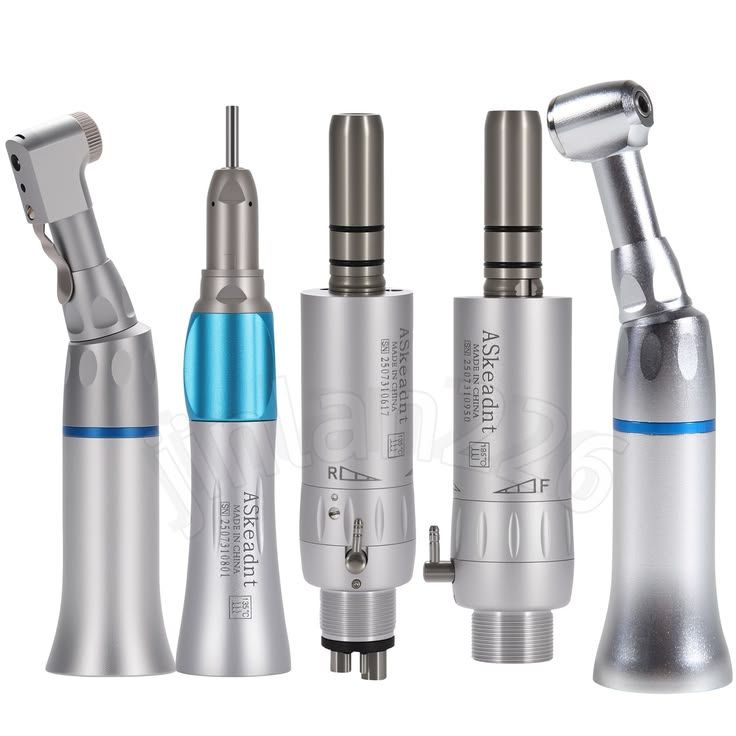
A practice typically runs three families of handpiece, and each has a slightly different maintenance profile because of how it is driven.
- High-speed air turbine handpieces spin the bur directly on an air-driven turbine, often running on small ball bearings that spin at very high RPM. These are the most sensitive to lubrication gaps because the bearings have the least tolerance for debris or dryness.
- Low-speed / contra-angle handpieces, also called low speed handpieces, use an air or electric motor connected through gears to the working end. The gear train needs its own lubrication point, separate from the motor.
- Electric handpieces are motor-driven, often brushless, and generally more tolerant of maintenance gaps than air turbines, but the attachment head (the part that actually holds the bur) still has its own gear-based wear points that need the same attention.
Why lubrication actually matters
Lubrication does two jobs at once, not one. It reduces friction, heat, and wear on the internal bearings and gears, and it physically flushes out debris that gets into the turbine or bearing area during patient use. That second job is easy to underrate: debris contamination during use is one of the most commonly cited causes of turbine and bearing failure, and the lubricant spray is what pushes that material back out before it can grind against a spinning bearing at high RPM. A handpiece that looks clean on the outside can still be accumulating debris internally with every patient it sees.
How often each brand recommends lubricating
There is no single universal number here, manufacturer guidance varies by brand and by which part of the handpiece is being lubricated. What is consistent across all of them: the main body gets lubricated far more often than the chuck mechanism.
| Brand | Main body lubrication | Chuck / coupler lubrication |
|---|---|---|
| NSK | Every sterilization cycle (clean, inspect, dry, then lubricate) | Weekly, as a separate step |
| Dentsply Sirona (Midwest) | Every cleaning/sterilization cycle | Once a week |
| KaVo | After each disinfection and before each sterilization, effectively every use | At least once a week |
| Star / DentalEZ | After each patient use, before sterilization | Same schedule as main body |
One genuine exception worth flagging honestly: some newer handpiece lines are built and marketed as lube-free, Star’s LubeFree range being one example. If your handpiece is one of these, follow its own instructions rather than applying the general rule above, since manual lubrication is not always the right move for every model.
The full maintenance cycle, step by step
Across NSK, Dentsply, and DentalEZ documentation, the reprocessing sequence is consistent:
- Flush the handpiece with a bur still in place, running it for 20 to 30 seconds to expel debris before removing it from the line.
- Clean the exterior with a soft brush or handpiece-safe cleaner. Never submerge a handpiece, and never use an ultrasonic cleaner, alcohol, or general disinfectant solution on the internals.
- Inspect for any residual debris and repeat cleaning if needed.
- Dry the handpiece.
- Lubricate: a short spray or drop application into the drive air tube or chuck, using the manufacturer’s own lubricant, not a generic substitute.
- Purge: run the handpiece or use compressed air for 20 to 30 seconds to expel the excess oil, until what comes out runs clear.
- Package in a sterilization pouch.
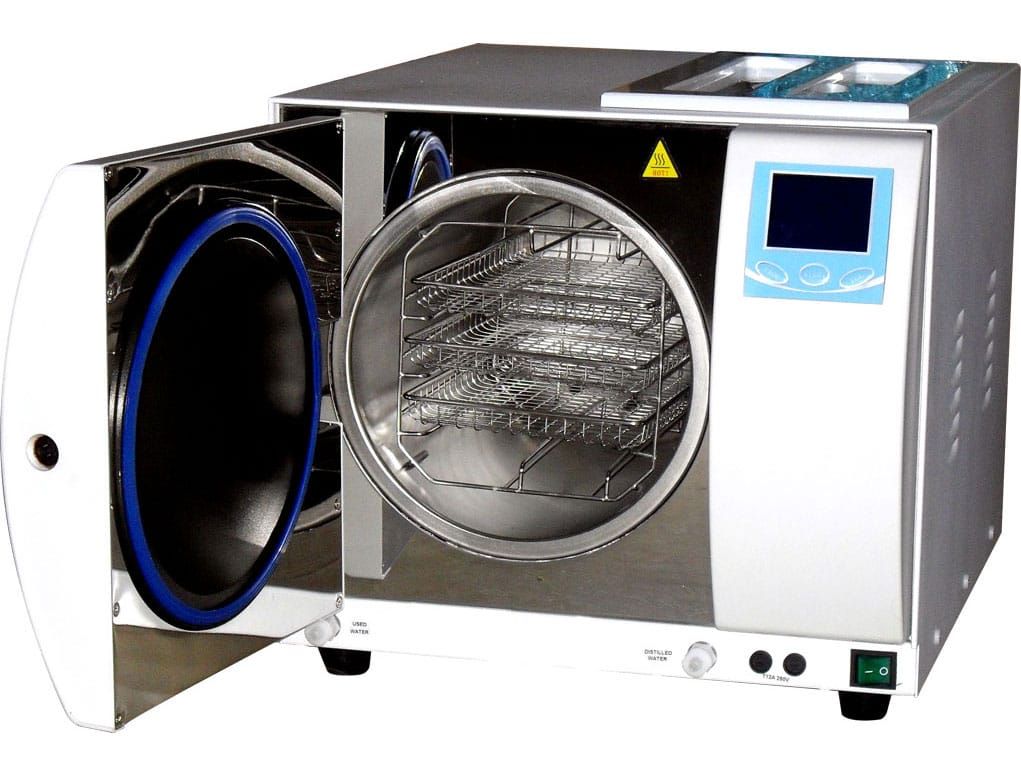
- Autoclave. Maximum temperatures differ by brand, NSK’s stated ceiling is 138°C, while Dentsply’s Midwest line specifies a gravity cycle at 132°C for 15 minutes or 121°C for 30 minutes, and a pre-vacuum cycle at 132°C for 4 minutes. Check your specific handpiece’s rating rather than assuming.
- Let it dry and cool fully before storage, upright and away from dust.
This is the same reprocessing discipline covered in our piece on autoclave validation and cycle logging, since a handpiece is only as sterile as the autoclave cycle it goes through, and skipping the lubrication step before that cycle does not just risk the handpiece, it risks the sterilization result too.
The CDC’s own guidance on this is narrower than people expect: it requires that handpieces and other removable intraoral instruments be cleaned and heat-sterilized between every patient, because internal components become contaminated during use and can expel material into the next patient’s mouth. It does not itself specify a lubrication interval, it defers that detail to the manufacturer’s own instructions, which is why the table above matters more than a single generic rule would.
What poor lubrication actually looks like
- Bearing seizure: the handpiece becomes completely inoperable, the most severe and most expensive outcome, and one that usually cannot be fixed with a simple service.
- Reduced cutting power or a rough feel: an early sign the turbine bearing is starting to wear.
- Chuck slipping or failing to hold a bur: often traced back to debris or improper lubrication at the chuck specifically, rather than the main body.
- The handpiece will not spin at all: can be a seized bearing, a blocked air supply, or full turbine failure, and usually needs a technician to distinguish which.
None of the sources we reviewed gave a specific number for how much lifespan a properly lubricated handpiece gains over a neglected one, so we are not going to invent one. What is documented: W&H’s own lab testing on its current automated system claims a 28 to 77 percent reduction in gear part abrasion compared to competitor oils, that is a manufacturer claim from their own testing, not an independently verified figure, but it is at least a real, sourced number rather than a marketing guess.
Manual spray cans vs. automated maintenance systems
A can of spray lubricant and a steady hand still works, and is what most smaller practices use. The tradeoff is consistency: a rushed lubrication between patients is easy to under-do, and over-oiling has its own downsides (excess oil baked onto internal parts during autoclaving). Automated systems exist specifically to standardize this:
- W&H Assistina One: nebulizes oil into a fine mist and pressurizes it into the handpiece so gears get coated without needing to spin, plus a spray-channel cleaning stage and compressed-air drying, in an 18-second cycle. Runs on compressed air only, no electricity needed. One cartridge is rated for over 2,800 instruments before replacement.
- W&H Assistina 301 Plus: the older, still widely used version of the same concept.
- KaVo QUATTROcare Plus: KaVo’s own automated lubrication and servicing unit, marketed on reducing servicing errors and the follow-up repair costs that come from inconsistent manual lubrication.
- Bien-Air Lubricare 2 and Dentsply Sirona Automate: equivalent systems from those manufacturers.
An automated handpiece maintenance system purges, lubricates, and purges again on a fixed cycle, which removes the main variable in handpiece life: whoever happens to be doing it that evening.
We could not find published retail pricing for any of these systems from a manufacturer or authorized dealer, every page we checked routed to “request a quote.” If you are weighing a manual routine against buying an automated unit, that is exactly the kind of comparison worth having with whoever services your handpieces, since the right answer depends on patient volume, not just sticker price.
Dental handpiece maintenance in Kenya
We looked for a KMPDC standard that specifically addresses handpiece reprocessing or maintenance and did not find one published, their facility licensing material for a dental clinic (KES 15,000) or dental centre (KES 20,000) covers fees and the application process, not equipment maintenance detail. That leaves manufacturer instructions as the practical standard for a Kenyan practice, the same conclusion we reached in our piece on autoclave validation and cycle logging.
If your practice is in Nairobi, our local page covers stock levels and service turnaround specific to the city.
We are not going to quote a KES price for handpiece maintenance systems or servicing here, we searched and could not find published pricing from any Kenyan supplier, only “contact us” pages. What we can tell you plainly: a handpiece that has gone months without proper lubrication is often still repairable if caught before the bearing fully seizes, and the honest first step is having someone look at it rather than replacing it on a guess.
This sits alongside the other side of chairside equipment reliability we cover separately: dental chair repair in Nairobi, since a handpiece rarely fails in isolation from the rest of the unit feeding it air and power.
If your practice is deciding how to structure maintenance across all its equipment rather than one handpiece at a time, see our guide to medical equipment service contracts in Kenya.
Lubricating and purging a handpiece correctly is only half the reprocessing chain, the autoclave cycle that follows needs its own proof it actually sterilised the load. See sterilizer validation beyond the autoclave for what a chemical or biological indicator failure means and what to do about it.
Get your handpieces checked before a bearing seizes
Tell us what is going on, a slow handpiece, a chuck that will not hold a bur, or just a maintenance routine you want reviewed. We will tell you honestly whether it needs lubrication, a full service, or replacement.
Call us on 0705 213 438 or WhatsApp us to get started.
Or book a check online and we will get back to you.
Frequently asked questions
How often should you lubricate a dental handpiece?
Most manufacturers, including NSK, Dentsply, and Star, recommend lubricating the main body every time the handpiece is cleaned and sterilized, effectively after every patient. The chuck mechanism usually needs a separate lubrication about once a week on top of that.
Why is my dental handpiece not spinning?
The most common causes are a seized bearing from inadequate lubrication, a blocked air supply line, or turbine failure from accumulated debris. A technician needs to check which one it is before you decide between a repair and a replacement.
What happens if you do not lubricate a handpiece?
Friction and heat build up in the bearings faster, and debris that enters the turbine during use is not flushed out. Over time this leads to reduced cutting power, a rough feel during use, and eventually bearing seizure, which usually makes the handpiece completely inoperable.
Can all dental handpieces be lubricated the same way?
No. Some newer handpiece lines are built as lube-free and should follow their own manufacturer instructions rather than a manual spray routine. For everything else, always use the specific lubricant your handpiece manufacturer recommends, not a generic substitute.
Is an automated handpiece maintenance system worth it over a spray can?
It depends on patient volume. An automated system standardizes the amount of oil applied and the cleaning cycle every time, which matters more in a high-volume practice where manual lubrication between patients is easy to rush or skip. A lower-volume practice can usually manage well with a careful manual routine.
Does KMPDC require a specific handpiece maintenance standard in Kenya?
We could not find one published. KMPDC’s facility licensing material covers fees and the application process for dental clinics and centres, not equipment reprocessing detail, which makes manufacturer instructions the practical standard for most Kenyan practices.
Can a seized handpiece bearing be repaired, or does it need replacing?
It depends how far the damage has gone. Caught early, a seized bearing is often a repairable service. Left too long, the internal wear can make a full rebuild not worth the cost compared to replacement, which is why it is worth having it looked at rather than guessing.
How long does a dental handpiece last?
There is no single figure, because the life of a handpiece is set by how many cycles it runs and how well it is lubricated between them, not by its age. The bearings are the wear part and they are what fails first. A handpiece that is purged and oiled after every patient and autoclaved correctly will outlast an identical one that is cleaned when somebody remembers, often by years. Your manufacturer’s instructions for use will state the expected service interval for that model, and that is the number to work to rather than a general rule.
What lubricant should you use on a dental handpiece?
Use the lubricant specified in the manufacturer’s instructions for that handpiece, and nothing else. Handpiece oils are formulated for the bearing type and for the temperature the unit will see in the autoclave. A general purpose machine oil or a penetrating spray will carry debris into the bearing and gum up as it heats. If a handpiece has no documentation left with it, we can identify the model and tell you what it takes.
Do rotary instruments other than the turbine need lubricating too?
Yes. Rotary instrument is the collective term for the air turbine, the contra angle, the straight handpiece, and the motor, and every one of them with moving parts inside needs lubrication. Contra angles in particular are often missed, because the turbine gets the attention and the contra angle runs quietly until the gears are already worn. Each type takes a different approach, which is covered in the section on the three handpiece types above.
Why has my handpiece lost torque?
Torque at the bur comes from the motor and the gear ratio in the handpiece, so a reduction contra angle delivers more torque and less speed than a one to one. When torque drops on a handpiece that used to be fine, the usual causes are worn bearings dragging on the rotor, a chuck that is no longer gripping the bur squarely, or air pressure at the unit that has fallen below the figure the handpiece is rated for. Check the pressure at the unit first, because it is the free one.
Sources: maintenance and lubrication guidance published by NSK, Dentsply Sirona (Midwest), KaVo, DentalEZ (Star), and W&H, plus CDC guidance on reprocessing dental handpieces and KMPDC’s published facility licensing material. Related reading: dental chair repair in Nairobi and autoclave validation and cycle logging in Kenya.