
How Often Should Medical Equipment Be Calibrated?
Short answer: How often should medical equipment be calibrated depends on the device and how hard it is used. most medical equipment should be calibrated once a year, but the real answer is whichever is shorter: the manufacturer’s stated interval, or a shorter interval set by how critical the device is, how hard it is used, and what your accreditation body requires. Life-critical devices such as infusion pumps and patient monitors are commonly checked every six months. Diagnostic and laboratory equipment is usually annual. Nothing on this page overrides the interval printed in your device’s own manual, that figure always wins.
What actually decides a calibration interval
There is no single law that says “calibrate every device every 12 months.” Instead, four things stack on top of each other, and whichever produces the shortest interval is the one you follow:
- The manufacturer’s specification. The instructions for use or service manual for your specific device states the interval the manufacturer designed it around. This always takes priority over any general guidance, including this page.
- Risk classification. A device that directly affects a treatment decision or keeps a patient alive if it fails, an infusion pump, a patient monitor, a dialysis machine, gets a shorter interval than a device that supports a diagnosis, which in turn gets a shorter interval than general-purpose equipment.
- Usage and environment. A pulse oximeter used on forty patients a day drifts faster than one used on four. Heat, dust, and humidity, all common in Kenyan facility conditions, accelerate drift in sensitive electronics and optics.
- Regulatory and accreditation requirements. A medical laboratory accredited to ISO 15189, or a clinic inspected by the Kenya Medical Practitioners and Dentists Council, will have its calibration records checked as part of that accreditation or licensing. That external requirement can force a shorter interval than you would otherwise choose.
How often should medical equipment be calibrated: intervals by type
These are the intervals most Kenyan facilities work to in the absence of a stricter manufacturer specification. Treat them as a starting point, not a substitute for the number in your own equipment’s manual.
| Equipment category | Typical interval | Why |
|---|---|---|
| Life-critical devices: infusion and syringe pumps, patient monitors, defibrillators, ventilators, dialysis machines | Every 6 months | A drift here can directly harm a patient, so many facilities calibrate twice the frequency of lower-risk equipment |
| Diagnostic and imaging equipment: ECG machines, X-ray systems, ultrasound | Annually | Errors affect diagnosis rather than immediate patient safety, but still need to be caught before they compound |
| Laboratory analysers, incubators, water baths, centrifuges | Annually | Matches the review cycle most labs already run for reagent and equipment quality checks |
| Analytical balances and pipettes in daily use | Every 3 to 6 months | High-use precision instruments drift faster and errors compound across every test that depends on them |
| Autoclaves and sterilisers | Annually, with quarterly validation runs in between | See our full breakdown in why autoclaves fail for the complete maintenance schedule |
| General-purpose equipment: refrigerators, freezers, basic thermometers | Every 12 to 24 months | Lower clinical risk if a small drift goes briefly unnoticed |
What can shorten the interval, whatever the table says
A few situations should move any device onto an earlier calibration date, regardless of its usual schedule:
- The device has just been repaired, moved, or had a component replaced. Recalibrate before returning it to service, not on the next scheduled date.
- A firmware or software update changed how the device processes its readings.
- An external quality assessment or proficiency testing round flagged a result that does not match the expected value.
- The device runs in a hotter, dustier, or more humid environment than the manufacturer’s stated operating conditions.
- Staff have noticed inconsistent readings between two devices measuring the same thing, even if neither has thrown an error.
Who calibrates medical equipment in Kenya, and what it costs
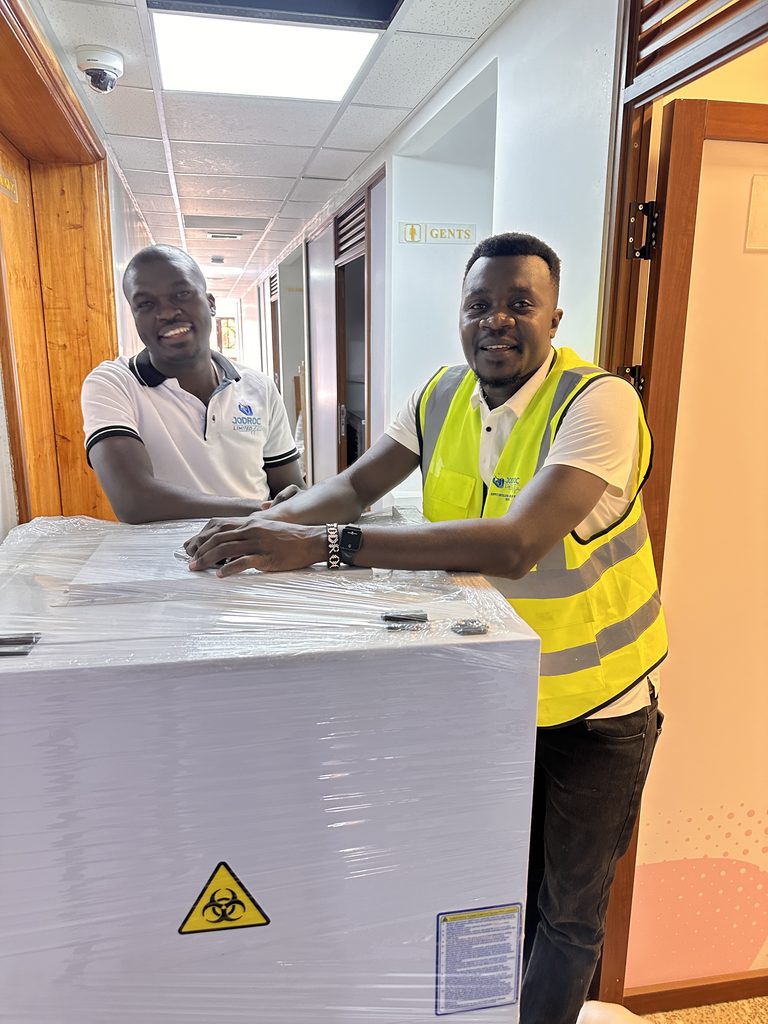
Calibration has to be done by an accredited lab, not by whoever services your equipment, because the certificate needs to be traceable to a national or international measurement standard. In Kenya, that accreditation comes from the Kenya Accreditation Service (KENAS) against the ISO/IEC 17025 standard.
| Provider | What they cover | Worth knowing |
|---|---|---|
| NPHL Centre of Excellence for Calibration of Medical Equipment | Bio-safety cabinets, pipettes, timers, thermometers, centrifuges, analytical balances, refrigerators and freezers, hot air ovens, incubators, and water baths | Free annual calibration for public hospital laboratory equipment. If you run a private facility, contact them directly to confirm whether they can take your equipment |
| Traceable Measurement Center | Laboratory, factory, and medical equipment, including volumetric glassware, temperature instruments, mass and pressure equipment | ISO 17025 accredited through KENAS and recognised by the International Laboratory Accreditation Cooperation, based on Tsavo Road, Nairobi |
| Biologic Calibration Solutions | Medical and laboratory equipment calibration | Based in Athi River, rated 5.0 stars from Google reviews at the time of writing |
We are not going to quote a single calibration price here. What an accredited lab charges depends on the device type, how many points on its range get checked, and whether it can be calibrated on your premises or needs to travel to their lab. The one number we can give you for free: if you run a public hospital laboratory, ask the NPHL Centre of Excellence about their annual free calibration programme before you pay a private lab for equipment that qualifies.
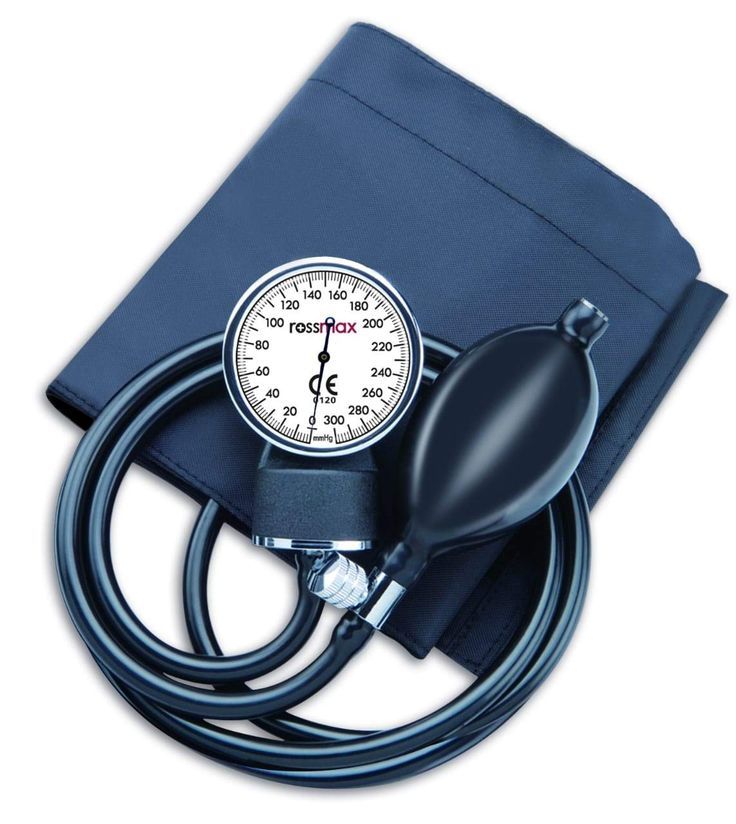
How Jodroc coordinates calibration for clients
We do not run our own ISO 17025 accredited calibration lab, and we will tell you plainly if a supplier claims to issue a traceable certificate without one, that claim is not worth much. What we do instead: as part of a maintenance contract, we keep an inventory of your equipment and its calibration due dates, and we book an accredited third-party lab on your behalf when a device comes due. You get one point of contact tracking the schedule instead of a spreadsheet nobody updates, and the certificate still comes from a properly accredited lab. This runs across the same locations we already serve: Nairobi, Mombasa, Kisumu, Nakuru, Eldoret, Nyeri, Meru, Thika, Kisii, and Embu.
This sits alongside the other maintenance work we already cover for the same equipment: dental chair repair when something breaks, and compressor and suction sizing when the utilities behind your chairs are the actual problem. Calibration, repair, and correct sizing all point at the same goal: equipment that gives you a reading, a treatment, or a result you can trust.
Calibration on its own does not prove a sterilizer is safe to use, that is a separate discipline. See autoclave validation and cycle logging in Kenya for what proper sterilizer validation and a daily cycle log actually involve.
Calibration is usually one line item within a wider maintenance arrangement. See our guide to medical equipment service contracts in Kenya for how calibration typically fits alongside repairs and preventive maintenance in a single agreement.
For x-ray equipment specifically, see our dedicated guide to x-ray machine calibration in Kenya, which also explains how calibration differs from KNRA radiation safety licensing.
The life-critical devices in the table above, patient monitors, ECG machines, and defibrillators, each have their own calibration specifics beyond a generic interval. See patient monitor and ECG calibration in Kenya and defibrillator testing and compliance in Kenya for what each of those checks actually involves.
Two more checks that sit alongside calibration rather than inside it: infusion pump and syringe driver accuracy testing, and electrical safety testing for medical equipment in Kenya, the IEC 62353 check that confirms a device is safe to touch, not just accurate to read.
Get your calibration schedule sorted
Send us your equipment list and we will tell you what is due, what qualifies for free public calibration, and what an accredited lab visit will involve.
Call us on 0705 213 438 or WhatsApp us to get started.
Frequently asked questions
What medical equipment requires calibration?
Any device that takes a measurement used for diagnosis or treatment: patient monitors, infusion pumps, ECG machines, autoclaves, analytical balances, pipettes, centrifuges, incubators, and thermometers among them. If a wrong reading from the device could change a clinical decision, it needs a calibration schedule.
What is calibration in medical equipment?
Calibration is the process of comparing a device’s readings against a known, traceable standard, and adjusting or documenting the difference. It confirms the device is still measuring accurately rather than drifting away from the true value over time.
What do calibration companies do?
An accredited calibration lab tests a device at set points across its measurement range against reference standards traceable to a national metrology body, then issues a certificate stating how accurate the device was found to be, and by how much it was adjusted if it needed correcting.
How much does it cost to calibrate medical equipment?
It varies by device type, how many points on its range are checked, and whether the lab can calibrate on-site or needs the equipment shipped to them. Public hospital laboratory equipment can qualify for free annual calibration through the NPHL Centre of Excellence, private facilities should request a quote directly from an accredited lab.
What are the 5 points of calibration?
A 5-point calibration checks a device at five values spread across its working range, typically the two extremes, the midpoint, and two points in between, rather than just one. It catches inaccuracies that a single-point check would miss, particularly in devices that behave differently at the low and high ends of their range.
What is the ISO standard for equipment calibration?
ISO/IEC 17025 is the standard a calibration laboratory itself is accredited against, it covers the lab’s competence, traceability, and quality management. Medical device manufacturers separately work to ISO 13485 for their own quality management systems, which includes requirements for calibrating the equipment used to make and test their devices.
How do I become a certified calibration technician?
Most technicians start with a background in biomedical, electrical, or instrumentation engineering, then complete manufacturer-specific or metrology training through an accredited body. In Kenya, KENAS-accredited labs and equipment manufacturers both run this kind of training for their own technicians.
What is the difference between calibration and verification?
Calibration compares a device against a traceable standard and documents or corrects any deviation, producing a certificate. Verification is a quicker check, often done between calibrations, that confirms the device is still reading within an acceptable tolerance, without the full traceable process behind a calibration certificate.
Sources: calibration provider details verified against each organisation’s own published information at the time of writing. Related reading: why autoclaves fail, and what it costs to ignore it, dental chair repair in Nairobi, and sizing compressors and suction for the number of chairs.