
Why autoclaves fail, and what it costs to ignore it
Short answer: autoclaves fail for three reasons that are almost always preventable: worn door gaskets that leak pressure, clogged drain strainers that leave loads wet, and skipped maintenance that lets small faults compound into expensive breakdowns. In Kenyan dental clinics, peer-reviewed research found a 31% sterilization failure rate, the highest documented proportion in the study. Each failure puts patients at risk, puts your PPB compliance at risk, and costs more to fix the longer you wait.
This guide walks through the six most common autoclave symptoms, what causes each one, what to check before you call an engineer, and when the machine needs to come out of service entirely. If you run a clinic, dental practice, or laboratory in Kenya and your autoclave has not been serviced in the last twelve months, this article is the reason to stop postponing it.
There is a particular kind of denial that happens with autoclaves. The cycle finishes, the indicator tape changes colour, and everyone assumes the instruments inside are sterile. Nobody opens the machine and swabs the load. Nobody runs a biological indicator test more than once a quarter, if that. The autoclave sits in the corner of the CSSD or sluice room, running the same programme it has run for three years, and the assumption is that silence equals safety.
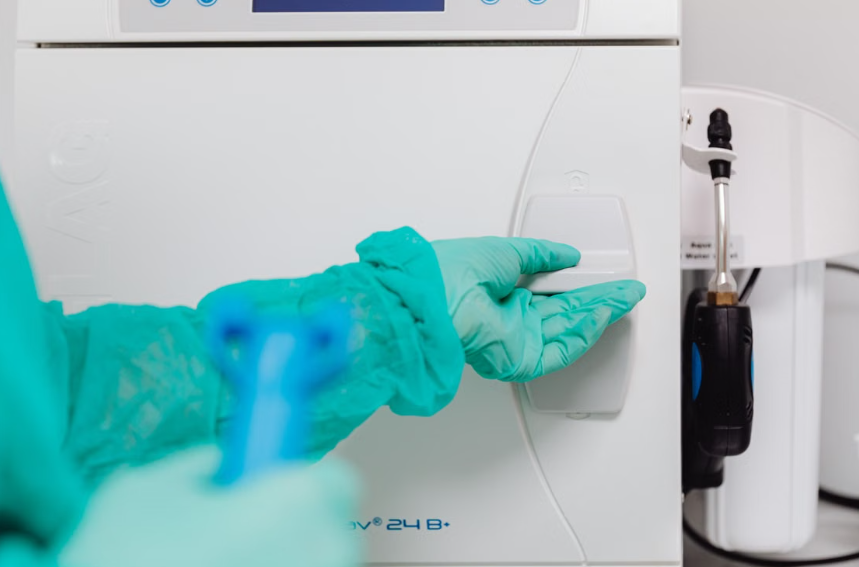
It does not. When an autoclave fails, it fails quietly. The instruments look clean. The tape changes. The cycle completes. But the steam did not reach the centre of the pack, or the temperature held for eleven minutes instead of fifteen, or trapped air created a cold pocket that the thermometer on the chamber wall never detected. The result is instruments that look sterile and are not.
A study published in the Journal of Infection in Developing Countries reviewed autoclave effectiveness across multiple nations and found that Kenyan dental clinics had a 31% sterilization failure proportion when tested with biological indicators. That is not a fringe statistic from a single broken machine. It is the measured failure rate across a sample of working clinics, each of which believed their autoclave was functioning correctly.
What does an autoclave actually do?
An autoclave is a pressurized chamber that uses saturated steam to kill microorganisms, including bacterial spores, on surgical instruments, laboratory glassware, dental handpieces, and textile packs. It works by raising the chamber pressure above atmospheric level so that steam reaches temperatures that cannot occur at normal pressure: 121 °C at 1 bar above atmospheric, or 134 °C at 2.1 bar. At 121 °C a standard gravity cycle needs 15 to 30 minutes of exposure. At 134 °C the holding time drops to 3 to 4 minutes, though the full cycle including heat-up, sterilization, exhaust and drying may run 20 to 45 minutes.
The critical word is saturated. Steam that still contains pockets of air cannot transfer heat efficiently, and those air pockets sit at a lower temperature than the surrounding steam. This is why pre-vacuum (Class B) autoclaves exist, and it is why gravity-displacement autoclaves fail more often on porous loads and hollow instruments. If you are sterilizing dental handpieces or wrapped surgical packs, a gravity autoclave is the wrong tool for the job even when it is working perfectly.
What are the three types of autoclave?
The three classes defined by EN 13060 each handle a different range of loads.
Class N (Naked). Designed for unwrapped, solid instruments only. Steam enters by gravity displacement, pushing air downward and out through a vent at the bottom of the chamber. Adequate for solid stainless-steel instruments in a small clinic, but unable to sterilize porous materials, hollow instruments, or wrapped loads. Most of the low-cost benchtop autoclaves sold in Kenya are Class N.
Class S (Specific). A middle category where the manufacturer specifies exactly which load types the machine can handle. Some include a basic vacuum pulse. If you are buying a Class S machine, the load types listed in the manual are the only loads it is validated for.
Class B (Big autoclave cycle). Uses a vacuum pump to evacuate air from the chamber before steam enters, typically with multiple pre-vacuum pulses. This is the only class that reliably sterilizes wrapped loads, porous materials (textiles, gauze), and hollow instruments (handpieces, cannulae). Dental practices and surgical theatres in Kenya need a Class B autoclave. Operating anything less on wrapped or hollow loads is a compliance risk with the Pharmacy and Poisons Board and a clinical risk to patients.
Six symptoms that mean your autoclave is failing
The table below is adapted from the STERIS master diagnostic framework, localized for the machine types and conditions common in Kenyan facilities. Each row is a symptom your staff can observe without specialized test equipment.
| Symptom | Most likely cause | Check first | Escalate when |
|---|---|---|---|
| Wet packs after the cycle ends | Overloaded chamber, blocked drain strainer, or failing vacuum pump (Class B) | Reduce the load by a third. Clean the drain strainer. Run the cycle again with a single test pack. | Packs remain wet after reducing the load and cleaning the strainer. The vacuum pump sounds different from normal. |
| Biological indicator (BI) shows growth | Air not fully removed from the chamber, or temperature/time fell short | Run a Bowie-Dick test (Class B) or a single-instrument BI test. Check the printout for temperature dips during the holding phase. | BI fails on a repeat test. The machine must come out of service immediately and every load processed since the last passed BI must be recalled and re-processed. |
| Bowie-Dick test shows incomplete penetration | Air leak in the chamber door seal or a failing vacuum pump | Inspect the door gasket visually. Run the test again with a commercial Bowie-Dick pack, not an improvised towel stack. | Test fails twice. Do not process patient loads until an engineer has checked the vacuum system and door seal. |
| Chemical indicator strip has not changed colour | Insufficient steam contact, usually because of wrapping that is too tight or a pack placed over the drain | Re-wrap the load with looser folds. Reposition packs so nothing covers the chamber drain. | Indicators fail after reloading. The steam generator or inlet valve may not be producing enough steam. |
| Cycle aborted or alarm triggered mid-cycle | Low water level, door not fully latched, pressure sensor fault, or power interruption | Check the water reservoir. Re-seat the door. Note the error code displayed. Restart once. | The same error code appears on the second attempt. Record the code and call your service provider. Do not override the alarm and force the cycle to complete. |
| Chamber not reaching set temperature | Heating element degradation, limescale on the element, or a faulty temperature sensor | Descale the chamber if overdue. Check that the water source is distilled or deionized, not tap water with high mineral content. | Temperature still falls short after descaling. The heating element or sensor needs replacement. |
Two of these six symptoms, the BI failure and the Bowie-Dick failure, require you to take the autoclave out of service immediately. That is not a guideline you can defer until the morning list is finished. Every instrument processed in a machine that has failed a biological indicator test is potentially non-sterile, and using those instruments exposes patients to infection and exposes the facility to liability.
What sterilization failure actually costs you
The cost is never the repair bill. The repair bill is the smallest part.
Surgical site infection rates in developing countries run between 1.2% and 23.6%, compared with 1.2% to 5.2% in high-income countries. That difference is not explained entirely by sterilization failures, but sterilization is one of the controllable variables. A single SSI in a Kenyan private hospital extends the patient’s stay, requires additional antibiotics (often IV), and can generate a complications dispute that costs the facility far more than the bed-days alone.
Then there is the regulatory cost. The Pharmacy and Poisons Board requires that registered medical facilities maintain functioning sterilization equipment. A PPB inspection that finds a non-functional autoclave, or one with no maintenance records, is a finding that can attach conditions to your operating licence. In dental practice, the Kenya Medical Practitioners and Dentists Council expects documented sterilization protocols for every instrument that enters a patient’s mouth. “The autoclave was working last time we checked” is not documentation.
Finally, there is the cost of the machine itself. An 18-litre benchtop autoclave in Kenya runs KSh 18,000 to 24,000. A 50-litre unit costs KSh 160,000 to 200,000. A 100-litre hospital-grade unit costs KSh 260,000 to 300,000. A door gasket replacement costs a fraction of those figures. A heating element replacement costs roughly one-tenth. But clinics that skip annual servicing for three years and then discover a corroded chamber, a failed vacuum pump, and a gasket that has hardened beyond repair are not looking at a service call. They are looking at a replacement purchase, and they are looking at it urgently because patient loads cannot wait.
This is the arithmetic that matters: annual maintenance on an autoclave costs roughly the price of one or two nights of a patient’s extended hospital stay for an SSI. Skipping it does not save money. It defers a larger expense to a moment when you have no negotiating room.
The most common reason for sterilization failure
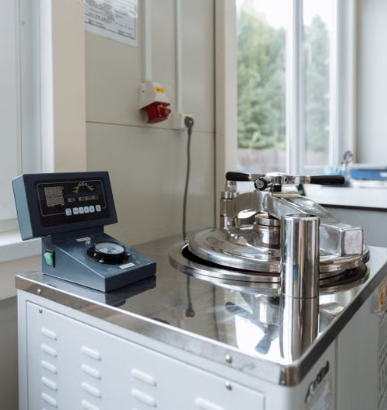
It is not the machine. It is how the machine is loaded.
The peer-reviewed literature is consistent on this point. The single most frequent cause of sterilization failure is trapped air, and trapped air is almost always a loading problem. Packs stacked too tightly, containers placed with lids closed, and instruments bundled inside wrapping that leaves no path for steam to penetrate the centre of the load.
The second most common cause is wrong cycle selection. A gravity cycle used on a wrapped load will not remove air from the interior of the pack. The steam contacts the outer layer, the indicator on the outside changes colour, and the centre of the pack never reaches sterilization temperature. This is exactly the failure mode that biological indicators are designed to catch, and it is the failure mode that most clinics never test for because they rely on the external chemical indicator and assume it represents the entire load.
The third cause is the one that worsens over time: gasket wear. The door gasket on a busy autoclave running four to six cycles per day degrades visibly within 12 to 18 months. It hardens, cracks at the corners, and eventually allows micro-leaks that prevent the chamber from reaching full pressure. Because the leak is small, the chamber still reaches temperature, but takes longer to do so. The holding phase starts late, runs short, and the printout shows a normal-looking cycle that was actually 2 to 3 minutes below the required exposure time. Without a functioning chart recorder or electronic log, nobody notices.
How to reset an autoclave after an error
The reset procedure varies by manufacturer, but the general sequence applies to most benchtop and mid-size units sold in Kenya (Tuttnauer, Getinge, Sturdy, Melag, and locally assembled units).
First, let the chamber depressurize completely. Never open the door while the pressure gauge reads above zero, and never rely on the digital display alone if the machine has a mechanical gauge. Wait for both to read zero. Second, open the door and remove the load. Third, check the error code against the manual. Common codes include E1 or Er1 (temperature sensor fault), E2 (over-temperature), E3 (door switch), and E4 (water level). Fourth, address the immediate cause: refill the reservoir, re-seat the door, clear any obstruction. Fifth, close the door and run an empty test cycle. If the cycle completes without error, run a second cycle with a minimal load and a biological indicator before returning to patient instruments.
If the same error code returns on the empty test cycle, the autoclave needs a technician. Do not continue resetting and retrying. Each failed cycle thermally stresses the chamber and wastes distilled water and electricity. Record the error code, the date, and what you tried, and contact your service provider with that information ready.
The maintenance schedule most clinics skip
The CDC requires preventive maintenance on sterilization equipment. Most autoclave manufacturers recommend annual servicing at minimum, with weekly and monthly operator-level checks in between. This is the schedule, broken into what your own staff should handle and what needs a qualified technician.
Daily (operator). Wipe down the chamber and door gasket after the last cycle. Check that the water reservoir is filled with distilled or deionized water. Inspect the drain strainer for lint, paper dust, and debris. Record the cycle count and any error codes in the maintenance log.
Weekly (operator). Drain and refill the reservoir completely. Deep-clean trays and the chamber interior. Run a biological indicator test (spore test). Check door latching and the safety interlock. On pre-vacuum (Class B) machines, run a Bowie-Dick test.
Monthly (operator). Inspect the door gasket for cracks, hardening, or deformation. Check tubing, hoses, and the power cord for wear. Compare gauge readings against the digital display. Verify the printer or log output is recording correctly.
Quarterly (operator or technician). Descale the heating elements and chamber walls. Replace chamber filters as specified in the manufacturer’s instructions. Run a full validation cycle with biological and chemical indicators placed at multiple points in the load.
Annual (qualified technician). Complete preventive maintenance including door gasket replacement, sensor calibration, safety valve testing, vacuum pump inspection (Class B), and chamber integrity check. This is the service call that prevents the emergency replacement purchase described above, and it is the one that the majority of clinics in Kenya either defer or skip entirely.
That annual service is also where calibration gets confirmed rather than assumed. See how often medical equipment should be calibrated for the intervals that apply across your other equipment, not just the autoclave.
None of that servicing means much without paperwork behind it. See autoclave validation and cycle logging in Kenya for what a validation actually proves versus what a daily cycle log needs to capture.
If you run a high-volume facility (a surgical theatre, a dental practice running six or more cycles a day, or a laboratory processing culture media), the manufacturer’s recommendation is semi-annual preventive maintenance, not annual.
What are the risks of using an autoclave incorrectly?
The risks fall into three categories, and the first one is the reason the other two matter.
Patient infection. Instruments that appear sterile but carry viable bacteria, including spore-forming organisms like Clostridium and Bacillus, cause surgical site infections, wound infections, and in dental practice, cross-contamination between patients. In neonatal and immunocompromised patients the mortality risk from a single contaminated instrument is real, not theoretical.
Operator injury. An autoclave is a pressure vessel. Opening the door before the chamber has fully depressurized, overriding a stuck door interlock, or ignoring a pressure relief valve that has not been tested in two years creates a steam flash risk that can cause severe burns. Handling loads without appropriate PPE (heat-resistant gloves, face protection when unloading large chambers) adds scalding risk to every cycle.
Regulatory and legal exposure. Inadequate sterilization documentation, absent maintenance logs, and a machine that fails inspection put the facility’s licence at risk. If a patient develops a post-procedure infection and the sterilization records show gaps, the burden of proof shifts to the facility to demonstrate that the infection was not caused by their instruments. That is a position no clinic wants to be in.
The 7 steps of proper sterilization
This is the processing sequence, not just the autoclave cycle. Sterilization is the fifth step, not the only one, and each preceding step matters as much as the machine itself.
1. Pre-cleaning at the point of use. Wipe gross contamination from instruments immediately after the procedure, before blood and tissue dry. Use an enzymatic spray or wipe if instruments cannot be transported to the decontamination area within 30 minutes.
2. Manual or ultrasonic cleaning. Disassemble instruments with removable parts. Scrub under running water with a non-abrasive brush, or place in an ultrasonic cleaner with enzymatic detergent. This step removes biofilm that steam cannot penetrate.
3. Rinsing and drying. Rinse with clean water (demineralized if available) and dry instruments before wrapping. Moisture left on instruments before the autoclave cycle contributes to wet packs.
4. Inspection and packaging. Inspect each instrument for remaining contamination, corrosion, or damage. Package in sterilization wraps or pouches with a chemical indicator inside the pack, not only on the outside. Seal pouches completely. Label with the date, load number, and contents.
5. Sterilization (autoclave cycle). Load the chamber according to the manufacturer’s instructions: packs on edge, containers with lids cracked open, nothing obstructing the drain or blocking the steam inlet. Select the correct cycle for the load type. Run the full programme without interruption.
6. Drying and unloading. Allow the drying phase to complete. Do not open the door early to speed up the process. Wet packs are not sterile. Check that all chemical indicators have changed appropriately before removing the load.
7. Sterile storage. Store processed packs in a clean, dry, enclosed area on solid shelving (not wire racks that can snag the wrap). Sterility is maintained by the integrity of the packaging, not by time alone, but most standards recommend a maximum shelf life of 30 days for wrapped packs in open shelving and longer for sealed, dust-protected storage.
When to repair and when to replace
Not every fault justifies a repair. Some faults are the autoclave telling you it is finished.
Repair when the failure is a single component with a known lifespan: the door gasket, a heating element, a temperature sensor, a solenoid valve, or a vacuum pump rebuild kit. These are maintenance items. Their failure is expected and the cost of replacement is a fraction of the machine’s value. A competent biomedical engineer replaces a door gasket in under an hour and a heating element in two to three hours.
Replace when you see chamber corrosion that has pitted the stainless steel, persistent pressure leaks that remain after gasket replacement (indicating warped door or chamber flanges), or a control board failure on a machine old enough that spare boards are no longer manufactured. Also replace when the cumulative repair cost in the last 24 months exceeds 40% of the price of a new equivalent machine. Beyond that threshold you are financing a machine that will fail again.
For Kenyan clinics buying locally, the replacement decision often comes down to lead time. A new benchtop autoclave can be delivered and commissioned in 3 to 5 working days. A hospital-grade unit may need 2 to 4 weeks depending on the configuration. If you wait until the machine is completely non-functional before ordering its replacement, you have that lead time with no sterilization capacity. Plan the replacement before the failure forces it.
Autoclave prices in Kenya (2026 ranges)
| Type | Capacity | Class | Price range (KSh) | Typical setting |
|---|---|---|---|---|
| Portable benchtop | 18 L | N | 18,000 to 24,000 | Small clinic, GP practice |
| Benchtop | 24 L | N or S | 27,000 to 31,000 | Dental practice (unwrapped only) |
| Dental steam sterilizer | 18 to 23 L | B | ~150,000 | Dental practice (wrapped loads, handpieces) |
| Vertical | 50 L | N or S | 160,000 to 200,000 | Laboratory, mid-size clinic |
| Horizontal, hospital-grade | 100 L | B | 260,000 to 300,000 | Hospital CSSD, surgical theatre |
Prices are indicative 2026 market ranges, not a price list. Your actual quotation depends on the manufacturer, features (printer, USB data log, built-in water treatment), and whether the unit is imported or locally assembled. Request a quotation against your specific requirements.
Notice the gap between the KSh 24,000 benchtop and the KSh 150,000 Class B dental sterilizer. That gap is the cost of a vacuum pump, and it is the difference between a machine that can only sterilize unwrapped solid instruments and a machine that can sterilize the full range of dental loads including wrapped handpieces. Clinics that buy the cheaper machine and then use it for wrapped loads are not saving KSh 126,000. They are spending KSh 24,000 on a machine that cannot do what they need it to do.
Get your autoclave inspected before it fails
Jodroc supplies, installs, and services autoclaves across Kenya for dental clinics, medical laboratories, and hospital CSSD departments. If your autoclave has not been serviced in the past 12 months, or if you are seeing any of the six symptoms listed above, we can send an engineer to inspect the machine, run a biological indicator test, and give you a written report on what needs attention.
This is not a sales pitch wrapped in a service call. The inspection is straightforward: we check the gasket, the heating element, the vacuum system (Class B), the sensors, and the drain. We run a test cycle with indicators placed inside the load. If the machine passes, you get a dated certificate and a maintenance log entry. If it fails, you get a repair quotation with parts and labour itemized, so you can compare the repair cost against the replacement cost before committing.
We also supply replacement autoclaves from our product range if the inspection shows the current machine is beyond economical repair. Our service and installation team handles the full scope: delivery, commissioning, operator training, and ongoing preventive maintenance contracts so the next annual service actually happens.
Frequently asked questions
What is an autoclave used for?
An autoclave sterilizes surgical instruments, dental handpieces, laboratory glassware, culture media, and textile packs (drapes, gowns) by exposing them to pressurized saturated steam at 121 °C or 134 °C. It is the standard sterilization method in hospitals, dental clinics, and laboratories because steam is the fastest and most reliable way to kill all microorganisms, including bacterial spores.
What are common autoclave problems?
The six most common problems are wet packs after the cycle, biological indicator test failure, Bowie-Dick test failure (Class B machines), chemical indicator strips not changing colour, cycle aborts or alarms mid-cycle, and the chamber not reaching set temperature. Each of these has a specific set of causes and first-response checks described in the diagnostic table above.
What is the most common reason for sterilization failure?
Trapped air in the chamber, almost always caused by overloading the autoclave or using a gravity-displacement cycle on loads that require a pre-vacuum cycle. Air pockets inside wrapped packs sit at a lower temperature than the surrounding steam, and the instruments in those pockets do not reach sterilization temperature even though the chamber thermometer reads correctly.
How do I reset my autoclave?
Wait for the chamber to depressurize fully (both gauges at zero). Open the door, remove the load, and note the error code. Address the cause (refill water, re-seat the door, clear obstructions). Close the door and run an empty test cycle. If the error recurs, the machine needs a technician. Full procedure in the reset section above.
What are common autoclave error codes?
Codes vary by manufacturer, but common ones include E1 (temperature sensor fault), E2 (over-temperature protection triggered), E3 (door interlock failure), and E4 (low water level). The exact meaning depends on your machine’s make and model. Check the manual, and if you do not have the manual, contact the manufacturer or your service provider with the machine’s model number and the code displayed.
What is the difference between a sterilizer and an autoclave?
An autoclave is a type of sterilizer that uses pressurized steam. Other sterilization methods include ethylene oxide gas (ETO), hydrogen peroxide plasma, and dry heat. In everyday clinical language, “autoclave” and “sterilizer” are used interchangeably when referring to steam sterilization, but technically a sterilizer is the broader category and an autoclave is one method within it.
How much does an autoclave cost in Kenya?
Prices range from KSh 18,000 for an 18-litre portable benchtop unit to KSh 300,000 for a 100-litre hospital-grade horizontal autoclave. Class B units with vacuum pumps (required for wrapped loads and dental handpieces) start around KSh 150,000. See the full pricing table above or request a quotation for your specific requirements.
Are used autoclaves worth buying?
Sometimes, but only if the seller can provide maintenance records, the remaining lifespan of the chamber and seals has been independently assessed, and the machine comes with a warranty on parts and labour. A used autoclave with no service history is a gamble that rarely pays off. The door gasket, heating element, and vacuum pump (if fitted) are the components that degrade with use, and replacing all three on a used machine can cost nearly as much as buying a new entry-level unit.
How often should an autoclave be serviced?
At minimum annually, with weekly biological indicator testing and daily operator checks (chamber wipe-down, water level, drain strainer). High-volume facilities (surgical theatres, busy dental practices, laboratories processing culture media) should schedule professional preventive maintenance every six months. The full maintenance schedule is listed above.
What happens if you open an autoclave too early?
Two things. First, the sudden pressure drop can cause flash steaming of residual moisture, producing wet packs that are not considered sterile. Second, if the door is forced open before the chamber has fully depressurized, the rush of steam creates a serious burn risk to the operator. Always wait for the pressure gauge to read zero and allow the drying phase to complete before opening.
Can you autoclave plastics?
Only plastics rated as autoclavable, typically marked with the autoclave symbol or rated for 121 °C or higher. Polypropylene (PP) and some grades of polycarbonate withstand autoclaving. Polystyrene, PVC, HDPE, and LDPE will warp or melt. Never autoclave a container unless it is explicitly rated for it, because melted plastic damages the chamber and contaminates the drain system.
What water should I use in my autoclave?
Distilled or deionized water. Tap water contains dissolved minerals (calcium, magnesium, silica) that deposit on the heating element, chamber walls, and sensors as limescale. In Nairobi and the surrounding counties, tap water hardness is high enough to produce visible scale buildup within weeks. Limescale reduces heating efficiency, clogs the drain strainer, and accelerates sensor corrosion. If you are descaling your autoclave monthly, the water source is the problem to fix.
For the deeper validation work an autoclave needs beyond troubleshooting, see autoclave validation and cycle logging in Kenya, and for how sterilizer upkeep fits into a facility’s wider maintenance planning, see our guide to medical equipment service contracts in Kenya.