
Sizing compressors and suction for the number of chairs
Short answer: a dental clinic needs roughly 2 CFM (50 litres per minute) of compressed air per chair under normal use, and about 300 litres per minute of suction per active operatory. Undersized equipment does not just slow your handpieces down. It shortens compressor life, contaminates your air supply with moisture, and leaves your suction struggling to clear the surgical field when two chairs run simultaneously. This guide gives you the actual numbers, the formulas, and a sizing table so you can spec your compressor and suction plant for the number of chairs you operate today, with enough headroom for the chairs you plan to add.
If you run a dental practice, medical clinic, or outpatient surgical unit in Kenya and you are planning to add chairs, relocate, or replace ageing equipment, this is the page to read before you call a supplier.
Most dental clinics in Kenya buy their compressor the same way they buy a generator: they walk into a supplier, describe what they think they need, and leave with whatever is in stock. The compressor arrives, gets plumbed in, and works well enough for the first year or two. Then the practice adds a chair. Then another. The compressor that was adequate for two operatories is now feeding four, and nobody recalculated the airflow.
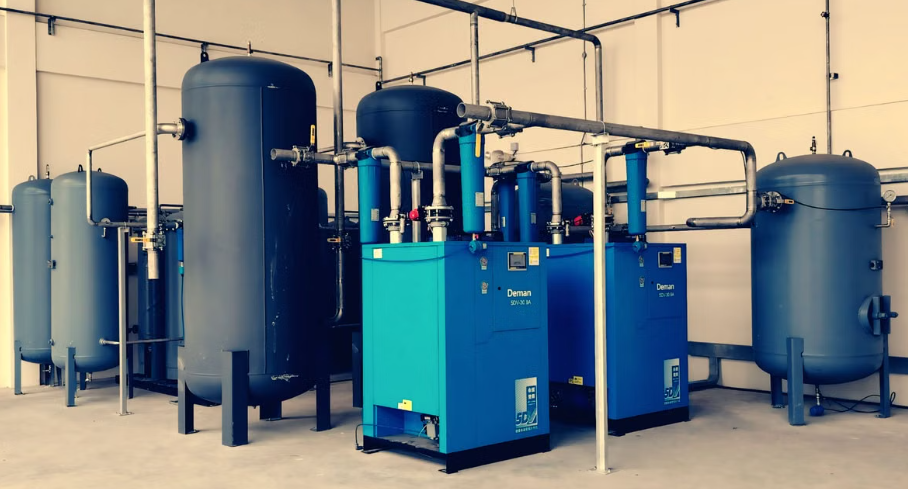
The symptoms show up gradually. Handpiece torque drops during busy mornings. The compressor runs without cycling off, which means the duty cycle has gone from the recommended 60% to nearly 100%. Moisture appears in the airline because the system no longer has enough recovery time to cool and drain condensate. The suction side has the same problem in reverse: two high-volume evacuators running at once reduce the vacuum to the point where neither one clears the field properly.
These are not minor inconveniences. They are equipment failures that most clinics never trace back to the actual cause, which is that the compressor and suction plant were never sized for the number of chairs they are serving.
Why compressor and suction sizing matters
An undersized compressor does three things, all of them expensive. First, it runs hotter and longer than it was designed to, which accelerates wear on the pump head, valves, and motor bearings. A compressor rated for a 60% duty cycle that runs at 90% will need a rebuild in half the time. Second, it cannot maintain consistent pressure at the point of use, which means your handpieces slow down under load and your air-water syringes lose their bite. Third, an overworked compressor produces more condensate than its dryer or drain can handle, and that moisture carries through the lines to your instruments and into the patient’s mouth.
An undersized suction system is arguably worse. When the vacuum drops below the minimum threshold, your high-volume evacuator stops doing its job: clearing saliva, water, and aerosols from the operative field. That is a visibility problem, an infection control problem, and a patient comfort problem all at once. Post-COVID, dental regulators are paying more attention to aerosol management than ever, and a suction system that cannot maintain flow across all active chairs is a compliance gap waiting to be noticed.
An oversized system, by contrast, wastes capital. A 10 HP compressor feeding two chairs costs more to buy, more to run, and takes up floor space you could use for something else. The goal is to match the equipment to the demand, with a sensible margin for growth.
If the compressor or suction plant itself is already failing rather than simply undersized, sizing alone will not fix it. See our guide to dental chair repair in Nairobi for common faults and how fast we can get an engineer to you.
How much air does each dental chair actually use?
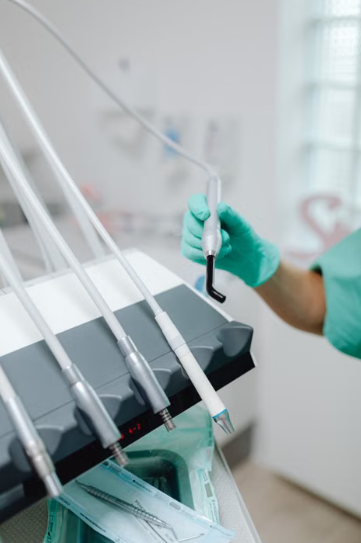
The honest answer is that it depends on the instruments connected to that chair. Different handpieces, scalers, and syringes draw different volumes of air. Here are the typical consumption figures for common dental instruments:
| Instrument | Air consumption (L/min) | Air consumption (CFM) |
|---|---|---|
| High-speed handpiece (turbine) | 30 to 60 | 1.0 to 2.1 |
| Air scaler / Cavitron | 20 to 40 | 0.7 to 1.4 |
| Air-driven polisher | 25 to 50 | 0.9 to 1.8 |
| 3-in-1 air/water syringe | 15 to 25 | 0.5 to 0.9 |
| CAD/CAM milling unit | 100 to 150+ | 3.5 to 5.3+ |
In practice, not every instrument on a chair runs at the same time. A dentist uses the handpiece, rinses with the syringe, uses the handpiece again. The realistic average consumption per chair, accounting for the natural gaps between instrument use, is about 2 CFM (roughly 50 litres per minute). That number comes up consistently across compressor manufacturers and dental equipment guides, and it is the figure you should use as your baseline for sizing.
Peak demand is higher. If a dentist is running a high-speed handpiece while the assistant operates the air-driven suction tip on the same chair, that single operatory can briefly draw 100 to 150 litres per minute. Your compressor and tank need to handle these peaks without dropping below the minimum operating pressure at the chair.
How to calculate the size of a compressor for your clinic
The sizing calculation has four steps. It is not complicated, but skipping any step is how clinics end up with the wrong machine.
Step 1: list every air-consuming device. Walk through the clinic and count every handpiece coupling, every air/water syringe, every air-driven scaler, and any other pneumatic equipment connected to the system. Include lab equipment if it shares the same air supply.
Step 2: add up the peak consumption. Use the manufacturer specifications for each device. If you do not have them, use the table above. Sum the peak draw for every device across all chairs. For a three-chair clinic with a high-speed handpiece and a syringe per chair, the theoretical maximum is roughly 240 L/min (8.5 CFM).
Step 3: apply a diversity factor. Not every chair operates at peak demand simultaneously. The diversity factor accounts for this. For small clinics with one to three chairs, use 0.7 to 0.8 (meaning you assume 70 to 80% of theoretical peak). For larger clinics with four or more chairs, the factor drops to 0.4 to 0.6, because the probability that every chair peaks at the same instant decreases as chair count rises. Multiply your total from Step 2 by this factor.
Step 4: add a safety margin. Multiply the result from Step 3 by 1.25 to 1.30. This covers future expansion (that extra chair you will add in eighteen months), minor leaks in ageing pipework, and filter restrictions that accumulate between services. The final number is your required Free Air Delivery (FAD) in litres per minute.
Here is a worked example for a three-chair dental clinic:
| Step | Calculation | Result |
|---|---|---|
| Total peak demand (3 chairs) | 3 chairs x 80 L/min each | 240 L/min |
| After diversity factor (0.8) | 240 x 0.8 | 192 L/min |
| With 30% safety margin | 192 x 1.30 | 250 L/min (8.8 CFM) |
That clinic needs a compressor rated for at least 250 litres per minute FAD at 6 to 8 bar. Not displacement, not theoretical output. FAD, which is the actual volume of air the compressor delivers after accounting for its own internal losses.
Compressor sizing table by number of chairs
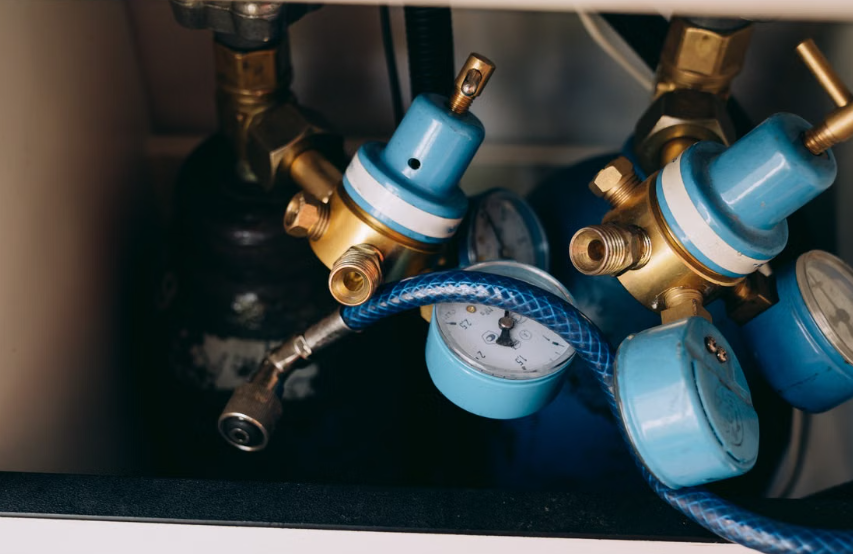
The table below gives recommended specifications for oil-free dental compressors at the standard operating pressure of 6 to 8 bar (87 to 116 PSI). These figures assume a typical dental instrument loadout per chair and include a 25 to 30% safety margin.
| Number of chairs | Recommended FAD (L/min) | Recommended FAD (CFM) | Tank size (litres) | Motor power |
|---|---|---|---|---|
| 1 | 80 to 100 | 2.8 to 3.5 | 30 to 50 | 1 to 1.5 HP |
| 2 | 130 to 170 | 4.6 to 6.0 | 50 to 100 | 1.5 to 2 HP |
| 3 | 200 to 260 | 7.0 to 9.2 | 100 to 150 | 2 to 3 HP |
| 4 to 5 | 280 to 380 | 9.9 to 13.4 | 150 to 250 | 3 to 5 HP |
| 6 to 8 | 400 to 550 | 14.1 to 19.4 | 250 to 500 | 5 to 7.5 HP |
| 10+ | 600+ | 21+ | 500+ | 7.5 to 10 HP (or dual compressors) |
For clinics with six or more chairs, consider a duplex system: two compressors piped in parallel with automatic lead-lag control. If one compressor goes down for service, the other keeps the clinic running. That redundancy is worth more than the extra cost the day your compressor fails at 9 AM on a Monday with a full book.
What tank size do you need?
The receiver tank is a buffer. It stores compressed air so that the compressor motor does not have to cycle on every time someone touches a handpiece. A larger tank means fewer motor starts per hour, longer cooling periods between cycles, and more stable pressure at the point of use.
The general guideline is 25 to 50 litres of tank capacity per dental chair. A busy three-chair practice should have at least a 100-litre receiver, and a 150-litre tank is better. The compressor cycles between a low setpoint (typically 6 bar) and a high setpoint (8 bar), and the tank holds enough volume to keep pressure above the low setpoint during peak demand bursts without the motor immediately restarting.
Undersized tanks cause short-cycling: the motor starts, runs for thirty seconds, stops, starts again. Each start draws a large inrush current and generates heat. Short-cycling is the fastest way to burn out a compressor motor and the contactors in the starter panel.
What does 4 CFM at 90 PSI mean?
CFM stands for cubic feet per minute and it measures the volume of air a compressor delivers. PSI stands for pounds per square inch and it measures the pressure at which that air is delivered. When a compressor is rated “4 CFM at 90 PSI,” it means the machine produces 4 cubic feet of air per minute while maintaining 90 PSI in the tank or at the outlet.
This distinction matters because CFM changes with pressure. The same compressor delivers more CFM at a lower pressure and less CFM at a higher pressure. A machine rated at 6 CFM at 40 PSI might only deliver 4 CFM at 90 PSI. Always compare compressor ratings at the same pressure, and always use the pressure your instruments actually need. For dental handpieces, the delivery pressure at the chair coupling is typically 2 to 2.5 bar (25 to 35 PSI), but the compressor runs at 6 to 8 bar to overcome line losses and maintain consistent delivery through the regulator.
In metric terms, 4 CFM is approximately 113 litres per minute, and 90 PSI is approximately 6.2 bar. Kenya’s market lists compressors in both unit systems depending on the manufacturer’s origin, so being comfortable with the conversion saves you from buying a machine rated in one system while your demand calculation used the other.
Types of medical air compressors
Not all compressors are suitable for dental or medical use. The air your patient breathes during a procedure, and the air that drives instruments inside their mouth, must be clean, dry, and oil-free. That limits your options to three compressor types.
Oil-free piston (reciprocating) compressors. These use PTFE-coated or carbon-ring piston seals instead of oil lubrication. They are the most common type in small to mid-sized dental clinics because they are affordable and widely available in Kenya. The trade-off is noise (typically 60 to 75 dB without sound enclosure) and a shorter service interval on the piston rings and valves compared to other types. Expect to rebuild the pump head every 3,000 to 5,000 hours of operation.
Oil-free scroll compressors. Two spiral elements compress air without contact, which makes them quieter (45 to 55 dB), more efficient, and longer-lasting than piston types. The purchase price is higher, but the reduced maintenance and lower noise make them the better long-term investment for any clinic with three or more chairs. Several brands available through Kenyan distributors offer scroll compressors sized for dental use.
Rotary screw compressors. These deliver continuous airflow at high volumes and are standard in hospitals, large multi-chair dental facilities, and medical air pipeline systems. They are the quietest of the three types and the most energy-efficient at scale, but they cost significantly more and require professional installation and maintenance. For a 10-chair dental centre or a hospital outpatient block, a rotary screw system is the right choice.
Whatever type you choose, the compressor must be oil-free. An oil-lubricated compressor produces air contaminated with oil aerosol. That oil ends up on instruments, in patients’ mouths, and in your suction lines. It is a clinical risk and a maintenance headache, and it violates medical air quality standards.
Sizing your suction system for multiple chairs
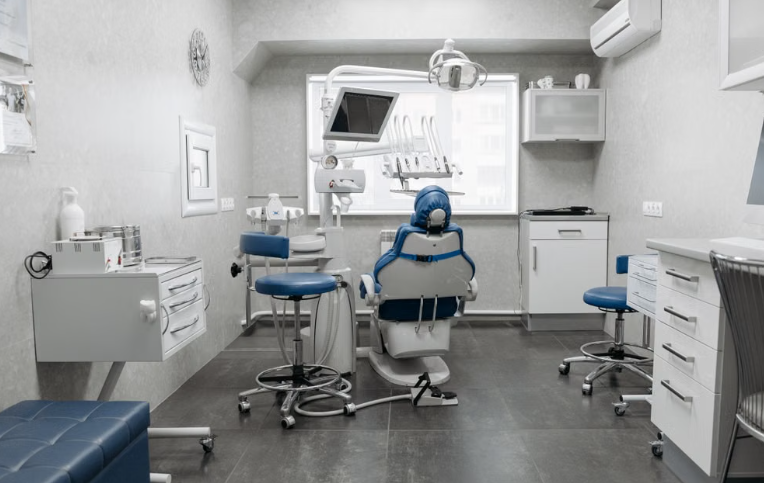
The suction side of the equation gets less attention than the compressor, but it deserves just as much. A properly sized suction system needs to maintain adequate vacuum at every active chair simultaneously.
The benchmark for high-volume evacuation (HVE) in dental applications comes from BS EN ISO 10637, which specifies a minimum flow rate of 250 litres per minute of air at a 16mm aspirator tip. The UK’s HTM 2022 Supplement 1 recommends 300 litres per minute per chair at the cannula connector for high-volume systems. In practice, most dental suction systems are designed to deliver between 250 and 350 litres per minute per active chair.
The critical word is “active.” Unlike compressor sizing, where a diversity factor reduces the total because not all chairs peak simultaneously, suction systems must deliver full flow to every chair that has a patient in it. If three of your five chairs are treating patients, the suction pump must produce enough vacuum flow for three full-capacity connections, not a reduced figure.
To size a suction pump, multiply the number of simultaneously active chairs by 300 L/min, then add 10 to 15% for line losses. A five-chair clinic that typically runs three chairs simultaneously needs at least 990 L/min of suction capacity (3 x 300 x 1.10). If you expect to run all five simultaneously during peak hours, size for 1,650 L/min.
Vacuum level also matters. Dental suction systems typically operate at 140 to 250 mbar of negative pressure (approximately 4 to 7.5 inches of mercury vacuum). Below 140 mbar, the HVE cannot clear the operative field effectively. Above 250 mbar, you risk pulling soft tissue into the tip. The suction pump’s rating should specify both flow rate and vacuum level at that flow rate, because a pump that hits 300 L/min at 100 mbar will not perform the same as one rated for 300 L/min at 200 mbar.
Wet suction vs dry suction: which should you choose?
Dental suction systems fall into two categories, and the choice affects your water bill, your maintenance schedule, and your environmental compliance.
Wet suction (water-ring pumps). These use a ring of water inside the pump housing to create the vacuum seal. They are quiet, reliable, and tolerate the occasional solid debris that enters the suction line without damage. The downside is water consumption: a wet pump uses 1 to 3 litres of water per minute while running, and that water goes down the drain mixed with whatever the pump evacuated from the patient’s mouth. In areas with water restrictions or expensive municipal water, the running cost adds up. Wet pumps also need a water separator (amalgam separator where required) before discharge.
Dry suction (dry vane or claw pumps). These create vacuum mechanically without water. They use less energy per unit of suction, produce no waste water, and have become the standard in new installations worldwide. The trade-off is that they are more sensitive to liquid and debris ingress, so they require an effective separator and filter on the suction line before the pump inlet. Dry claw pumps in particular are efficient and durable, with service intervals of 10,000+ hours in some models.
For a new dental clinic in Kenya, dry suction is the better choice unless your water supply is unusually cheap and reliable. The lower operating cost and reduced maintenance compensate for the higher purchase price within two to three years.
Piping, pressure drop, and installation mistakes
A correctly sized compressor feeding poorly designed pipework will still underperform. Pressure drop through the distribution system should stay below 0.5 bar (7 PSI) from the compressor outlet to the furthest chair. Anything more means you are losing the pressure you paid to produce.
The most common piping mistakes in Kenyan dental clinics are:
Undersized pipe diameter. Smaller pipes create more friction, which means more pressure drop. For a three-chair clinic, the main trunk line should be at least 15mm (1/2 inch) internal diameter. For five or more chairs, step up to 22mm (3/4 inch). Branch lines to individual chairs can drop to 10mm, but the trunk must be adequate for the total flow.
Excessive use of elbows and tees. Every fitting creates a pressure drop equivalent to several feet of straight pipe. A run with six tight 90-degree elbows wastes as much pressure as adding two extra metres of pipe. Use swept bends where possible and keep the layout as direct as the building allows.
No slope on the air lines. Compressed air lines should slope downward (1:100 gradient) away from the compressor toward drain points. Without this slope, condensate pools inside the pipes and eventually reaches the instruments. Suction lines have the reverse requirement: they should slope toward the pump so that liquids drain by gravity rather than pooling in low spots.
Plastic pipe where copper or aluminium is needed. PVC pipe is common because it is cheap, but standard PVC is not rated for compressed air. If a PVC joint fails under pressure, it shatters rather than splitting, sending fragments outward. Use copper, aluminium, or compressed-air-rated composite pipe for your air distribution. Suction lines are under negative pressure and can safely use PVC, but the joints must be solvent-welded and airtight.
Medical air vs dental air: what is the difference?
In a hospital context, “medical air” has a specific regulatory meaning. It refers to compressed air that meets pharmacopoeia standards for breathing-grade gas: oil-free, particulate-free, dewpoint below a specified threshold, and produced by a system with full redundancy and continuous monitoring. NFPA 99 in the US and ISO 7396-1 internationally define the requirements for medical air pipeline systems in hospitals.
Dental air is functionally the same gas, but the regulatory framework is lighter. Dental air drives instruments and the air-water syringe. It contacts the oral mucosa but is not typically delivered as a breathing gas through a mask or ventilator circuit. The compressor still needs to be oil-free, and the air should be filtered and dried, but the monitoring, redundancy, and quality testing requirements are less onerous than for a hospital medical air system.
The practical distinction matters when you are specifying equipment. A dental clinic does not need a duplex medical-grade air plant with automatic changeover and continuous dewpoint monitoring. It needs a reliable oil-free compressor with adequate filtration and a refrigerated or membrane dryer. Buying hospital-grade equipment for a three-chair dental practice wastes money without improving patient outcomes. Buying an unsuitable industrial compressor for a medical facility puts patients at risk.
ISO 7396-1 and NFPA 99: the standards your system should meet
Two international standards govern the design of medical gas pipeline systems, including compressed air and vacuum.
ISO 7396-1 covers the design, installation, and testing of medical gas pipeline systems. It applies to hospitals and healthcare facilities where compressed air and vacuum are piped to multiple points of use. The standard requires that medical air compressor systems include redundancy (at least two compressors, each capable of handling the full demand independently), automatic changeover between primary and standby units, and alarm systems for pressure deviation.
NFPA 99 is the US Healthcare Facilities Code. It classifies medical air systems by risk category and specifies requirements for air quality, compressor installation, and vacuum system performance. Level 1 systems (critical care areas) require the highest level of redundancy and monitoring. Level 3 systems (outpatient clinics) have reduced requirements but still mandate oil-free compression and basic alarm capability.
In Kenya, the Pharmacy and Poisons Board and the Kenya Medical Practitioners and Dentists Council do not explicitly mandate either standard for private clinics. However, both standards represent international best practice, and any clinic planning a piped medical air or vacuum system should design to ISO 7396-1 as a minimum. If you are building a new facility or expanding, your mechanical engineer should be specifying to this standard. If they are not, ask why.
Compressor and suction suppliers in Kenya
Several suppliers in Kenya stock dental and medical compressors and suction systems. Prices vary significantly depending on the type, brand, and whether the unit is new or refurbished.
| Supplier | Location | Equipment types | Price range (KSh) |
|---|---|---|---|
| Paula Medical Solutions | Nairobi | Dental compressors, suction units, portable and plant systems | 50,000 to 150,000 (portable units) |
| Atlas Copco Kenya | Nairobi | Oil-free scroll and rotary screw compressors, medical air systems | 500,000+ (medical-grade systems) |
| Prestige Industrial Services Ltd | Nairobi | Industrial and medical compressors, servicing | Varies by specification |
| Crown Healthcare | Nairobi | Dental chairs, compressors, suction units (bundled packages) | Contact for quote |
| Ryce East Africa Ltd | Nairobi | Compressors, vacuum pumps, pneumatic systems | Contact for quote |
| Acon Medical Supplies | Nairobi | Portable suction machines, dental compressors | 35,000 to 120,000 |
When comparing quotes, insist on FAD ratings at the operating pressure you need, not displacement figures. A compressor advertised as “200 L/min” might deliver only 140 L/min FAD at 8 bar after accounting for volumetric efficiency losses. Ask for the FAD figure specifically, and if the supplier cannot provide it, consider that a warning sign.
What a properly sized system actually costs
Dental clinic owners in Kenya typically underestimate the total cost of a compressed air and suction installation because they budget for the compressor alone and forget everything else. A complete system includes the compressor, the receiver tank (if not integrated), an air dryer, inline filters (particulate and coalescing), the distribution pipework, regulators at each chair, the suction pump, suction piping with separators, and installation labour.
For a three-chair dental clinic, budget approximately:
| Component | Estimated cost (KSh) |
|---|---|
| Oil-free dental compressor (2 to 3 HP, 100 to 150L tank) | 80,000 to 200,000 |
| Refrigerated air dryer | 40,000 to 80,000 |
| Inline filters (particulate + coalescing) | 10,000 to 25,000 |
| Copper/aluminium pipework and fittings | 30,000 to 60,000 |
| Suction pump (dry vane or claw, 3-chair capacity) | 100,000 to 250,000 |
| Suction piping and separators | 20,000 to 40,000 |
| Installation and commissioning | 30,000 to 60,000 |
| Total | 310,000 to 715,000 |
That range is wide because it spans from a basic piston compressor with PVC suction lines to a scroll compressor with copper air distribution and a claw-type suction pump. The lower end works for a startup practice that plans to upgrade later. The upper end is the right investment for a practice that intends to run the same system for ten years without major overhaul.
For perspective: the cost of replacing a compressor that burned out after two years of being undersized, including the lost revenue from the day or two the clinic cannot operate, often exceeds the difference between buying the right machine and buying the cheap one.
Get your compressor and suction system sized correctly
Jodroc supplies, installs, and services dental and medical compressor and suction systems across Kenya. We size the system to match your chair count, your instrument loadout, and your growth plans, not to match whatever happens to be sitting in a warehouse.
If you are setting up a new clinic, adding chairs to an existing practice, or replacing equipment that is no longer keeping up, talk to us before you buy. A fifteen-minute conversation about your requirements can save you from a five-year mistake.
Call us on 0705 213 438 or WhatsApp us for a free sizing consultation.
Frequently asked questions
How do I calculate the size of a compressor I need?
List every air-consuming device in your clinic, sum their peak consumption from manufacturer specs, multiply by a diversity factor (0.7 to 0.8 for small clinics, 0.4 to 0.6 for larger ones), then add a 25 to 30% safety margin. The result is your required Free Air Delivery (FAD) in litres per minute. Match that to a compressor that delivers at least that FAD at your operating pressure (typically 6 to 8 bar for dental applications).
What does 4 CFM at 90 PSI mean?
It means the compressor produces 4 cubic feet of air per minute at a pressure of 90 pounds per square inch. CFM measures volume flow and PSI measures pressure. The same compressor will deliver higher CFM at lower PSI and lower CFM at higher PSI, so always compare compressor ratings at the same pressure point.
What is the difference between medical air and surgical air?
Medical air is compressed ambient air, filtered and dried to pharmacopoeia standards, used for respiratory therapy and powering pneumatic medical devices. Surgical air (also called instrument air) is produced to the same quality standard but is dedicated to powering surgical tools in operating theatres. The gas is physically the same; the distinction is in the pipeline designation, the level of redundancy required, and the monitoring applied to each system.
What types of suction pumps are used in hospitals?
Hospitals typically use centralized vacuum systems with oil-lubricated rotary vane pumps, oil-free dry rotary vane pumps, or claw vacuum pumps piped to wall outlets throughout the facility. Portable suction units with electric diaphragm or piston pumps are used at the bedside and in emergency settings. Venturi-powered suction devices, which use compressed gas to generate vacuum, serve as backup or transport options.
What is suction pressure in a compressor system?
In a dental or medical context, suction pressure refers to the negative pressure (vacuum) generated by the evacuation pump, not the compressor. Dental suction systems operate at 140 to 250 mbar of vacuum (approximately 4 to 7.5 inches of mercury). This is the pressure below atmospheric that the pump maintains at the suction tip to evacuate fluids and aerosols from the operative field.
How many CFM per dental chair for suction?
High-volume evacuation requires approximately 300 litres per minute (10.6 CFM) per active dental chair at the cannula connector. This figure comes from HTM 2022 Supplement 1 and represents the flow rate needed for effective aerosol and fluid management during procedures. When sizing a suction pump, multiply this per-chair figure by the number of chairs you expect to run simultaneously, then add 10 to 15% for line losses.
Can I use the same compressor for dental instruments and a medical air supply?
For a standalone dental clinic, one oil-free compressor can serve both instrument air and the air-water syringe, provided it has adequate filtration and drying. For a hospital or facility that pipes medical air to patient breathing circuits, the medical air compressor must be a separate, dedicated system meeting ISO 7396-1 and your local regulatory requirements. Mixing instrument air and breathing-grade medical air on the same compressor is not compliant with international standards.
What is the lifespan of a dental compressor?
An oil-free piston compressor typically lasts 5,000 to 10,000 hours of run time before needing a major rebuild (pump head overhaul). At a 60% duty cycle over an 8-hour working day, that is roughly 6 to 12 years. Scroll compressors last longer, often 15,000 to 20,000 hours, because there is less mechanical wear. The lifespan depends heavily on correct sizing (undersized compressors die sooner), ambient temperature, and maintenance compliance.