
How to Equip a Small Hospital Theatre: The 2026 Numbers, Itemised
Short answer: to equip a small hospital theatre in Kenya, budget about KES 1.8 million for a minor operations theatre, KES 8.7 million for a single general theatre capable of anaesthesia, and KES 18.2 million for a general theatre plus a maternity theatre. Roughly a quarter of that goes on services behind the wall rather than on equipment in the room.
Figures are indicative market ranges for 2026, not a price list. Ask for a quotation against your actual room and surgical list before committing a budget.
Ask how to equip a small hospital theatre and every published price list gives you the same four things: the table, the light, the monitor and the suction. Add those four at Kenyan prices and you get about KES 885,000, which is why you will read that a core surgical setup costs between KES 800,000 and KES 1.5 million.
That number is right about the furniture and wrong about the theatre. On the same build, the piped medical gas, the suction plant, the medical air, the ventilation and the backup power come to roughly KES 2 million on their own. None of it appears on any equipment quotation, and all of it has to exist before a surgeon can operate.
This guide answers how to equip a small hospital theatre three ways, line by line, and puts the room services where they belong, at the front. We install and commission this equipment across Kenya, Tanzania and Uganda, including the gas manifolds, so the sequencing advice comes from jobs rather than from a brochure.
What it costs to equip a small hospital theatre in 2026
Three builds, sized by what you intend to operate on rather than by floor area. The middle column is what most small and mission hospitals mean when they ask how to equip a small hospital theatre.
| Build | Equipment | Room and everything else | Total |
|---|---|---|---|
| Minor operations theatre Local and regional anaesthesia. Suturing, incision and drainage, minor excisions, dressings. | KES 1,262,500 | KES 559,000 | KES 1,821,500 |
| General theatre One table, general anaesthesia, recovery bay. The standard small-hospital build. | KES 6,592,000 | KES 2,130,000 | KES 8,722,000 |
| General plus maternity Two theatres, caesarean capable, neonatal resuscitation, ventilator. | KES 13,793,000 | KES 4,450,000 | KES 18,243,000 |
Ranges reflect the Kenyan market in 2026. “Room and everything else” covers theatre fit-out, registration, waste contracts, commissioning and three months of working capital.
Why the core setup price leaves out the theatre
Take the general theatre column and separate what stands in the room from what runs behind the wall.
| What you can see | Cost | What you cannot see | Cost |
|---|---|---|---|
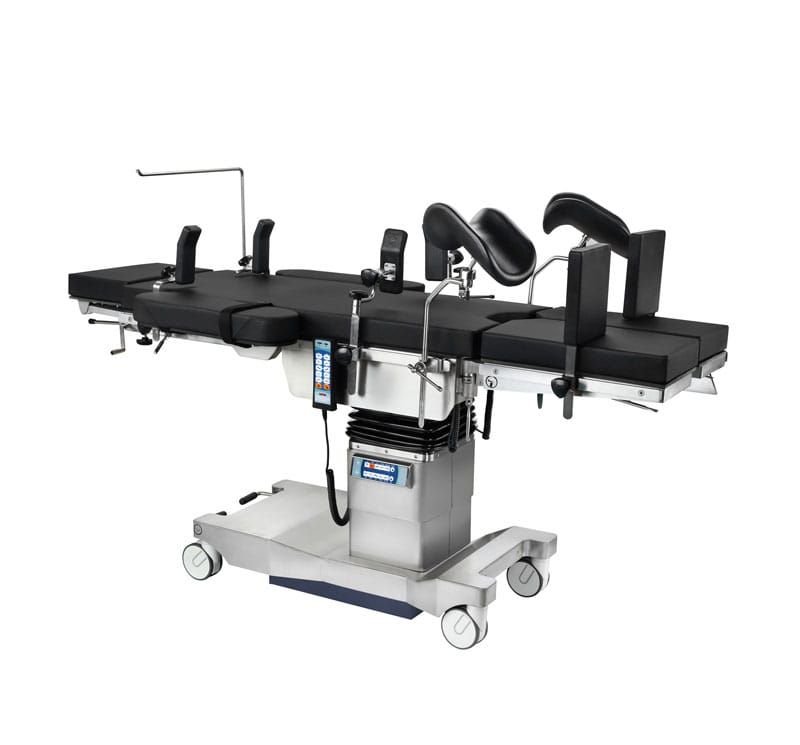
| Operating table | 300,000 | Piped medical gas and outlets | 420,000 |
| Theatre light | 320,000 | Central suction plant | 280,000 |
| Patient monitor | 180,000 | Medical air compressor | 240,000 |
| Suction unit | 85,000 | Theatre ventilation and extraction | 650,000 |
| Subtotal | 885,000 | Backup power and UPS | 420,000 |
| Subtotal | 2,010,000 |
The visible half is the half that gets quoted. The invisible half costs more than twice as much, and a theatre without it is a room with a table in it. Anaesthesia is the clearest example: an anaesthesia machine at KES 899,000 is useless without a gas supply, a scavenging route for waste gases and power that does not drop mid-case.
This is the single most common reason a theatre project overruns in our experience. The equipment budget is approved, the services are discovered during the fit-out, and the money for them comes out of the recovery bay or the second instrument set.
The room comes before the equipment
The first thing to understand about how to equip a small hospital theatre is that five decisions about the room govern whether the equipment you buy can be used at all. All five are cheaper to build than to retrofit, and all five have to be designed before the floor goes down.
Ventilation and air changes. A theatre needs controlled air movement, positive pressure relative to the corridor, and filtration. This is the most expensive single service and the one most often value-engineered out, usually by someone who has not been asked to defend it at an inspection. Budget from KES 650,000 for a single theatre.
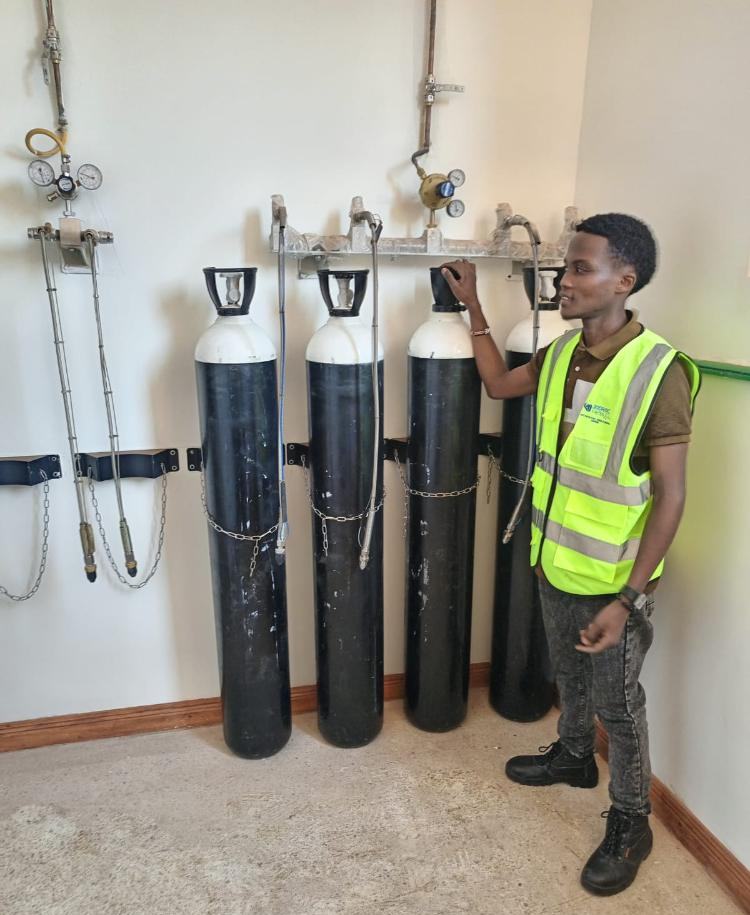
Medical gas outlets. Oxygen, nitrous oxide, medical air and vacuum, terminating at outlets positioned for where the anaesthetist will stand rather than where the wall is convenient. Pipe runs are cheap in an open ceiling and painful afterwards.
Waste anaesthetic gas scavenging. Anaesthesia machines produce waste gas that has to leave the room. Scavenging is a duct decision, not an equipment decision, and it is routinely forgotten until the machine is delivered.
Power that does not drop. A theatre needs a dedicated circuit, backup generation and a UPS on the anaesthesia machine and monitor specifically. A power cut during a case is not an inconvenience.
Surfaces and doors. Coved flooring with sealed joints, washable walls, and doors wide enough to pass a trolley with a patient and a drip stand on it. Measure the doorway before ordering the table.
Full operating theatre equipment list
Here is everything needed to equip a small hospital theatre, grouped by zone, because that is how the room is built and how an inspector walks it. Every line links to the category page.
| Zone | Item | Minor | General | Gen + maternity |
|---|---|---|---|---|
| The table | Operating table and accessories | 220,000 | 300,000 | 760,000 |
| Theatre light | 85,000 | 320,000 | 540,000 | |
| Diathermy or electrosurgery unit | Not included | 200,000 | 240,000 | |
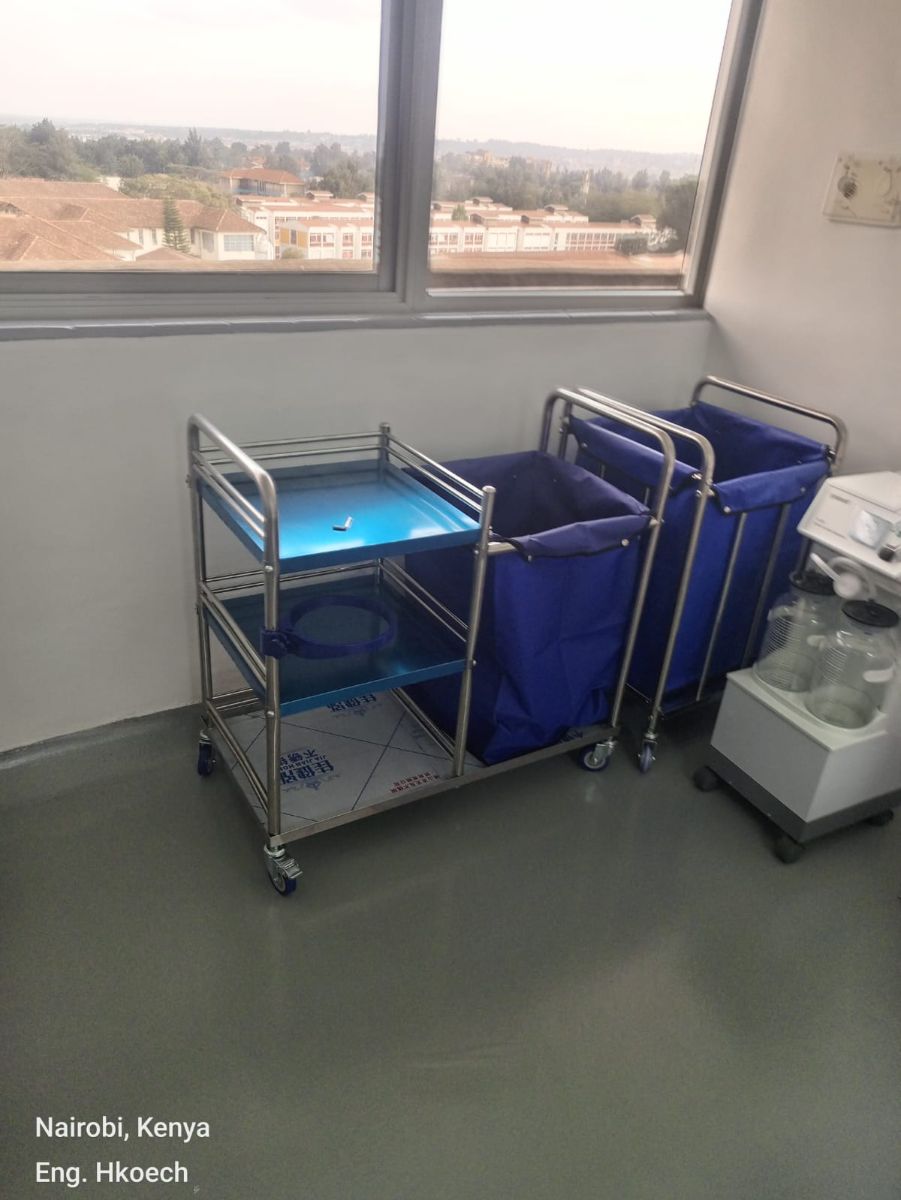
| Instrument and dressing trolleys | 20,000 | 45,000 | 85,000 | |
| Screens, curtains and rails | 18,000 | 42,000 | 78,000 | |
| Anaesthesia and monitoring | Anaesthesia machine | Not included | 899,000 | 1,798,000 |
| Patient monitor | 55,000 | 180,000 | 530,000 | |
| Ventilator | Not included | Not included | 850,000 | |
| Infusion and syringe pumps | Not included | 120,000 | 280,000 | |
| Defibrillator | Not included | 260,000 | 320,000 | |
| Resuscitators and bag valve masks | 12,000 | 28,000 | 62,000 | |
| Services behind the wall | Piped medical gas and outlets | Not included | 420,000 | 880,000 |
| Central suction plant | Not included | 280,000 | 460,000 | |
| Medical air compressor | Not included | 240,000 | 420,000 | |
| Theatre ventilation and extraction | Not included | 650,000 | 1,400,000 | |
| Backup power and UPS | 140,000 | 420,000 | 900,000 | |
| Gas supply | Oxygen cylinders and manifold | 65,000 | 240,000 | 420,000 |
| Regulators and flowmeters | 22,000 | 65,000 | 120,000 | |
| Portable suction, twin electric | 19,500 | 85,000 | 170,000 | |
| Sterilisation | Steam steriliser | 180,000 | 420,000 | 760,000 |
| Washer-disinfector | Not included | 260,000 | 380,000 | |
| Instrument trays and cassettes | 35,000 | 95,000 | 160,000 | |
| Sharps and waste handling | 18,000 | 38,000 | 65,000 | |
| Scrub sinks | 55,000 | 140,000 | 240,000 | |
| Instruments and furniture | Surgical instrument sets | 120,000 | 340,000 | 620,000 |
| Scalpels, blades and sutures | 18,000 | 45,000 | 85,000 | |
| Stainless steel casework | 65,000 | 180,000 | 320,000 | |
| Emergency and crash trolley | 45,000 | 95,000 | 190,000 | |
| Recovery beds and bedside units | 70,000 | 185,000 | 420,000 | |
| Delivery bed | Not included | Not included | 240,000 | |
| Subtotal | 1,262,500 | 6,592,000 | 13,793,000 |
All figures in Kenya Shillings, excluding VAT and delivery outside Nairobi.
Send us the room and the surgical list, not a shopping list. Tell us the floor area, the ceiling void, the power supply and what you intend to operate on. We will come back with an itemised specification for that theatre, delivered, installed and commissioned.
Get a specification on WhatsApp Or send the details in writing
Cylinders, manifold or plant: the medical gas decision
This choice sets your running costs for the next decade, and it is usually made too quickly.
Cylinders at the point of use suit a minor theatre and nothing larger. Capital cost is low, the cylinder trolley is visible in the room, and somebody has to change a cylinder mid-list eventually. Budget from KES 65,000.
A manifold with piped outlets is the standard answer for a single general theatre. Two banks of cylinders sit in a store outside the theatre, one in use and one in reserve, with automatic changeover and piped runs to the outlets. Capital from about KES 660,000 including the pipework, and the cylinders keep coming from your supplier.
An oxygen plant generates on site and only pays back at volume. For a small hospital it usually does not, and the maintenance burden is real. Revisit it when your monthly cylinder bill starts to look like a loan repayment.
Whichever you choose, the outlets need to be positioned around the anaesthetist and the pipework needs testing and certification before first use. That is a commissioning task with paperwork attached, not a plumbing job.
Ask about medical gas on WhatsApp
Sizing sterilisation to the surgical list
Theatre sterilisation is sized by turnaround, not by the number of instruments. The question is how many sets you need in circulation so that a second case can start while the first case’s instruments are being reprocessed.
A steam cycle plus washing, packing and drying runs to well over an hour. On a four-case list that means at least three sets of the common instruments, and a hospital that buys two will spend its mornings waiting for the autoclave.
| Cases per list | Instrument sets in circulation | Steriliser capacity |
|---|---|---|
| 1 to 2 | 2 sets | Benchtop, 23 to 45 litres |
| 3 to 5 | 3 to 4 sets | Horizontal, 60 to 100 litres |
| 6 or more, or two theatres | 5 or more sets | Horizontal 100 litres plus, with a washer-disinfector |
The washer-disinfector is the item most often cut from a first budget and the one that most changes how a theatre runs, because manual cleaning is the slowest and least consistent step in the whole chain.
What a minor theatre can leave out
A minor operations theatre is the cheapest honest way to equip a small hospital theatre, and it is a legitimate build rather than a compromised general one, provided you are clear about what it will not do.
It leaves out the anaesthesia machine, the ventilator, the defibrillator, the piped gases and the theatre ventilation plant, which is why it costs KES 1.8 million rather than KES 8.7 million. What it keeps is a table, a light, portable suction, monitoring, sterilisation and a crash trolley.
The line you cannot blur is general anaesthesia. Once you are inducing, you need the gas supply, the scavenging, the monitoring, the backup power and the recovery bay, and at that point you are building the general theatre whether the budget says so or not. Deciding this early is worth more than any discount you will negotiate later.
The order to build in
Sequence saves more money than negotiation does when you equip a small hospital theatre, because the services are buried and the equipment is not.
- Design the ventilation, gas pipework, scavenging and drainage before the ceiling and floor are closed. This is the whole game. Everything else can be bought later at roughly the same price.
- Fit the floors, doors and scrub sinks. Coved flooring and a doorway that passes a loaded trolley are decisions, not details.
- Install the table, light and gas outlets together, because their positions depend on each other and on where the anaesthetist stands.
- Commission the anaesthesia machine, monitor and backup power as one system, and test them under load rather than individually.
- Buy instrument sets in the quantity the list needs, then the recovery beds, then anything else.
Most of the equipment we are asked to fix was chosen well and specified badly. It fitted the brochure, not the room. That is why we would rather spend an afternoon measuring than send a catalogue.
Jodroc Limited, on how we quote
What it costs to keep a theatre running
Knowing how to equip a small hospital theatre is one number. The monthly one decides whether the theatre stays open.
| Ongoing cost | Typical monthly range |
|---|---|
| Medical gases and cylinder refills | KES 25,000 to 180,000 |
| Consumables, drapes and PPE | KES 60,000 to 300,000 |
| Theatre staff, scrub and anaesthetic | KES 180,000 to 600,000 |
| Electricity, water and generator fuel | KES 35,000 to 140,000 |
| Licensed medical waste collection | KES 15,000 to 70,000 |
| Equipment service and calibration contract | KES 25,000 to 90,000 |
The service contract matters more in a theatre than anywhere else in a hospital, because a failed anaesthesia machine or a dead theatre light cancels a list rather than slowing it. We service equipment we did not supply, so taking out a contract does not mean changing supplier. A theatre also puts the facility at Level 3A or above under KMPDC’s categorisation, which carries its own staffing and equipment-upkeep scoring; see our guide to KMPDC facility licensing requirements for what inspectors check at that level.
Get your theatre specified
Tell us the room and the list. We will specify the theatre that does it.
Send the floor area, the ceiling void, the power supply, and the procedures you intend to run, and we will work out how to equip a small hospital theatre for your case rather than for an average one. You get back an itemised specification and quotation for that theatre, with delivery, installation and commissioning inside the figure rather than added afterwards. Our own engineers do the install, including the gas manifold, in Kenya, Tanzania and Uganda.
Send the details on WhatsApp Request a quote in writing
Also planning other departments? See our guides to the cost of starting a medical laboratory in Kenya and the cost of setting up a dental clinic in Kenya.
Frequently asked questions
How much does it cost to equip a small hospital theatre in Kenya?
A minor operations theatre costs about KES 1.8 million to equip. A single general theatre capable of general anaesthesia costs about KES 8.7 million. A general theatre plus a maternity theatre costs about KES 18.2 million. Roughly a quarter of each figure is services behind the wall rather than equipment in the room.
What equipment is needed in an operating theatre?
An operating theatre needs an operating table, a theatre light, an anaesthesia machine, a patient monitor, a diathermy or electrosurgery unit, suction, a defibrillator, resuscitation equipment, instrument and dressing trolleys, surgical instrument sets, scrub sinks, a steam steriliser, sharps and waste handling, and a crash trolley. It also needs piped medical gas, ventilation, scavenging and backup power, which are services rather than equipment.
How much does an operating table cost in Kenya?
A hydraulic operating table costs between KES 220,000 and KES 260,000 in Kenya. A standard electric table costs about KES 300,000, and a full-feature electric theatre table runs from KES 450,000. Accessories such as arm boards, leg supports and lateral positioners are usually quoted separately.
How much does an anaesthesia machine cost in Kenya?
An anaesthesia machine costs from about KES 899,000 to KES 1,000,000 in Kenya for a machine suited to a small hospital theatre. The machine is only part of the cost, because it requires a medical gas supply, waste gas scavenging and uninterrupted power to be usable.
What is the difference between a minor theatre and a general theatre?
A minor operations theatre handles procedures under local or regional anaesthesia and needs no anaesthesia machine, piped gases or theatre ventilation plant. A general theatre supports general anaesthesia and therefore requires a gas supply, scavenging, monitoring, backup power and a recovery bay. That difference is roughly KES 7 million.
Do I need piped medical gas or are cylinders enough?
Cylinders at the point of use suit a minor theatre. A single general theatre is normally served by a manifold with two cylinder banks and automatic changeover, piped to outlets in the theatre, costing from about KES 660,000 including pipework. An on-site oxygen plant only pays back at volumes a small hospital rarely reaches.
How many instrument sets does a small theatre need?
Two sets for a list of one to two cases, three to four sets for three to five cases, and five or more once you are running six cases or two theatres. The constraint is reprocessing time, because a steam cycle plus washing, packing and drying takes well over an hour.
What is usually forgotten when equipping a hospital theatre?
Waste anaesthetic gas scavenging, theatre ventilation, a UPS on the anaesthesia machine and monitor, and a doorway wide enough to pass a loaded trolley. All four are decided during the fit-out and are expensive to add afterwards.
Does a hospital theatre need SHA empanelment?
Yes, if the hospital or surgical centre plans to see SHA-insured patients. SHA empanelment for a hospital is a separate application from KMPDC registration and requires the KMPDC facility licence, county public health certificate and a licensed waste disposal contract. Processing takes two to four weeks through the SHA provider portal at sha.go.ke. A surgical facility that is KMPDC-licensed but not SHA-empanelled cannot bill SHA directly, so plan the application for the week after the KMPDC licence arrives.
What does a C-arm cost in Kenya, and does a small theatre need one?
A mobile C-arm for intraoperative imaging costs from KES 2.5 million for a refurbished unit to KES 8 million or more for a new mid-range system in Kenya. A minor theatre that handles soft-tissue procedures and no orthopaedic or vascular work can operate without one. A general theatre planning trauma surgery, nail insertion or any implant work where intraoperative position needs to be confirmed will need either a C-arm or a referring arrangement with a facility that has one. Budget for it in phase two if it is not in your opening surgical list.
Sources
- Kenya Medical Practitioners and Dentists Council, health facilities
- KMPDC, licensing of a health facility
- Pharmacy and Poisons Board, registration of medical devices and establishments
- Social Health Authority, facility empanelment
Reviewed August 2026. Equipment prices move with the shilling and with shipping, and facility requirements differ by registration level, so ask for a current quotation and check the checklist matching your category before committing to a budget. This article is general guidance, not financial, clinical or legal advice.
Pricing individual theatre equipment? See our guides to anaesthesia machine prices, patient monitor prices, defibrillator prices, infusion pump prices and autoclave prices in Kenya.