
Defibrillator Price in Kenya: The 2026 Numbers
Short answer: an automated external defibrillator (AED) price in Kenya runs about KES 120,000 to 160,000. A manual biphasic defibrillator-monitor, the type a theatre or ICU actually needs, runs KES 260,000 to 550,000 depending on whether it is a general-theatre unit or a full ICU and ambulance-spec unit with pacing and a printer. Most general theatres buying new in 2026 land near KES 280,000 to 320,000.
Figures are indicative market ranges for 2026, not a price list. Ask for a quotation against your use case before committing a budget.
A defibrillator price in Kenya is quoted as one number far more often than the market actually supports. Search for it and you will find listings from under KES 150,000 to well over KES 500,000, and most of that spread is not brand markup. It is two genuinely different machines sharing one name. An AED and a manual biphasic defibrillator-monitor both shock a heart out of a lethal rhythm, but they are built for different users, different settings and different budgets, and quoting one price for both hides more than it reveals.
We supply and install both types across Kenya, Tanzania and Uganda, so the figures below come from what we quote for a new, supported unit, cross-checked against current open-market listings. Where a single figure would blur a real distinction, we split it instead.
What is the defibrillator price in Kenya in 2026?
Three real tiers, split by what the device is built to do rather than by brand.
| Tier | What it is | Price |
|---|---|---|
| AED | Automated external defibrillator, voice-prompted, no manual override | KES 120,000 to 160,000 |
| Manual biphasic, general theatre | Manual override, ECG display, pads or paddles | KES 260,000 to 320,000 |
| Manual biphasic, ICU and ambulance spec | Adds synchronised pacing, printer, extended monitoring | KES 380,000 to 550,000 |
Ranges reflect the Kenyan market in 2026, cross-checked against our own supply figures and current open-market listings. All figures exclude VAT and delivery outside Nairobi.
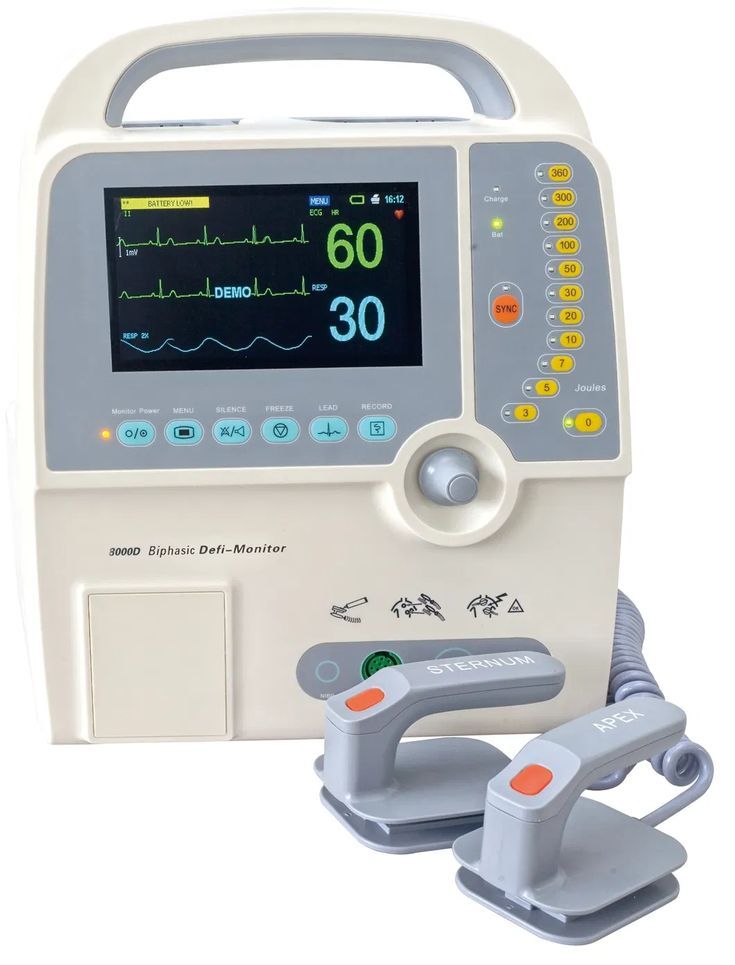
AED vs manual biphasic defibrillator-monitor
The gap between KES 150,000 and KES 500,000 is not inflation. It is two different machines.
- An AED reads the heart rhythm itself, tells the user through voice prompts whether to shock, and will not deliver a shock on a rhythm that does not need one. It needs minimal training and is built for a receptionist, a security guard or a gym staff member to use on the worst day of someone’s life. It has no manual override and no continuous ECG screen.
- A manual biphasic defibrillator-monitor gives a clinician a live ECG trace and lets them choose the energy level and the moment of the shock themselves. It is what a theatre, ICU or ambulance crew needs, because clinical staff are already reading the rhythm and the device has to follow their judgement, not replace it.
Buying a hospital-grade manual unit for a reception desk is over-specifying, and the reverse, an AED on a theatre crash trolley, is under-specifying in a way that will not come up until the day it matters. The defibrillator price in Kenya only makes sense once you know which of these two you are actually pricing.
Tell us the setting, not a model number. Front desk, ward crash trolley, theatre or ICU? We will quote the unit that setting actually needs.
Get a defibrillator quote on WhatsApp Or send the details in writing
Which one your facility actually needs
The defibrillator price in Kenya that applies to you depends on the setting, not the budget.
- Choose an AED for a reception area, gym, school, church or any public-access point where the first person on scene is unlikely to be clinically trained.
- Choose a general-theatre manual biphasic unit for a theatre, recovery bay or general ward crash trolley staffed by clinicians who can read a rhythm themselves.
- Choose an ICU and ambulance-spec unit only where pacing and continuous monitoring are part of how the case is actually managed, which is an ICU, a cardiac unit or a response vehicle rather than a general ward.
Our own theatre equipping figures, covered in how to equip a small hospital theatre, quote a defibrillator at KES 260,000 for a general theatre and KES 320,000 where maternity and obstetric cases are also covered. Both sit inside the general-theatre manual tier above. Facilities asking about the higher ICU and ambulance-spec figures are usually pricing a different brief, not a better version of the same one.
Pads, batteries and the cost people forget
The purchase price buys the unit. Keeping it ready to fire buys itself a recurring line every budget cycle.
| Ongoing cost | Typical range |
|---|---|
| Adult pads, replacement set | KES 8,000 to 20,000 |
| Paediatric pads, replacement set | KES 10,000 to 22,000 |
| Battery, replacement | KES 12,000 to 35,000 |
| Annual function check and calibration | KES 6,000 to 20,000 per unit |
Pads and batteries both carry an expiry date even if the device is never used, and an expired pad is a device that fails the one time it is needed. See how often medical equipment should be calibrated for where a defibrillator’s function check sits on the wider schedule, and our guide to defibrillator testing and compliance in Kenya for what that check actually covers.
The standard a defibrillator is built to
Cardiac defibrillators sold in Kenya should be built to IEC 60601-2-4, the particular standard covering basic safety and essential performance for this equipment class. Asking a seller which standard their unit is certified against, and whether it carries a current KEBS import certificate, is a reasonable question before buying, and one a brochure rarely volunteers.
Most of the equipment we are asked to fix was chosen well and specified badly. It fitted the brochure, not the crash trolley. That is why we would rather spend an afternoon on the use case than send a catalogue.
Jodroc Limited, on how we quote
Training is part of the real cost
A defibrillator that staff have never practised on costs the same on paper and a great deal more in the moment it is needed. An AED is designed to need almost none, which is the entire case for putting one at a reception desk. A manual unit needs the opposite: staff who can read the rhythm it is showing them and act inside the window that matters. Budget a short on-site training session into the purchase rather than treating the device as self-explanatory once it is unboxed.
Get your defibrillator quoted
Tell us the setting. We will quote the unit it actually needs.
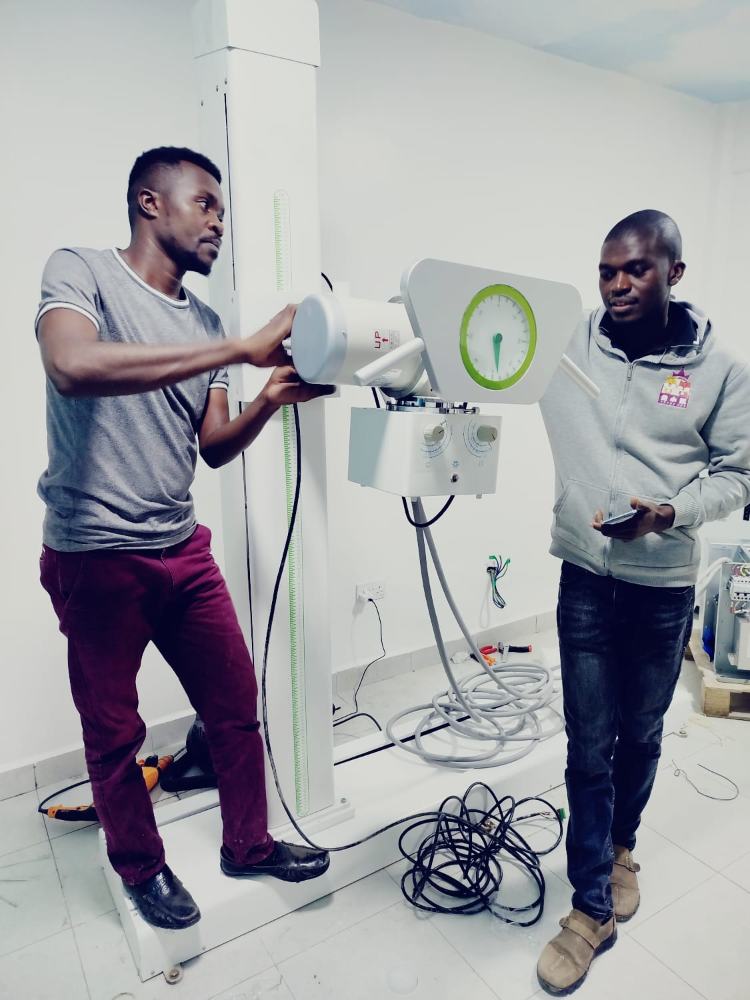
Send the setting, whether clinical staff will be operating it, and whether pacing or an ambulance-spec unit is part of the brief. You get back an itemised quotation for that specific need, with pads, a wall bracket or trolley, delivery and a staff handover session inside the figure rather than added afterwards. Our own engineers do the install and the training, in Kenya, Tanzania and Uganda.
Send the details on WhatsApp Request a quote in writing
Specifying a whole theatre rather than one device? See how to equip a small hospital theatre, or our guides to anaesthesia machine prices in Kenya and patient monitor prices in Kenya if you are equipping the whole room.
Frequently asked questions
How much does a defibrillator cost in Kenya?
The defibrillator price in Kenya splits into two real tiers. An AED runs about KES 120,000 to 160,000. A manual biphasic defibrillator-monitor for a theatre or ICU runs KES 260,000 to 550,000 depending on whether it is a general-theatre unit or a full ICU and ambulance-spec unit with pacing.
What is the difference between an AED and a manual defibrillator?
An AED reads the rhythm itself and talks a user through the shock, with no manual override, designed for untrained first responders. A manual biphasic defibrillator-monitor gives a clinician a live ECG and lets them choose the energy and timing themselves, which is what theatres, ICUs and ambulances actually need.
Why do defibrillator prices in Kenya vary so much?
Mostly because “defibrillator” covers two different products. An AED and a hospital-grade manual unit are priced far apart because they are built for different users, not because one listing is a better deal than another.
Does an AED need a trained operator?
No. An AED is designed for minimal training, with voice prompts that guide an untrained user through the process and a built-in rhythm check that prevents a shock when one is not needed.
How often should a defibrillator be tested?
Most facilities run a function check at least annually, alongside routine checks on pad and battery expiry dates. See our guide to defibrillator testing and compliance in Kenya for the full schedule.
What standard governs defibrillators sold in Kenya?
Cardiac defibrillators should be built to IEC 60601-2-4, the particular standard for basic safety and essential performance of this equipment class, and should carry a current KEBS import certificate.
Sources
The defibrillator price in Kenya figures above were reviewed October 2026, cross-checked against our own supply figures and current Kenyan market listings. Equipment prices move with the shilling and with shipping, so ask for a current quotation before committing to a budget. This article is general guidance, not financial or legal advice.
Pricing other theatre equipment? See our guides to anaesthesia machine prices in Kenya and patient monitor prices in Kenya.