
Patient Monitor Price in Kenya: The 2026 Numbers
Short answer: a patient monitor price in Kenya runs from about KES 55,000 for a basic NIBP, SpO2 and pulse unit to KES 530,000 for a full multiparameter monitor with EtCO2 and invasive pressure. Most general theatres and wards buying new in 2026 land near KES 180,000.
Figures are indicative market ranges for 2026, not a price list. Ask for a quotation against your parameter list before committing a budget.
A patient monitor price in Kenya is one of the few medical equipment questions where the open market actually shows numbers, used listings and classified ads included. The problem is not that nobody prices it. The problem is that the figures you find are rarely for the same thing twice: a basic vitals stand, a five-parameter ward monitor and a full ICU unit all get called a “patient monitor,” and they are not within shouting distance of each other on price.
We install and service patient monitors across Kenya, Tanzania and Uganda, so the figures below come from what we quote for a new, supported unit, cross-checked against what is currently listed in the open market. Where the two disagree, we say so rather than pretending they match.
What is the patient monitor price in Kenya in 2026?
Three real tiers, priced by parameter count rather than by brand. The middle tier is what most general wards and theatres should budget for.
| Tier | Parameters | Price |
|---|---|---|
| Basic | NIBP, SpO2, pulse rate, single-lead ECG trace | KES 55,000 to 90,000 |
| Standard | 5 to 7 parameters: ECG, SpO2, NIBP, respiration, temperature | KES 130,000 to 210,000 |
| Advanced | Full multiparameter with EtCO2 and invasive blood pressure | KES 400,000 to 530,000 |
Ranges reflect the Kenyan market in 2026, cross-checked against our own supply figures and current open-market listings. All figures exclude VAT and delivery outside Nairobi.
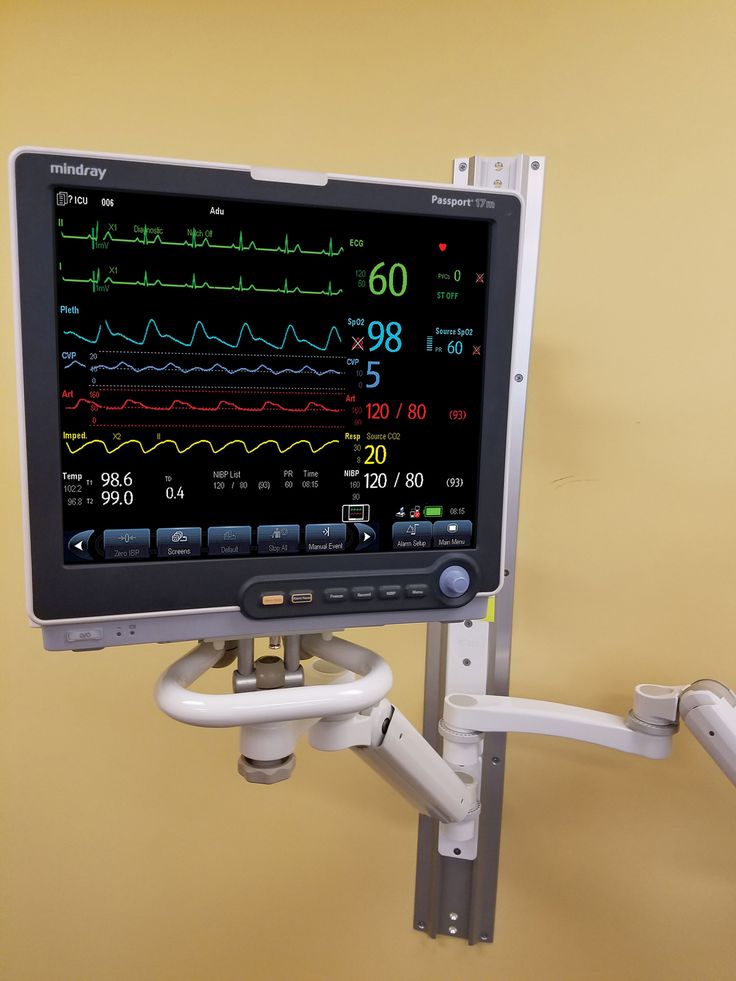
What each parameter adds to the price
The patient monitor price in Kenya moves almost entirely on parameter count and parameter type, not on the display size or the brand sticker.
- ECG, SpO2 and NIBP are the baseline three on nearly every monitor sold, including the cheapest ones, and they are what most general wards actually use day to day.
- Respiration and temperature add relatively little to the price and are standard on most mid-range units.
- EtCO2 (capnography) is the parameter that moves a monitor out of the standard tier on its own. It requires a separate sensor and sampling line, and it is close to mandatory for anaesthesia and sedation work, optional for a general ward.
- Invasive blood pressure (IBP) needs a pressure transducer module and is almost exclusively an ICU, theatre or high-dependency requirement rather than a ward one.
Buying a monitor with parameters you will not use is the single most common overspend we see. A general ward rarely needs EtCO2 or IBP. A theatre monitoring general anaesthesia almost always needs EtCO2 at minimum.
Tell us the department, not a model number. Ward, theatre or ICU? We will quote the parameter set that department actually uses, not the one with the most features on the spec sheet.
Get a patient monitor quote on WhatsApp Or send the details in writing
Why some market listings undercut this range, and what that buys you
Search further and you will find patient monitor listings in Kenya below KES 50,000, sometimes as low as KES 30,000. That number is real for what it buys, which is usually a refurbished or imported-used unit with no local service history and a warranty that may or may not survive the first fault. It is not a comparable figure to the KES 55,000 entry tier above, which is for a new unit sold with support in Kenya.
A cheap monitor that cannot be serviced locally is not a saving the first time it fails during a shift. If you are buying used to stretch a budget, ask specifically whether parts and service are available in Kenya for that model before the price decides it for you.
Patient monitor vs standalone ECG machine
A patient monitor’s ECG parameter gives a continuous trace for ongoing monitoring. It is not a replacement for a diagnostic 12-lead ECG machine, which captures a full diagnostic recording for interpretation rather than a running trace. Facilities sometimes try to use one for the other’s job, and it does not work in either direction. If you are deciding between the two or need both, our guide to patient monitor and ECG calibration in Kenya covers the distinction and what each needs to stay accurate once it is in service.
What it costs to keep a monitor running
The purchase price is one number. The consumables and calibration are the ones that recur.
| Ongoing cost | Typical range |
|---|---|
| NIBP cuffs and SpO2 probes, replacement | KES 3,000 to 15,000 each |
| ECG electrodes, per month at moderate use | KES 2,000 to 8,000 |
| EtCO2 sampling lines, per month | KES 5,000 to 18,000 |
| Annual calibration and service | KES 8,000 to 30,000 per unit |
A monitor that has never been calibrated against a reference is not automatically wrong, but nobody can tell you whether it is right either. See how often medical equipment should be calibrated for where patient monitors sit on that schedule.
The standard a patient monitor is built to
Multifunction patient monitoring equipment is built to IEC 80601-2-49, the particular standard covering accuracy and essential performance for the combined parameters on one monitor. A standalone ECG channel is covered separately under IEC 60601-2-27. Asking a seller which standard their monitor is certified against is a reasonable question before buying, and one a brochure rarely answers unprompted.
Most of the equipment we are asked to fix was chosen well and specified badly. It fitted the brochure, not the ward. That is why we would rather spend an afternoon on the parameter list than send a catalogue.
Jodroc Limited, on how we quote
Which parameters you actually need
Your department decides the right tier, not your budget ceiling.
- Choose basic for a general ward doing routine observation, where NIBP, SpO2 and pulse cover what nursing staff actually chart each round.
- Choose standard for a general theatre, recovery bay or higher-acuity ward, where respiration and temperature trending matter and a five to seven parameter set is the normal specification.
- Choose advanced only for anaesthesia, ICU or high-dependency care, where EtCO2 and invasive pressure are part of how the case is actually managed, not a nice-to-have.
Get your parameter list quoted
Tell us the department. We will quote the parameters it uses.
Send the department, how many beds or bays need monitoring, and whether anaesthesia or ICU-level parameters are part of the brief. You get back an itemised quotation for that specific need, with delivery, installation and commissioning inside the figure rather than added afterwards. Our own engineers do the install, in Kenya, Tanzania and Uganda.
Send the details on WhatsApp Request a quote in writing
Specifying a whole theatre rather than one monitor? See how to equip a small hospital theatre, or our guide to anaesthesia machine prices in Kenya if the monitor is pairing with one.
Frequently asked questions
How much does a patient monitor cost in Kenya?
A patient monitor price in Kenya runs from about KES 55,000 for a basic NIBP, SpO2 and pulse unit to KES 530,000 for a full multiparameter monitor with EtCO2 and invasive pressure. Most general wards and theatres should budget near KES 180,000.
Why do some patient monitor listings in Kenya look much cheaper?
Listings under KES 50,000 are usually refurbished or imported-used units with no confirmed local service history. That can be a reasonable purchase for a tight budget, but it is a different product from a new, locally supported unit, and the two prices are not directly comparable.
What is the difference between a patient monitor and an ECG machine?
A patient monitor’s ECG parameter provides a continuous trace for ongoing monitoring. A standalone ECG machine captures a full diagnostic 12-lead recording for interpretation. They serve different purposes and one cannot substitute for the other.
Which parameters does a general ward actually need?
Most general wards use NIBP, SpO2, pulse rate and a basic ECG trace day to day. EtCO2 and invasive blood pressure are mainly needed for anaesthesia, ICU and high-dependency care rather than routine ward observation.
How often should a patient monitor be calibrated?
There is no single Kenya-wide mandated interval. Most facilities calibrate life-critical monitors every six months to annually, depending on usage and accreditation requirements. See our guide to how often medical equipment should be calibrated for the full breakdown by device type.
What standard governs patient monitor accuracy?
Multifunction patient monitors are built to IEC 80601-2-49, the particular standard for essential performance of multifunction patient monitoring equipment. A standalone ECG channel is covered separately under IEC 60601-2-27.
Sources
Figures reviewed October 2026, cross-checked against our own supply figures and current Kenyan market listings. Equipment prices move with the shilling and with shipping, so ask for a current quotation before committing to a budget. This article is general guidance, not financial or legal advice.
Pricing other theatre equipment? See our guides to anaesthesia machine prices in Kenya and how to equip a small hospital theatre.