
Infusion Pump Price in Kenya: The 2026 Numbers
Short answer: an infusion pump price in Kenya runs about KES 120,000 for a single-channel syringe driver to KES 280,000 for a volumetric infusion pump with occlusion alarms and multi-rate programming. Most general wards buying new in 2026 land near KES 160,000 to 200,000.
Figures are indicative market ranges for 2026, not a price list. Ask for a quotation against your use case before committing a budget.
An infusion pump price in Kenya covers two machines that get shopped for under one heading. A syringe driver pushes a small, precise volume from a syringe, typically for drugs where dose accuracy matters more than large volume: sedation, paediatric dosing, certain cardiac and oncology drugs. A volumetric infusion pump delivers larger volumes from a standard bag, with occlusion detection and air-in-line alarms that a syringe driver does not need in the same way. Both get called an infusion pump. Only one of them is right for a given order.
We supply and install both across Kenya, Tanzania and Uganda, so the figures below are what we actually quote per type, cross-checked against our own supply figures for theatre and ward fit-outs.
What is the infusion pump price in Kenya in 2026?
Two real types, priced by what they are built to deliver rather than by brand.
| Type | What it delivers | Price |
|---|---|---|
| Syringe driver | Small, precise volumes from a syringe, single channel | KES 120,000 to 160,000 |
| Volumetric infusion pump | Larger volumes from a bag, occlusion and air-in-line alarms | KES 180,000 to 280,000 |
Ranges reflect the Kenyan market in 2026, cross-checked against our own supply figures. All figures exclude VAT and delivery outside Nairobi.
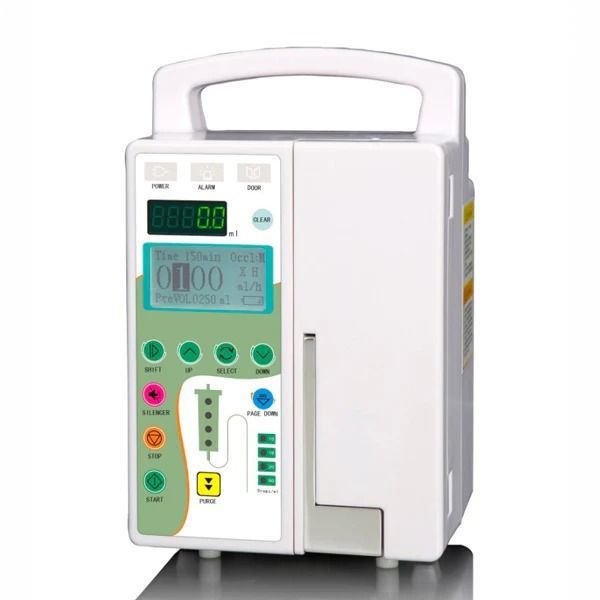
Syringe driver vs volumetric infusion pump
The two machines solve different problems, and the price difference tracks that rather than tracking brand quality.
- A syringe driver delivers from a syringe at a fixed, programmable rate, usually measured in millilitres per hour at small volumes. It is built for dosing accuracy on drugs where the margin for error is narrow: sedatives, inotropes, paediatric and neonatal dosing, and specific oncology protocols.
- A volumetric infusion pump delivers from a standard IV bag, with occlusion detection, air-in-line alarms and multi-rate programming that a syringe driver does not carry in the same form. It is the right choice for general fluid replacement, larger-volume medication, and most routine ward infusions.
Buying a volumetric pump for a sedation protocol that needs syringe-driver precision is over-specifying for the wrong parameter. Buying a syringe driver for a ward that mostly runs large-volume fluids is under-specifying for a different reason: it has nowhere near the bag capacity the order needs.
Tell us the drug and the volume, not a model number. We will quote the type that use actually needs.
Get an infusion pump quote on WhatsApp Or send the details in writing
Which one your department actually needs
The order you are infusing decides the type, not the budget line.
- Choose a syringe driver for sedation, paediatric and neonatal dosing, inotropes, and any order where a small, precise rate matters more than volume.
- Choose a volumetric infusion pump for general ward fluid replacement, larger-volume medication infusions, and any order where occlusion and air-in-line detection on a standard bag is the real requirement.
- Theatres and ICUs typically need both, not one instead of the other. Our guide to how to equip a small hospital theatre covers where this sits against the rest of a theatre fit-out, including the anaesthesia machine, patient monitor and defibrillator it is usually bought alongside.
Giving sets, batteries and the cost people forget
The purchase price buys the pump. Giving sets and battery health are the recurring lines.
| Ongoing cost | Typical range |
|---|---|
| Syringe driver giving sets, per unit | KES 300 to 800 |
| Volumetric pump giving sets, per unit | KES 400 to 1,200 |
| Battery replacement | KES 8,000 to 20,000 |
| Annual accuracy calibration and service | KES 6,000 to 18,000 per unit |
Giving sets are consumable and brand-specific on most pumps, which is worth checking before buying: a pump with hard-to-source sets in Kenya is a recurring problem dressed up as a one-time saving. See infusion pump and syringe driver accuracy testing in Kenya for what the annual calibration actually checks, and how often medical equipment should be calibrated for where this sits on the wider schedule.
Most of the equipment we are asked to fix was chosen well and specified badly. It fitted the brochure, not the drug order. That is why we would rather spend an afternoon on the use case than send a catalogue.
Jodroc Limited, on how we quote
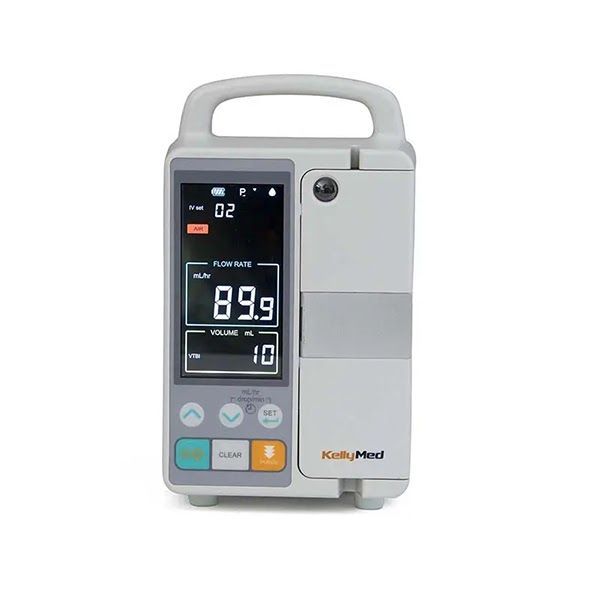
The standard an infusion pump is built to
Infusion pumps and controllers sold in Kenya should be built to IEC 60601-2-24, the particular standard covering basic safety and essential performance for this equipment class, including flow accuracy and alarm conditions. Asking a seller which standard their pump is certified against is a reasonable question before buying, and one a brochure rarely volunteers.
Buying more than one channel
Theatres and ICUs running several infusions at once often buy multi-channel stacks rather than separate single-channel units, mainly to save trolley space and simplify alarm management at the bedside. A multi-channel stack is priced per channel close to the single-unit figures above, plus the docking station, so the saving is in space and workflow rather than in the per-channel price itself. Tell us the channel count you need and we will quote it as a stack rather than as separate units if that suits your layout better.
Get your infusion pump quoted
Tell us the drug and the volume. We will quote the type it actually needs.
Send the department, whether you need syringe-driver precision or volumetric bag delivery, and how many channels. You get back an itemised quotation for that specific need, with giving sets, pole clamp and delivery inside the figure rather than added afterwards. Our own engineers do the install, in Kenya, Tanzania and Uganda.
Send the details on WhatsApp Request a quote in writing
Specifying a whole theatre rather than one pump? See how to equip a small hospital theatre, or our guides to anaesthesia machine prices in Kenya and patient monitor prices in Kenya if you are equipping the whole room.
Frequently asked questions
How much does an infusion pump cost in Kenya?
A single-channel syringe driver runs about KES 120,000 to 160,000. A volumetric infusion pump runs about KES 180,000 to 280,000. Most general wards should budget near KES 160,000 to 200,000 depending on which type the ward mainly uses.
What is the difference between a syringe driver and an infusion pump?
A syringe driver delivers small, precise volumes from a syringe, used where dose accuracy on a low volume matters most. A volumetric infusion pump delivers larger volumes from a standard IV bag, with occlusion and air-in-line alarms, used for general fluid and medication infusions.
Does a theatre need both a syringe driver and a volumetric pump?
Usually, yes. Theatres and ICUs commonly run both types at once, since sedation and inotrope dosing typically need syringe-driver precision while general fluid replacement needs a volumetric pump.
Why buy a multi-channel infusion pump stack?
Mainly to save trolley space and simplify alarm management when several infusions are running at once. The per-channel price is close to a single-unit price, plus the docking station.
How often should an infusion pump be calibrated?
Most facilities calibrate flow accuracy at least annually, more often for heavily used theatre and ICU units. See our guide to infusion pump and syringe driver accuracy testing in Kenya for the full schedule.
What standard governs infusion pumps sold in Kenya?
Infusion pumps and controllers are built to IEC 60601-2-24, the particular standard for basic safety and essential performance of this equipment class, covering flow accuracy and alarm conditions.
Sources
The infusion pump price in Kenya figures above were reviewed October 2026, cross-checked against our own supply figures for theatre and ward fit-outs. Equipment prices move with the shilling and with shipping, so ask for a current quotation before committing to a budget. This article is general guidance, not financial or legal advice.
Pricing other theatre equipment? See our guides to anaesthesia machine prices in Kenya and patient monitor prices in Kenya.