
Cost of Starting a Medical Laboratory in Kenya: The 2026 Numbers, Itemised
Short answer: the cost of starting a medical laboratory in Kenya runs from about KES 742,000 for a bench lab inside an existing clinic to KES 8.5 million for an automated standalone lab. Most independent labs opening in 2026 land near KES 3.5 million, of which equipment is roughly seven-tenths.
Figures are indicative market ranges for 2026, not a price list. Ask for a quotation against your actual room and test menu before committing a budget.
The published numbers for this question disagree by a factor of ten, and the reason is that nobody says which laboratory they are pricing. A microscope on a bench in a health centre and a standalone diagnostic lab running a chemistry panel are both called medical laboratories. They cost nothing like the same money.
This article prices the cost of starting a medical laboratory in Kenya three ways, line by line, and names the regulator you will answer to. We install and service this equipment across Kenya, Tanzania and Uganda, so the figures come from what it costs to put a working laboratory into a room rather than from a catalogue.
What is the cost of starting a medical laboratory in Kenya in 2026?
Here is the cost of starting a medical laboratory in Kenya split into the three builds people commission. The middle column is what most independent labs should be budgeting for.
| Build | Equipment | Everything else | Total |
|---|---|---|---|
| Bench lab Inside an existing clinic. Microscopy, rapid tests, urinalysis, random blood sugar. | KES 479,000 | KES 263,000 | KES 742,000 |
| Semi-automated Standalone. Three-part haematology, semi-automatic chemistry, own premises. | KES 2,504,000 | KES 1,021,000 | KES 3,525,000 |
| Automated Higher volume. Full chemistry, five-part haematology, immunoassay. | KES 6,209,000 | KES 2,292,000 | KES 8,501,000 |
Ranges reflect the Kenyan market in 2026. “Everything else” covers premises, registration, waste contracts, branding and three months of working capital.
Why the KES 1.1 million figure is only the analysers
Search this question and you will be told a semi-automated standalone lab costs between KES 1 million and 1.5 million. Add up the six items that figure is built from and you get almost exactly KES 1.14 million: a three-part haematology analyser, a semi-automatic chemistry analyser, an LED microscope, a bench centrifuge, a 200-litre refrigerator and opening stock.
Every one of those prices is right. The problem is the list. It has no biosafety cabinet, no autoclave, no incubator, no water treatment, no backup power, no benching and no working capital. It prices the instruments and leaves out the laboratory.
Four items separate that shopping list from a lab that can register and open:
- A class II biosafety cabinet, around KES 340,000. If you handle sputum, culture, or anything aerosol-generating, this is not optional and an inspector will look for it.
- A laboratory autoclave, around KES 165,000, because contaminated waste has to be decontaminated before it leaves the bench.
- Water treatment, around KES 75,000. Analysers fail on Nairobi tap water, and the failure shows up as drifting results rather than an error message.
- Backup power, around KES 140,000. A reagent fridge that warms up overnight costs you the reagents and the day’s controls.
Add those, the benching, the phlebotomy station and the reagents you need on day one, and the honest cost of starting a medical laboratory in Kenya at this level is about KES 3.5 million rather than KES 1.1 million.
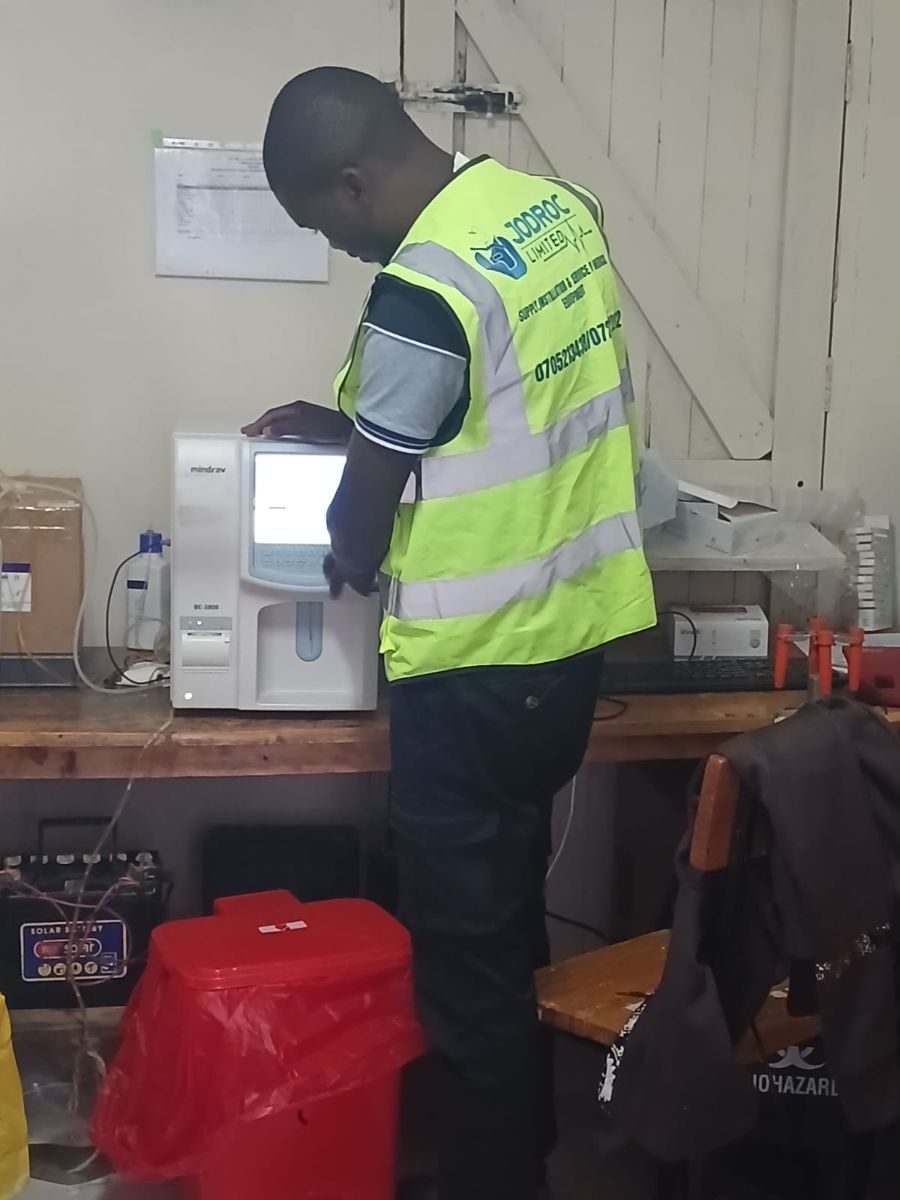
Full medical laboratory equipment list and prices in Kenya
Equipment is roughly seven-tenths of the cost of starting a medical laboratory in Kenya. This is what each build needs, itemised. Each line links to the category page if you want to see what we hold.
| Item | Bench | Semi-auto | Automated |
|---|---|---|---|
| Haematology analyser | Not included | 420,000 | 880,000 |
| Chemistry analyser | Not included | 280,000 | 950,000 |
| Immunoassay analyser | Not included | Not included | 750,000 |
| Binocular LED microscope | 78,000 | 78,000 | 156,000 |
| Bench centrifuge | 55,000 | 95,000 | 260,000 |
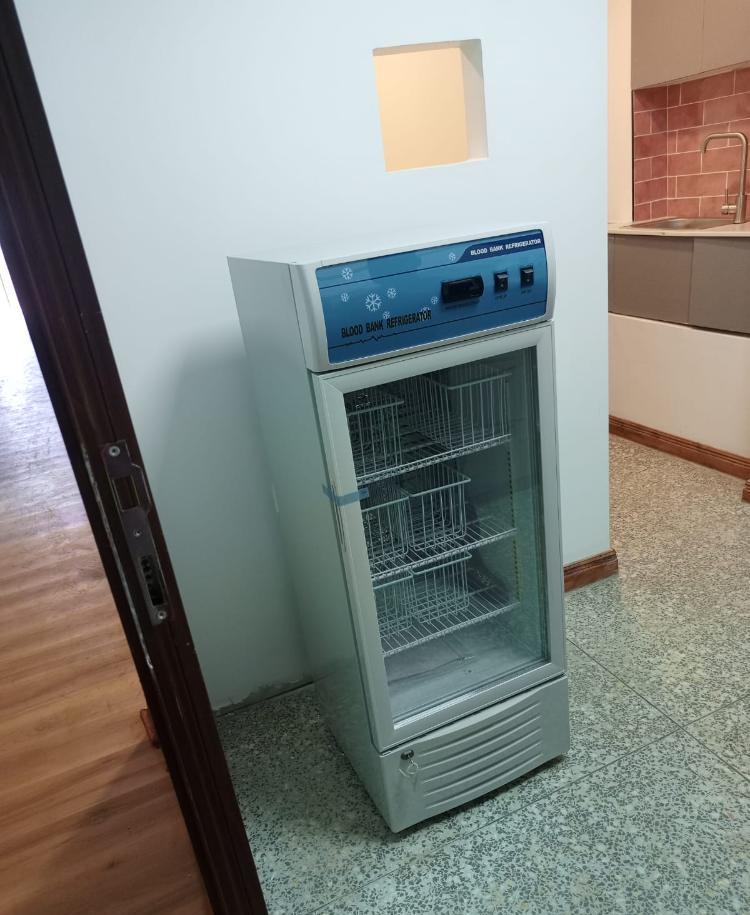
| Refrigeration and cold chain | 60,000 | 110,000 | 320,000 |
| Laboratory autoclave | Not included | 165,000 | 280,000 |
| Incubator and water bath | Not included | 120,000 | 210,000 |
| Class II biosafety cabinet | Not included | 340,000 | 420,000 |
| Phlebotomy station and blood collection | 45,000 | 85,000 | 150,000 |
| Glucometers, strips and rapid tests | 22,000 | 32,000 | 48,000 |
| Pipettes and consumables | 24,000 | 55,000 | 95,000 |
| Laboratory glassware | 26,000 | 45,000 | 70,000 |
| Lab furniture, benching and sinks | 95,000 | 260,000 | 520,000 |
| Extraction and ventilation | Not included | Not included | 180,000 |
| Water treatment and RO | Not included | 75,000 | 140,000 |
| Backup power and UPS | Not included | 140,000 | 320,000 |
| Sharps and waste handling | 14,000 | 24,000 | 40,000 |
| Opening reagents, controls and kits | 60,000 | 180,000 | 420,000 |
| Equipment subtotal | 479,000 | 2,504,000 | 6,209,000 |
All figures in Kenya Shillings, excluding VAT and delivery outside Nairobi. Equipment is the largest share of the cost of starting a medical laboratory in Kenya at every level.
Send us the room and the test menu, not a shopping list. Tell us the floor area, the power supply and which tests you intend to run. We will come back with an itemised quotation for that laboratory, delivered, installed and handed over.
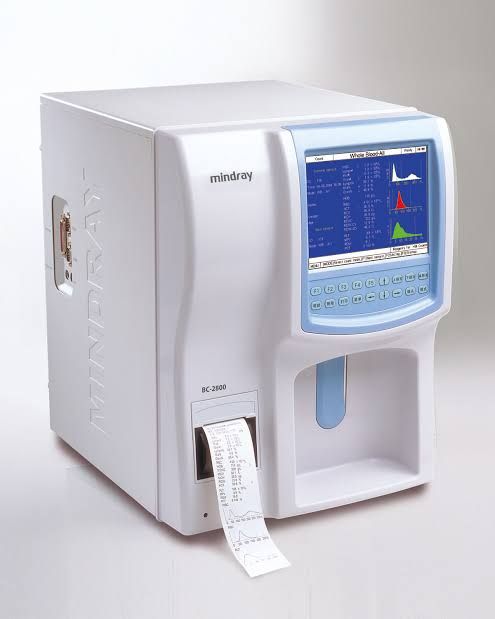
How much does a haematology analyser cost in Kenya?
A three-part haematology analyser costs between KES 360,000 and KES 585,000 in Kenya. A five-part differential analyser, which most insurers and referring clinicians now expect, runs from about KES 700,000 upward. A semi-automatic chemistry analyser sits between KES 190,000 and KES 465,000, and a fully automatic one starts near KES 450,000 and climbs quickly with throughput.
Two things move the real cost far more than the sticker price:
- The reagent system. A closed system ties you to the manufacturer’s reagents for the life of the machine. An open system lets you shop, but validation becomes your responsibility. The cheaper analyser on a closed system is often the more expensive laboratory over five years.
- Who calibrates it. An analyser is only as good as its last calibration and its controls. Ask what the service interval costs before you compare two quotations, because that number is usually missing from both.
See what we hold on the haematology analysers and semi-automatic chemistry analysers pages, or tell us your expected daily sample count and we will size it against that instead of against a brochure.
Ask for analyser prices on WhatsApp
Who licenses a medical laboratory in Kenya
This is where laboratories differ from clinics, and where people lose months. A dental or medical clinic answers to the Kenya Medical Practitioners and Dentists Council. A medical laboratory answers to the Kenya Medical Laboratory Technicians and Technologists Board, which regulates both the premises and the people under Cap 253A of the laws of Kenya.
Three registrations run in parallel, and none of them is instant.
- Registration of the laboratory itself with the KMLTTB, applied for through the eCitizen portal.
- Registration and annual licensing of the technologist or technician in charge. The premises cannot be licensed without a licensed person responsible for it.
- A county single business permit and public health certificate, plus a contract with a licensed medical waste handler.
Budget KES 58,000 to KES 182,000 across registration, permits and the first year of waste collection, depending on the build. Confirm current fees on the Board’s portal before you commit the figure to a business plan, because they are revised and we would rather you checked than took our word for it.
The sequence matters more than the fees
The licensed person in charge has to be in place before the premises can be registered, and the premises has to be registered before you can invoice anybody. If you are recruiting a technologist and fitting out at the same time, start the recruitment first. Equipment can be delivered into an unregistered room. Revenue cannot.
SHA empanelment for a medical laboratory
If the laboratory will process samples for SHA-insured patients, add SHA empanelment to the registration sequence. The Social Health Authority requires the KMLTTB premises registration certificate and a valid waste disposal contract before it will process a laboratory empanelment application. Processing takes two to four weeks. A laboratory that completes KMLTTB registration but skips SHA empanelment cannot bill insured patients directly, which in practice means losing those referrals to a competitor that did apply. Start the SHA application through the provider portal at sha.go.ke as soon as the KMLTTB certificate is in hand.
The four costs that catch people out
These four push the cost of starting a medical laboratory in Kenya past the figure most people plan for. None of them appears on an equipment quotation.
1. Water the analysers will accept
Chemistry and haematology analysers need treated water, and the damage from feeding them anything else is gradual. You get drifting results and shortened cell life rather than a fault code, which means you may not notice until a control fails. Water treatment starts around KES 75,000 and is cheaper than one contaminated reagent run.
2. Power that does not drop
A reagent refrigerator that warms up overnight costs you the reagents, the controls and a day of testing. In most Kenyan towns a laboratory needs backup power and a UPS on the analysers themselves, rather than only on the building. Budget KES 140,000 to KES 320,000.
3. The cold chain you did not plan for
Reagents, controls and specimens all need different temperatures, and a domestic fridge holds none of them reliably. Laboratory-grade refrigeration with alarms and a temperature log is what an inspection asks to see, and the log matters as much as the fridge.
4. The gap between commissioning and accreditation
Delivery day is not the day you start earning. Installation, method verification, running controls, staff training and the KMLTTB inspection all come after it. Three months of working capital, KES 180,000 to KES 1.1 million depending on the build, is what covers that gap.
Bench, semi-automated or automated
Your expected daily sample count sets the right build, not your budget ceiling, and it is the biggest single lever on the cost of starting a medical laboratory in Kenya.
- Choose a bench lab if the laboratory sits inside a clinic you already run and the menu is microscopy, rapid tests, urinalysis and random blood sugar. KES 742,000 gets you working, and you refer anything else out.
- Choose semi-automated if you are opening a standalone laboratory, expect fifteen to forty samples a day, and want to offer a full blood count and a chemistry panel in-house. At KES 3.53 million this is the build most independent Kenyan labs should be costing.
- Choose automated only once you are consistently past forty to fifty samples a day. Below that volume the machines idle, the reagents expire on the shelf, and the extra KES 5 million buys capacity you are paying to keep warm.
Most of the equipment we are asked to fix was chosen well and specified badly. It fitted the brochure, not the room. That is why we would rather spend an afternoon measuring than send a catalogue.
Jodroc Limited, on how we quote
Is a laboratory business profitable in Kenya?
The cost of starting a medical laboratory in Kenya is only half the question; profitability depends almost entirely on volume against fixed cost, and the arithmetic is unforgiving in a way that a dental practice is not. A dental chair earns whether it sees four patients or twelve. An analyser has a reagent cost per test, a calibration cost that recurs whether you test or not, and controls that must be run daily even on a day with no samples.
That gives you two numbers worth working out before you buy anything. The first is your cost per reportable test, which is the reagent plus the controls plus the share of calibration. The second is the daily sample count at which that cost drops below what you can charge. Automated systems are widely considered viable past roughly forty to fifty samples a day, and the reason is exactly this: below that point you are paying for controls and calibration on tests you never ran.
A laboratory that starts semi-automated and grows into automation usually beats one that buys the capacity first. The second machine can be justified by a referral book you already have.
What it costs to keep the laboratory running
The cost of starting a medical laboratory in Kenya is one number. The monthly one decides whether it survives.
| Ongoing cost | Typical monthly range |
|---|---|
| Reagents, controls and calibrators | KES 60,000 to 350,000 |
| Rent, standalone premises | KES 35,000 to 150,000 |
| Licensed technologist and phlebotomist | KES 70,000 to 180,000 |
| Consumables and PPE | KES 25,000 to 90,000 |
| Electricity, water and internet | KES 15,000 to 45,000 |
| Licensed medical waste collection | KES 6,000 to 25,000 |
| Equipment service and calibration contract | KES 12,000 to 45,000 |
Reagents are the line that surprises people, because it scales with testing rather than sitting flat. The service contract is the line most often cut and most regretted. An analyser down on a Tuesday sends your samples, and often your client, to the laboratory down the road. We service equipment we did not supply, so taking out a contract does not mean changing supplier.
How to reduce the cost of starting a medical laboratory in Kenya
None of these five reductions puts your registration at risk.
- Start with the menu, not the machines. Write down the twenty tests you will run in month one and price only those. Most new laboratories buy for a menu they reach in year three.
- Buy semi-automatic chemistry first. It costs roughly KES 170,000 less than an entry automated system and handles a real panel. Upgrade when the sample count justifies it rather than in anticipation. We work the crossover through in semi-automatic vs fully automatic chemistry analyser.
- Ask for the reagent cost per test in writing before you compare analysers. Two machines KES 100,000 apart can be KES 300,000 a year apart on running cost.
- Do the benching, drainage and extraction during the fit-out. Retrofitting a fume extraction duct through a finished ceiling costs several times what routing it early does.
- Be careful with second-hand analysers. A used centrifuge or microscope can be perfectly sound. A used analyser with no service history and no reagent support in Kenya is a machine you cannot calibrate, which makes it a bench.
Get your room and test menu quoted
Tell us what you intend to test. We will quote the laboratory that does it.
Send the floor dimensions, the power supply, the tests you plan to offer and the samples per day you expect, and we will price the cost of starting a medical laboratory in Kenya for your case rather than for an average one. You get back an itemised quotation for that specific laboratory, with delivery, installation and handover inside the figure rather than added afterwards. Our own engineers do the install and the commissioning, in Kenya, Tanzania and Uganda.
Send the details on WhatsApp Request a quote in writing
Prefer to look first? Browse everything we supply, or download the free practice care calendar, the twenty-minute weekly routine that keeps this equipment out of our workshop.
Working out what to buy rather than what it totals? The companion checklist lists every item a starter medical laboratory needs and what each one is for, priced by line.
Frequently asked questions
How much does it cost to start a medical laboratory in Kenya?
The cost of starting a medical laboratory in Kenya is between KES 742,000 and KES 8.5 million, depending on the build. A bench lab inside an existing clinic costs about KES 742,000. A standalone semi-automated laboratory costs about KES 3.53 million. An automated higher-volume laboratory costs about KES 8.5 million.
What equipment is needed to start a medical laboratory?
The minimum is a binocular microscope, a bench centrifuge, laboratory refrigeration, a phlebotomy station, pipettes, glassware, benching with a sink, sharps and waste handling, and opening reagents. A standalone laboratory adds a haematology analyser, a chemistry analyser, a laboratory autoclave, an incubator and water bath, a class II biosafety cabinet, water treatment and backup power.
Who licenses medical laboratories in Kenya?
The Kenya Medical Laboratory Technicians and Technologists Board licenses both medical laboratories and the personnel who run them, under Cap 253A of the laws of Kenya. Applications are made through the eCitizen portal. A laboratory also needs a county single business permit, a public health certificate and a licensed medical waste disposal contract.
How much does a haematology analyser cost in Kenya?
A three-part haematology analyser costs between KES 360,000 and KES 585,000 in Kenya. A five-part differential analyser starts near KES 700,000. The reagent system matters more than the purchase price, because a closed system ties you to one manufacturer’s reagents for the life of the machine.
Is a medical laboratory business profitable in Kenya?
Profitability depends on daily sample volume against fixed cost. Reagents, controls and calibration recur whether or not you test, so the number that matters is your cost per reportable test and the sample count at which it falls below your price. Automated systems are generally considered viable past roughly forty to fifty samples a day.
Can I own a medical laboratory without being a laboratory technologist?
Ownership and technical responsibility are separate questions. The laboratory must have a registered and licensed technologist or technician responsible for it, and the KMLTTB licenses the premises against that person. Confirm your specific structure with the Board before committing capital.
How long does it take to set up a medical laboratory in Kenya?
Allow four to six months from signing the lease to reporting your first result. Fit-out and equipment lead times run in parallel. What usually sets the final date is recruiting and licensing the technologist in charge, then the KMLTTB premises inspection.
What is the difference between a semi-automatic and a fully automatic chemistry analyser?
A semi-automatic analyser needs an operator to pipette and load each sample, and suits laboratories running up to about forty samples a day. A fully automatic analyser handles sampling, dilution and reporting on its own, costs from about KES 450,000 upward, and only earns its price at higher volumes.
How do I register a medical laboratory in Kenya?
Apply through the KMLTTB eCitizen portal for registration of the premises as a private medical laboratory (KMLTTB Form LAB06). The application requires a licensed medical laboratory technologist or technician to be named as the person in charge, a county public health certificate, premises details and a fee that varies by lab classification. KMLTTB processes applications in order; allow four to eight weeks. Once the KMLTTB certificate is issued, apply separately to SHA for empanelment to accept insured patients.
What are the KMLTTB laboratory categories in Kenya?
KMLTTB classifies laboratories into tiers based on the tests they offer and the complexity of equipment. A Level 1 laboratory handles basic microscopy, rapid tests and urinalysis. Level 2 adds semi-automated biochemistry and haematology. Level 3 and above handle culture, immunoassay and higher-throughput automation. The level determines the minimum staff qualifications, the equipment the inspector will expect to see, and the fee schedule. Confirm which level your proposed test menu falls under with KMLTTB before you finalise the equipment list. This KMLTTB tier is separate from, and additional to, the KMPDC facility registration your clinic needs if the laboratory sits inside a clinic rather than operating as a stand-alone lab; see our guide to KMPDC facility licensing requirements for that side of it.
Sources
- Kenya Medical Laboratory Technicians and Technologists Board
- KMLTTB services on eCitizen
- KMLTTB laboratory and personnel licensing
- Kenya Medical Practitioners and Dentists Council, health facility licensing
- Pharmacy and Poisons Board, registration of medical devices and establishments
Figures reviewed August 2026. Equipment prices move with the shilling and with shipping, and licence fees are revised, so ask for a current quotation and check the Board’s portal before committing to a budget. This article is general guidance, not financial or legal advice.
Equipping other departments? See our guides to how to equip a small hospital theatre and the cost of setting up a dental clinic in Kenya. Pricing just the autoclave? See our guide to autoclave prices in Kenya.