
Semi-Automatic vs Fully Automatic Chemistry Analyser: The 2026 Numbers
Short answer: in semi-automatic vs fully automatic chemistry analyser terms, a semi-automatic unit needs an operator to prepare and aspirate every sample and runs 30 to 50 samples an hour, costing KES 180,000 to 290,000 in Kenya. A fully automatic analyser pipettes, mixes, incubates and washes on its own at 200 to 350 samples an hour, from KES 1,500,000 to over KES 4,000,000. Automation starts paying for itself at roughly 120 to 150 samples a day.
Figures are indicative market ranges for 2026, not a price list. Ask for a quotation against your actual test menu and daily sample count.
Every comparison of semi-automatic vs fully automatic chemistry analyser describes what the two machines do. Almost none tells you the number that decides it, which is the daily sample count at which the expensive one stops being an indulgence and starts being cheaper than the alternative.
That number exists, it can be worked out from figures already published, and it is lower than most brochures imply and much higher than most sales conversations suggest. We put it in the middle of this article rather than at the end.
Semi-automatic vs fully automatic chemistry analyser, side by side
| Semi-automatic | Fully automatic | |
|---|---|---|
| Sample handling | Operator prepares and aspirates each sample and reagent mixture | Machine pipettes, mixes, incubates and washes on its own |
| Throughput | 30 to 50 samples an hour | 200 to 350+ samples an hour |
| Operator attention | Continuous | Load, calibrate, walk away |
| Access | Batch, one test at a time through the flow cell | Random access, mixed panels in one run |
| Between tests | Manual dilution, flow cell rinsing, external temperature block | Onboard refrigeration, automated probe washing |
| Reagent system | Usually open | Often closed to the manufacturer |
| Main error source | Operator technique | Calibration and maintenance |
| Kenyan price | KES 180,000 to 290,000 | KES 1,500,000 to 4,000,000+ |
| Suits | Small laboratory, clinic bench, backup unit | Hospital or diagnostic centre with real volume |
What changes at the bench
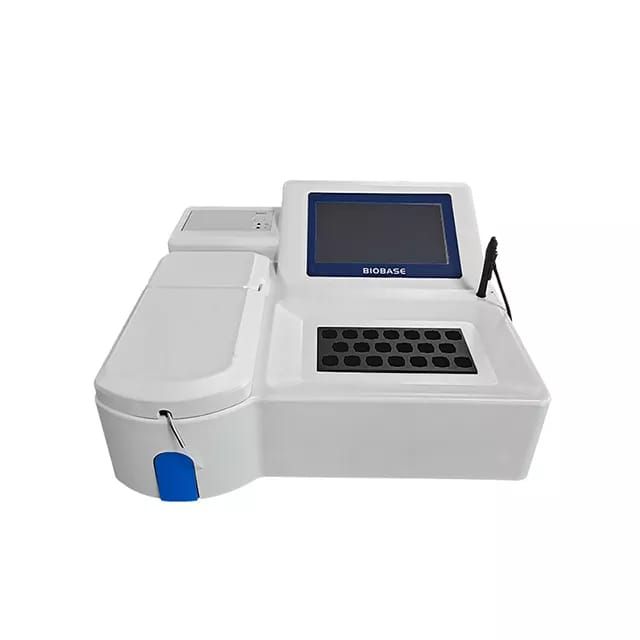
The technical half of semi-automatic vs fully automatic chemistry analyser is simple enough. A fully automatic chemistry analyser handles pipetting, mixing, incubation and washing without an operator. A semi-automatic one requires somebody to prepare and aspirate every single sample and reagent mixture by hand.
What that means on a working morning is less obvious. On a semi-automatic unit the technologist is tied to the machine for the whole run. They dilute manually, rinse the flow cell between tests, and manage temperature in an external block. The results are only as good as their technique on the fortieth sample, which is rarely as good as their technique on the fourth.
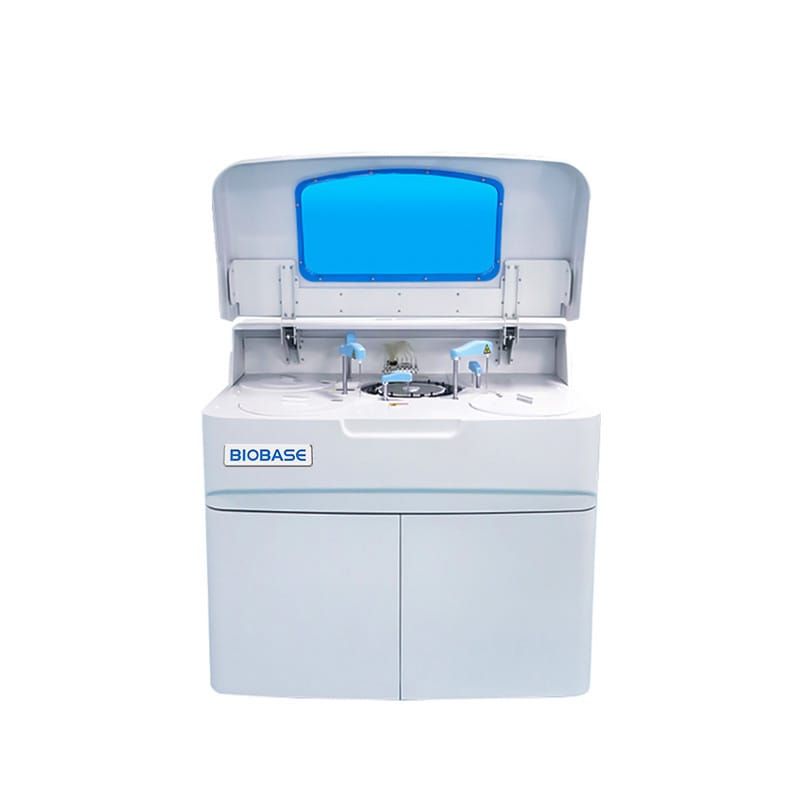
A fully automatic analyser runs random access, so a liver panel and a renal panel can sit in the same run without re-sequencing anything. Reagents live in onboard refrigeration and the probe washes itself. The technologist loads, checks the controls and goes and does something else. That last part is where the money is, and it is why the honest comparison is about labour rather than about specifications.
What each costs in Kenya
Price the semi-automatic vs fully automatic chemistry analyser question from the top, so the rest reads in proportion. A high-throughput fully automatic chemistry analyser passes KES 4,000,000 in Kenya. Entry automation starts near KES 1,500,000. Against that, a semi-automatic unit at KES 180,000 is not a compromise so much as a different category of purchase.
| Machine | Kenyan price | Note |
|---|---|---|
| Semi-automatic, budget | from about KES 180,000 | Basic unit, no touchscreen |
| Semi-automatic, touchscreen | KES 250,000 to 290,000 | 7-inch LCD, onboard printer, stored programmes |
| Semi-automatic, higher specification | up to about KES 1,500,000 | Larger memory, wider open channel range |
| Fully automatic, entry | from about KES 1,500,000 | Random access, onboard refrigeration |
| Fully automatic, high throughput | KES 4,000,000+ | 200 to 350+ samples an hour |
Prices as published by Kenyan suppliers in 2026, excluding VAT, reagents and installation.
Send us your daily sample count, not a model number. Tell us how many samples you run, which panels you offer and what you charge for them. We will work out whether automation pays in your laboratory and quote the machine that fits, delivered, installed and commissioned.
Get your analyser sized on WhatsApp Or send the details in writing
The crossover: when automation starts paying
Here is the calculation nobody publishes for semi-automatic vs fully automatic chemistry analyser. Take the throughput figures both manufacturers quote, put a Kenyan technologist’s salary against the hours, and see how long it takes to recover the difference in purchase price.
Working at 40 samples an hour for the semi-automatic and 250 for the fully automatic, and adding fifteen minutes of loading, calibration and quality control to every automated run so the comparison is not rigged:
| Samples a day | Hands-on hours, semi-auto | Hands-on hours, fully auto | Labour recovered a month | Months to cover KES 1.25M |
|---|---|---|---|---|
| 40 | 1.00 | 0.41 | KES 8,850 | 141 |
| 100 | 2.50 | 0.65 | KES 27,750 | 45 |
| 150 | 3.75 | 0.85 | KES 43,500 | 29 |
| 200 | 5.00 | 1.05 | KES 59,250 | 21 |
| 300 | 7.50 | 1.45 | KES 90,750 | 14 |
Technologist at KES 120,000 a month over 22 working days. Capital gap of KES 1,250,000 is entry automation at KES 1.5M less a mid-range semi-automatic at KES 250,000. Labour only.
Read the last column slowly. At 40 samples a day, recovering the price difference on saved labour alone takes 141 months, which is not a business case, it is a wish. At 150 a day it is 29 months. At 200 a day it is 21 months and the argument is over.
The crossover sits somewhere around 120 to 150 samples a day, and the true figure is a little lower than that table shows because labour is not the only saving. Automated pipetting wastes less reagent than a hand at the fortieth sample, and fewer results have to be repeated. Both effects push in favour of automation, neither is in the arithmetic above, and neither is large enough to rescue a laboratory running forty samples a day.
There is a second constraint worth knowing. A semi-automatic unit at 40 samples an hour fills a six-hour bench day at around 240 samples, so throughput is rarely the thing that breaks first. The operator’s attention is. A technologist who spends four hours a day aspirating is one who is not doing microscopy, phlebotomy or quality control.
Why the import price is not the price
Anyone researching semi-automatic vs fully automatic chemistry analyser prices will find the same thing we did. The same class of semi-automatic analyser is listed on international manufacturing platforms at 280 to 1,500 US dollars, which is roughly KES 36,000 to KES 195,000, against a Kenyan retail range of KES 180,000 to 290,000.
That gap is real and it is worth understanding rather than resenting, because part of it is margin and most of it is not.
- Freight, duty and VAT, none of which appear in an FOB price.
- Registration of the device with the Pharmacy and Poisons Board, which importing personally does not exempt you from.
- A reagent supply that keeps arriving. An analyser with no local reagent channel is a bench ornament by month four.
- Calibration, controls and somebody to call. A result you cannot defend is worse than no result.
- A warranty that can be honoured in the country where the machine sits.
Buy the cheapest listing and you have bought a machine. Buy locally and you have bought a machine that will still be producing defensible results in three years. That is the whole difference, and it is the reason we quote installation and commissioning inside the figure rather than as an extra.
Open or closed reagent system
This decision sits underneath the semi-automatic vs fully automatic chemistry analyser choice and outlasts it, because reagents are bought every month for the life of the analyser and the machine is bought once.
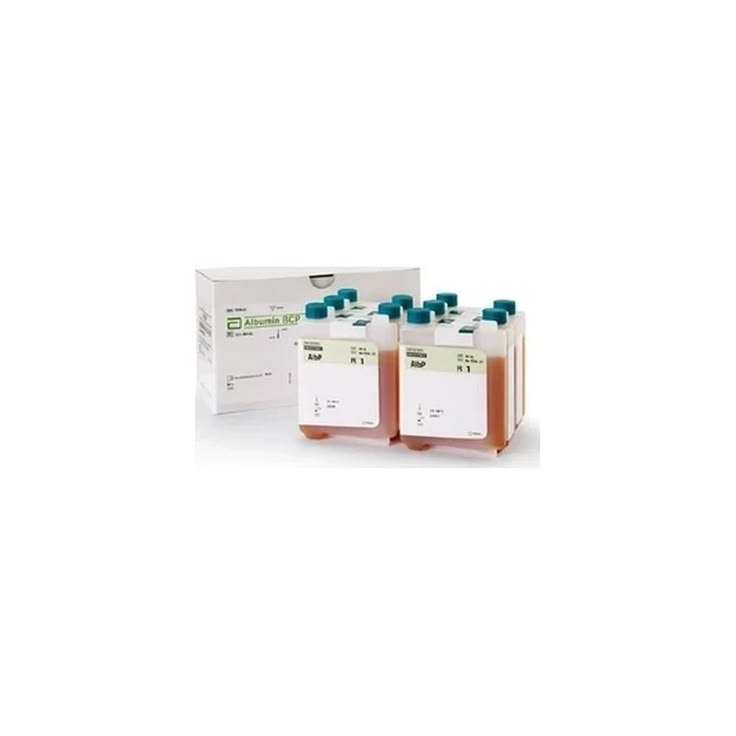
Semi-automatic analysers usually run open systems. You can source reagents from more than one supplier, negotiate, and switch when somebody lets you down. The cost is that method validation becomes your responsibility.
Fully automatic analysers are often closed to the manufacturer’s reagents. Consistency is better and validation is done for you. The cost is that your reagent price for the next decade is set by somebody who knows you cannot easily leave.
Before you compare two quotations, ask both suppliers for the reagent cost per reportable test in writing, and the annual calibration cost. Two analysers KES 300,000 apart on purchase price can be further apart than that every year on running cost. We can put those numbers side by side for you against the panels you run, and we would rather do it before you buy than after.
Ask us to compare reagent costs on WhatsApp
Which one to buy
Three honest answers to semi-automatic vs fully automatic chemistry analyser, by what the laboratory is.
- A semi-automatic analyser is right for a clinic bench, a small standalone laboratory, a rural facility, or as a backup unit behind an automated one, alongside a haematology analyser and a microscope. Under about 100 samples a day it is not the cheap option, it is the correct one.
- An entry fully automatic analyser is right once you are consistently past roughly 150 samples a day, or when your technologist’s time is worth more spent elsewhere. This is the build most growing Kenyan laboratories should be planning towards rather than starting at.
- A high-throughput fully automatic analyser is for hospitals and diagnostic centres with the volume to keep it busy. Below that, the extra capacity is something you pay to keep idle, and reagents expire in the cold chain whether or not they are used.
The pattern we see most often is a laboratory that starts semi-automatic, grows a referral book, and buys automation on the strength of a sample count it can already prove. That sequence beats buying capacity first and hoping the volume arrives, and it is what we would advise even though the second machine is the bigger sale.
Most of the equipment we are asked to fix was chosen well and specified badly. It fitted the brochure, not the room. That is why we would rather spend an afternoon measuring than send a catalogue.
Jodroc Limited, on how we quote
What each costs to run
| Ongoing cost | Semi-automatic | Fully automatic |
|---|---|---|
| Reagents and controls | Lower unit price, more waste per test | Higher unit price, less waste |
| Operator time | Continuous through the run | Load, calibrate, walk away |
| Calibration and service | Simpler, still annual | More involved, usually contracted |
| Consumables | Cuvettes, tips, flow cell care | Probe wash solution, reaction cuvettes |
| Cold chain | External reagent refrigerator | Onboard, plus a backup fridge |
| Treated water | Required | Required, larger volumes |
| Backup power | Advisable | Necessary, a run lost mid-cycle is reagents lost |
The line that catches people is treated water. Both machines fail on Nairobi tap water, and the failure shows up as drifting results rather than an error message, so you may not notice until a control falls over. We service equipment we did not supply, so a calibration contract does not mean changing supplier.
Get your analyser sized
Tell us the sample count. We will tell you which machine pays.
Send your daily sample count, the panels you offer and what you charge for them, and we will settle semi-automatic vs fully automatic chemistry analyser against your numbers rather than an average laboratory’s. You get back the crossover arithmetic run on your own numbers and an itemised quotation for whichever machine it points to, with delivery, installation, commissioning and reagent supply accounted for rather than added afterwards. Our own engineers do the install, in Kenya, Tanzania and Uganda.
Send the details on WhatsApp Request a quote in writing
Setting up the whole laboratory? See the cost of starting a medical laboratory in Kenya, or download the free practice care calendar, the twenty-minute weekly routine that keeps this equipment out of our workshop.
Frequently asked questions
What is the difference between a semi-automatic and a fully automated biochemistry analyser?
A fully automatic chemistry analyser handles sample pipetting, mixing, incubation and washing independently. A semi-automatic analyser requires an operator to manually prepare and aspirate each sample and reagent mixture. Fully automatic units run 200 to 350 samples an hour with random access; semi-automatic units run 30 to 50 an hour in batches.
How much does a semi-automatic chemistry analyser cost in Kenya?
A semi-automatic chemistry analyser costs between KES 180,000 and KES 290,000 in Kenya. Budget units start around KES 180,000 and touchscreen models with an onboard printer run from KES 250,000 to KES 290,000. Higher-specification semi-automatic units reach about KES 1,500,000.
How much does a fully automatic chemistry analyser cost in Kenya?
A fully automatic chemistry analyser costs from about KES 1,500,000 for an entry random-access machine to over KES 4,000,000 for a high-throughput system running 200 to 350 samples an hour.
At what sample volume is a fully automatic analyser worth buying?
Around 120 to 150 samples a day. At 40 samples a day, recovering the roughly KES 1,250,000 price difference on saved technologist time alone would take about 141 months. At 150 a day it takes about 29 months, and at 200 a day about 21 months. Reduced reagent waste and fewer repeats lower the crossover slightly.
Semi-automatic vs fully automatic chemistry analyser: which is best for a small laboratory?
A semi-automatic analyser, for any laboratory under roughly 100 samples a day. It costs a fraction of an automated system, uses an open reagent system so you can shop for reagents, and matches the throughput a small laboratory needs.
What is the difference between a colorimeter and a semi-automatic biochemistry analyser?
A colorimeter measures absorbance at a wavelength and leaves calculation to the operator. A semi-automatic biochemistry analyser adds stored test programmes, incubation control and automatic calculation of results, so it reports a concentration rather than an absorbance reading.
Is it cheaper to import a chemistry analyzer directly?
The purchase price is lower. Semi-automatic analysers are listed on international platforms at 280 to 1,500 US dollars, roughly KES 36,000 to KES 195,000, against a Kenyan retail range of KES 180,000 to 290,000. That gap covers freight, duty, VAT, device registration with the Pharmacy and Poisons Board, a local reagent channel, calibration and a warranty that can be honoured here. An analyser with no local reagent supply or service stops producing defensible results quickly.
What tests can a fully automated biochemistry analyser run?
Typically liver function, renal function, lipid profile, glucose, electrolytes, cardiac and inflammatory markers, and specific proteins, with random access so different panels run in the same batch. The menu depends on the reagent system, which is why the reagent decision matters as much as the machine.
What chemistry analyser brands are used in Kenya?
The semi-automatic segment in Kenya is dominated by Chinese and European-origin machines. Common brands in this range include Mindray (BS-120, BA-88A), ERBA Mannheim (Chem-7), Biotecnica Instruments and Humalyzer (Human Diagnostics). In the fully automatic segment, Mindray (BS-240 Pro, BS-800M), Roche (Cobas), Abbott (Architect) and ERBA (XL 200, XL 600) are the brands most frequently purchased by Kenyan hospitals and reference labs. When choosing a brand, reagent availability in Kenya matters as much as the machine specifications. An analyser whose reagents are not stocked locally creates supply risk that shows up on days when results cannot wait.
What is the difference between an open and a closed reagent system?
An open reagent system accepts reagents from any compatible manufacturer, so the laboratory can shop by price and switch supplier if one goes out of stock. A closed system accepts only the manufacturer's own reagents, which guarantees compatibility but removes any price leverage. Most semi-automatic analysers are open. Many fully automatic systems from Roche, Abbott and the upper Mindray range are partially or fully closed. Check the reagent terms before committing to a fully automatic system, because the reagent cost often exceeds the capital cost over four years.
Sources
- Kenya Medical Laboratory Technicians and Technologists Board
- KMLTTB services on eCitizen
- Pharmacy and Poisons Board, registration of medical devices and establishments
- Kenya Medical Practitioners and Dentists Council, licensing of a health facility
Reviewed August 2026. Equipment and reagent prices move with the shilling and with shipping, so ask for a current quotation before committing to a budget. The crossover calculation is labour only and excludes reagent waste, repeat rates, servicing and finance. This article is general guidance, not financial or clinical advice.