
Intraoral X-ray vs Panoramic vs CBCT: What to Buy in 2026
Short answer: in the intraoral x-ray vs panoramic vs CBCT decision, an intraoral unit gives a 2D close-up of one to four teeth for the lowest dose and costs KES 160,000 to 250,000 in Kenya. A panoramic machine gives a 2D view of both jaws end to end. A CBCT builds a 3D volume of teeth, bone and nerve canals and costs KES 2.3 million second-hand to over KES 7 million new.
Written for a practice deciding what to buy, not for a patient deciding what to have. Figures are indicative market ranges for 2026, not a price list.
Search intraoral x-ray vs panoramic vs CBCT and every result explains it to a patient. Which scan will the dentist take, how much radiation is in it, what will it show. Useful if you are in the chair, useless if you are the one signing for the machine.
A practice owner is asking a different question with the same words. Which of these three earns its price in my clinic, what licence does each one drag behind it, and how many scans do I have to run before the thing has paid for itself. That version is not written down anywhere we could find, so here it is.
Intraoral x-ray vs panoramic vs CBCT, side by side
| Intraoral (IOPA) | Panoramic (OPG) | CBCT | |
|---|---|---|---|
| Image | 2D | 2D | 3D volume |
| Coverage | 1 to 4 teeth | Both jaws, ear to ear, plus sinuses | Teeth, bone, nerve canals and surrounding structures |
| Where the sensor sits | Inside the mouth | Machine rotates outside the head | Beam sweeps around the head |
| Radiation dose | Lowest | Low, higher than intraoral | Highest of the three |
| Bought for | Caries between teeth, root health, bone loss | Overviews, wisdom teeth, growth in children, basic orthodontic work | Implant planning, surgical cases, complex endodontics |
| Kenyan price | KES 160,000 to 250,000 | See note below | KES 2.3M used, 3.5M to 7M+ new |
| Room needs | Shielding, badges | Dedicated room, shielding | Dedicated room, heavier shielding |
Intraoral and CBCT prices are published by Kenyan suppliers. We have found no reliable published Kenyan figure for a standalone panoramic unit, so we have not invented one. Ask us and we will quote the current landed price.
What each one shows
The clinical side of intraoral x-ray vs panoramic vs CBCT is settled and worth stating plainly before the money, because buying the wrong one is usually a diagnosis problem rather than a budget problem.
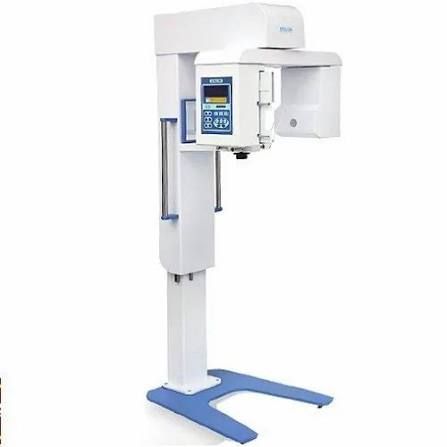
Intraoral puts a sensor or film inside the mouth and images one to four teeth at high detail. It is the workhorse. Interproximal caries, root morphology, periapical pathology and bone levels all live here, and nothing else in the list replaces it.
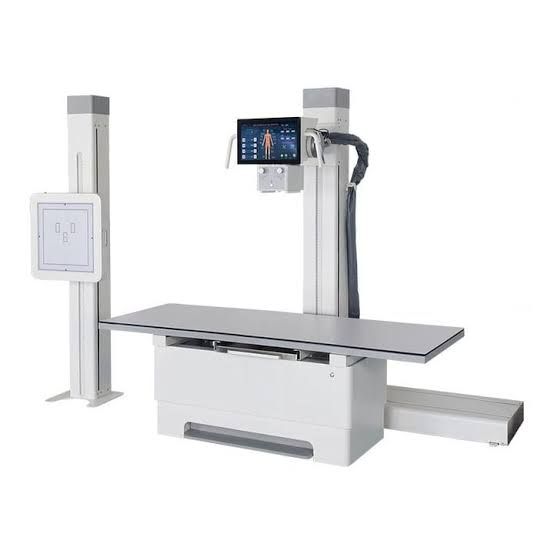
Panoramic rotates around the head and returns both arches in a single 2D image, sinuses included. It is a survey tool. You reach for it to screen third molars, to look at a jaw fracture, to check eruption in a child, or to get an orthodontic baseline. What it will not do is show you a small carious lesion between two premolars.
CBCT sweeps a cone-shaped beam around the head and reconstructs a three-dimensional volume. It answers the questions the two-dimensional images cannot: where the inferior alveolar nerve runs, how much buccal bone there is behind an implant site, whether a canal is a second mesiobuccal or an artefact. It also carries the highest dose of the three, which is why it belongs to specific indications rather than to routine screening.
What each costs in Kenya
Here is intraoral x-ray vs panoramic vs CBCT priced against the Kenyan market. These are figures Kenyan suppliers publish, not international list prices converted at a hopeful rate.
| Item | Kenyan price | Note |
|---|---|---|
| Intraoral unit, wall-mounted or basic mobile | KES 160,000 to 250,000 | Entry units start near KES 165,000 |
| Digital intraoral sensor, standalone | from about KES 158,000 | Sold separately from the unit |
| Intraoral unit bundled with a digital sensor | KES 240,000 to 250,000+ | Usually cheaper than buying the two apart |
| CBCT, pre-owned | around KES 2,300,000 | Older 2D and 3D hybrid units |
| CBCT, new mid to high range | KES 3,500,000 to 7,000,000+ | Varies with field of view and software tier |
| Shielding, lead lining and survey | KES 250,000 to 450,000 | Higher for CBCT than intraoral |
| Radiation monitoring badges | Annual subscription | Per person working near the beam |
For context on what the scans sell for, a single CBCT scan in Nairobi is commonly priced between KES 4,000 and KES 7,500. That number is what makes the next section possible.
Send us the case mix, not a model number. Tell us what you treat, how many radiographs you take in a week and whether implants are in your plan. We will come back with an itemised quotation for the imaging that suits it, delivered, installed and commissioned.
Get an imaging quote on WhatsApp Or send the details in writing
The licence and shielding attached to each
Whichever way the intraoral x-ray vs panoramic vs CBCT decision goes, all three make your surgery a radiation premises. That brings in the Kenya Nuclear Regulatory Authority, which licenses the premises and the device and publishes an application guide specifically for diagnostic radiology and dental practices.
The obligation is the same in kind for all three and different in degree.
- An intraoral unit needs shielding assessed, aprons, badges for the operator and a premises licence. In a small surgery this is usually manageable within the existing walls.
- A panoramic unit needs a dedicated space, because the machine rotates and the patient stands. Shielding is designed around the room rather than around a chair.
- A CBCT needs the most shielding of the three and the most careful room design. Budget for the survey and for remedial lead before you order the machine, not after.
The sequencing point matters more than the money. Shielding is designed before the walls go up and licensed before first use, so a CBCT ordered in month one and a room designed in month four will leave an expensive machine sitting in a crate.
The payback arithmetic
This is the part of the intraoral x-ray vs panoramic vs CBCT question that nobody publishes, and it decides the answer more often than image quality does.
Take the published numbers. Add roughly KES 450,000 for shielding, the survey and licensing to each machine, then divide by what the scan sells for.
| Machine | All-in cost | Scans to break even | At a realistic volume |
|---|---|---|---|
| Intraoral unit plus sensor | about KES 370,000 | 247 radiographs at KES 1,500 | About 5 months at 12 a week |
| CBCT, pre-owned | about KES 2,750,000 | 479 scans at KES 5,750 | Around 2 years at 5 a week |
| CBCT, new mid-range | about KES 3,950,000 | 687 scans at KES 5,750 | 1.7 years at 8 a week, 4.4 years at 3 |
| CBCT, new high-end | about KES 7,450,000 | 1,296 scans at KES 5,750 | Over 3 years at 8 a week |
Machine cost plus shielding and licensing only. Staff time, servicing, software and finance are excluded, so treat these as the optimistic case.
Two things fall out of that table. The intraoral unit pays for itself inside a year at almost any realistic volume, which is why it is not really a decision. The CBCT does not, unless you can name the cases that will fill it. Three scans a week and a new mid-range machine is four and a half years before the equipment has covered its own cost, and that is before anyone has been paid to run it.
The question to answer honestly before ordering a CBCT is how many implant, surgical and complex endodontic cases you see in a month. If the answer is fewer than about eight, referring those scans out and buying the machine in two years is usually the better business, and it is what we would tell you if you asked.
Ask us to run your CBCT payback on WhatsApp
Which one to buy first
For a practice building up rather than fitting out all at once, intraoral x-ray vs panoramic vs CBCT is a sequence rather than a choice.
- Intraoral, always. It covers the majority of diagnostic need, carries the lowest dose, the lowest price and the lightest shielding burden, and it pays for itself faster than anything else you will buy.
- Panoramic, once you are doing enough third molar assessment, orthodontic screening or trauma work that referring out is costing you appointments. It is a workflow purchase more than a diagnostic one.
- CBCT, when the case volume is there. Placing implants regularly is the usual trigger. Ambition to place them is not.
Worth knowing before you compare quotations: many units sold in Kenya are combination machines. A three-in-one panoramic, cephalometric and CBCT system means you are not always choosing between the second and third rows of the table. Sometimes the sensible purchase is one machine that does both, which changes the arithmetic in favour of moving sooner.
Sensor or phosphor plate for the intraoral
Once the intraoral x-ray vs panoramic vs CBCT question is settled and you have an intraoral unit, there is a second decision, and it is the one practices get wrong more often than the machine choice.
A digital sensor is a rigid wired detector. Images appear immediately, there is no processing step, and it is the faster workflow. It costs from about KES 158,000, it is rigid in a mouth that may not want it, and if somebody drops it you are buying another one.
A phosphor plate system uses thin flexible plates that are scanned after exposure. It is cheaper, the plates are comfortable and cheap to replace, and you can hold several sizes. The cost is a scanning step between exposure and image.
Either works with the same X-ray unit, which is the useful part. Start with plates, move to a sensor when the extra minutes per patient begin to matter, and you will not have wasted the first purchase. See both on the digital sensors and phosphor plates page.
What imaging costs to run
| Ongoing cost | Typical range |
|---|---|
| Radiation monitoring badges | Annual, per person near the beam |
| KNRA licence renewal | Annual |
| Phosphor plate replacement | Consumable, scratches with use |
| Imaging software licences | Often annual on CBCT systems |
| Calibration and service contract | KES 12,000 to 45,000 a month |
| Backup power and surge protection | One-off, then battery replacement |
The software line surprises people on CBCT. A viewer licence that renews annually is a real operating cost and it is rarely on the front page of a quotation. Ask for it in writing before you compare two machines, along with the calibration interval. We service equipment we did not supply, so a contract is not a reason to change supplier.
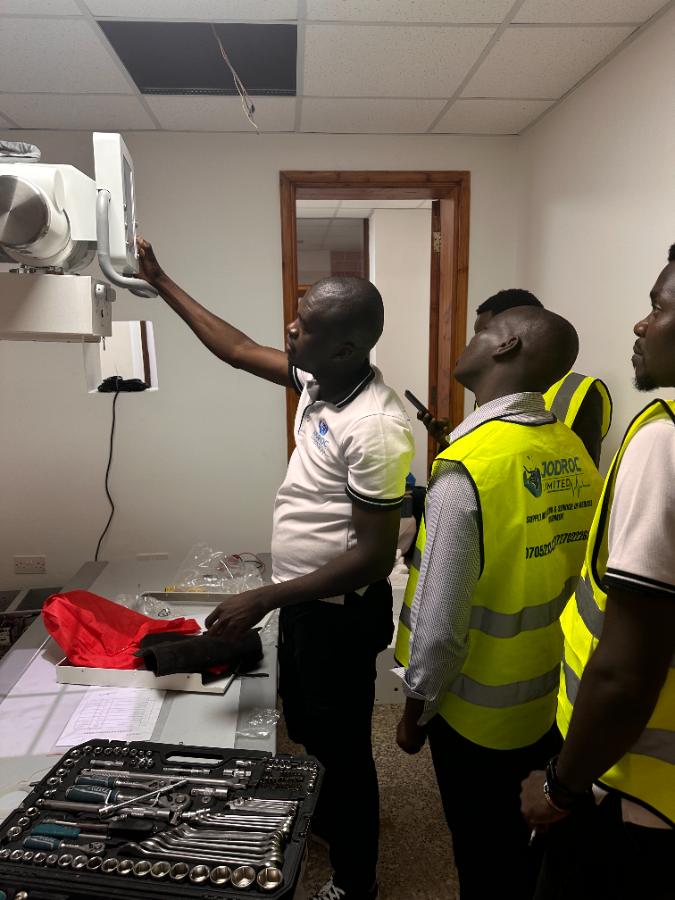
Most of the equipment we are asked to fix was chosen well and specified badly. It fitted the brochure, not the room. That is why we would rather spend an afternoon measuring than send a catalogue.
Jodroc Limited, on how we quote
Get your imaging specified
Tell us the cases. We will specify the imaging that pays for itself.
Send your case mix, your weekly radiograph count, the room you have available and whether implants are in the plan, and we will settle the intraoral x-ray vs panoramic vs CBCT question against your numbers rather than an average practice’s. You get back an itemised quotation with shielding, installation, commissioning and the KNRA paperwork accounted for, rather than added afterwards. Our own engineers do the install, in Kenya, Tanzania and Uganda.
Send the details on WhatsApp Request a quote in writing
Fitting out a whole practice? See the cost of setting up a dental clinic in Kenya and the equipment needed to start a dental clinic.
Frequently asked questions
Is CBCT the same as a panoramic X-ray?
No. A panoramic X-ray is a single two-dimensional image of both jaws taken by a machine that rotates around the head. A CBCT sweeps a cone-shaped beam around the head and reconstructs a three-dimensional volume that can be sliced in any plane. Many machines sold in Kenya combine both functions in one unit.
How much does a CBCT machine cost in Kenya?
A new dental CBCT machine in Kenya costs from about KES 3,500,000 to over KES 7,000,000 depending on field of view, software tier and whether installation is included. Pre-owned units are listed locally at around KES 2,300,000. Budget a further KES 250,000 to 450,000 for shielding, the radiation survey and licensing.
How much does an intraoral X-ray machine cost in Kenya?
A standard intraoral dental X-ray machine costs between KES 160,000 and KES 250,000 in Kenya for a wall-mounted or basic mobile unit. Entry-level units start near KES 165,000. A unit bundled with a digital sensor runs from KES 240,000, and a standalone digital sensor costs from about KES 158,000.
How much does a CBCT scan cost in Nairobi?
A single dental CBCT scan in Nairobi is commonly priced between KES 4,000 and KES 7,500, depending on the clinic and the field of view. That figure is what determines how quickly a CBCT machine pays for itself.
How many scans does it take for a CBCT to pay for itself?
A new mid-range CBCT costing about KES 3,950,000 including shielding and licensing needs roughly 687 scans at KES 5,750 to cover its own cost. At eight scans a week that is about 1.7 years, and at three scans a week about 4.4 years, before staff time, servicing and software are counted.
Which X-ray does a dental practice need first, intraoral x-ray vs panoramic vs CBCT?
An intraoral unit. It covers most diagnostic need, carries the lowest radiation dose and the lightest shielding requirement, and at roughly 247 radiographs it pays for itself faster than any other imaging purchase. Panoramic and CBCT are added later, driven by case volume.
Do I need a licence for a dental X-ray in Kenya?
Yes. Any dental X-ray unit makes the surgery a radiation premises, licensed by the Kenya Nuclear Regulatory Authority, which licenses both the premises and the device and publishes an application guide for diagnostic radiology and dental practices. Shielding must be assessed and staff working near the beam need monitoring badges.
Should I buy a digital sensor or a phosphor plate system?
A digital sensor gives an immediate image with no processing step but is rigid, costs from about KES 158,000 and is expensive to replace if damaged. A phosphor plate system is cheaper, uses flexible plates in several sizes and replaces them cheaply, at the cost of a scanning step. Both work with the same X-ray unit, so starting with plates and upgrading later wastes nothing.
How much does a KNRA radiation licence cost for a dental X-ray unit in Kenya?
The Kenya Nuclear Regulatory Authority charges a licence fee that varies by device type and premises category. For a dental diagnostic X-ray setup, budget KES 25,000 to KES 60,000 in total across the application fee, the mandatory radiation shielding survey, and any remedial shielding work the survey identifies. The shielding survey is the unpredictable part: a room with dense enough walls on three sides may need very little remediation; a partition wall facing a public corridor usually needs lead sheeting. Start the KNRA application while the fit-out is running rather than after you receive the X-ray unit, because the licence must be in place before the first patient is exposed.
What brands of dental X-ray equipment are available from Kenya suppliers?
For intraoral units, the brands stocked or serviced in Kenya include Planmeca, Acteon (Satelec), Dentsply Sirona, Woodpecker, and Eighteeth. For panoramic machines, Vatech (South Korea) and Planmeca are the brands most commonly maintained locally, with Carestream and Yoshida also present. CBCT units in Kenya are predominantly Vatech, Planmeca and J. Morita. When choosing a brand, local service infrastructure matters more than the specification sheet: ask which brands the supplier engineers have been trained on and whether genuine spare parts are held in-country before you sign.
Sources
- Kenya Nuclear Regulatory Authority, licence guide for diagnostic radiology and dental practices
- Kenya Nuclear Regulatory Authority
- Kenya Medical Practitioners and Dentists Council, licensing of a health facility
- Pharmacy and Poisons Board, registration of medical devices and establishments
Whichever modality you choose, the equipment needs to stay calibrated to keep producing reliable images. See our guide to x-ray machine calibration in Kenya for what that involves and how it differs from KNRA radiation safety licensing.
Reviewed August 2026. Equipment prices move with the shilling and with shipping, and scan fees vary by clinic, so ask for a current quotation before committing to a budget. Clinical indications for each modality are a matter for the treating clinician. This article is general guidance, not clinical, financial or legal advice.
Want the full price breakdown across intraoral, panoramic, CBCT and portable units? See our guide to X-ray machine prices in Kenya.