
Equipment Needed to Start a Dental Clinic: The 2026 Checklist
Short answer: the equipment needed to start a dental clinic is a dental chair with delivery unit and operating light, an oil-free compressor, a suction unit, a class B autoclave, an ultrasonic cleaner and pouch sealer, handpieces and a scaler, a curing light, an intraoral X-ray with image capture and shielding, hand instruments in multiple sets, stools, cabinetry, and colour-coded waste bins with a sharps box.
This is a specification and compliance guide. For what each item costs, read our companion piece on the cost of setting up a dental clinic in Kenya.
Most lists of the equipment needed to start a dental clinic are written by someone selling the list. They are long, they are alphabetical, and they say nothing about how many of each item you need or which ones an inspector will ask to see.
This one is organised the way the room is: by zone, with quantities, and against what the Kenya Medical Practitioners and Dentists Council puts on its own facility checklist. We install and commission this equipment across Kenya, Tanzania and Uganda, so the notes about what fails in practice come from callouts rather than from a brochure. That checklist sits inside KMPDC’s wider facility registration rules: most dental practices register at Level 2 or Level 3B, and our guide to KMPDC facility licensing requirements walks through what each level needs beyond the equipment room.
The full equipment needed to start a dental clinic
Here is the equipment needed to start a dental clinic, grouped by where it lives rather than alphabetically, because that is how you will buy it and how an inspector will walk the room. Every line links to the category page.
What the KMPDC checklist asks for
This is the part most lists of the equipment needed to start a dental clinic leave out. The Kenya Medical Practitioners and Dentists Council publishes categorization checklists that inspectors work from, and they are public. Reading the one for a general medical and dental centre changes how you spec a room.
Four things stand out for a dental unit.
A separate sterilisation unit is named, not implied. The dental section lists a waiting area, a consultation room, a dental chair and a “Separate sterilization Unit” as distinct requirements. An autoclave on the corner of the operatory bench does not satisfy this. The bay needs to be its own space.
The sterilisation area is assessed on zoning as much as on kit. The checklist asks for a “Functional autoclave”, a “Demarcated clean and sterile zone” and “Labelled shelves”. Two of those three are joinery and signage rather than machinery, and they are the ones people forget until the day of the visit.
Waste is specified by colour. The requirement is for colour-coded pedal bins with matching liners in black, yellow and red, plus a sharps safety box. Buying three identical bins and labelling them by hand is the version that gets written up.
Radiography brings a staffing requirement with it. Where imaging services are offered, the checklist pairs the X-ray capability with a radiographer. That is a recurring salary attached to a capital purchase, and it belongs in the plan before the unit is ordered rather than after.
Requirements differ by the level and category your facility is being registered under, so read the checklist that matches yours on the KMPDC health facilities pages before you finalise a list.
The operatory: what goes in the room
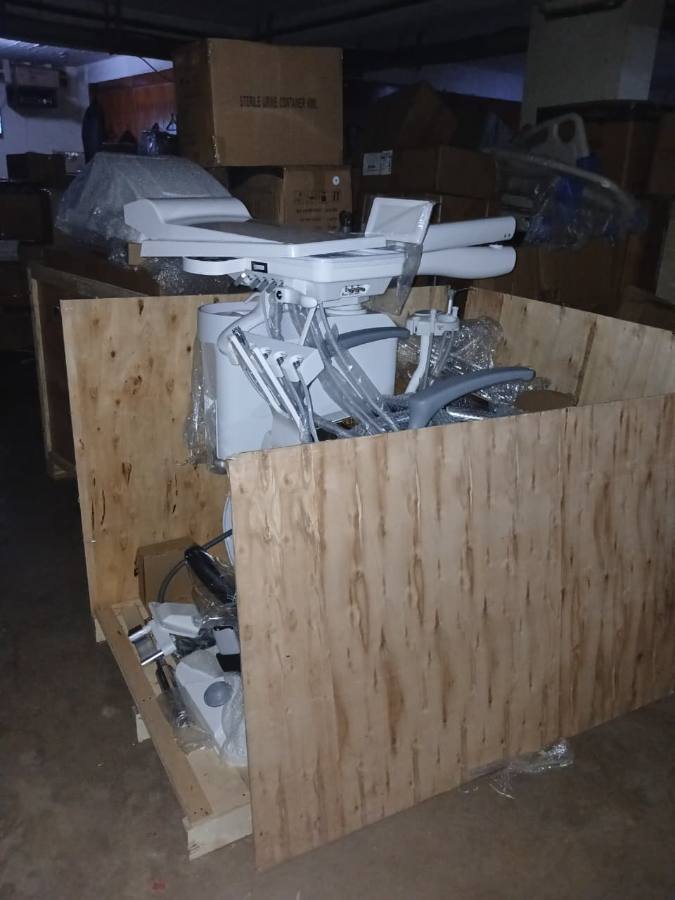
Of all the equipment needed to start a dental clinic, the chair is the anchor, and everything else is positioned against it. A complete unit usually arrives with the delivery system, the operating light and the cuspidor integrated, which is why comparing a “chair price” against a “complete unit price” tells you very little.
What the chair does not arrive with is the plant that makes it work. Compressed air and suction come from equipment that lives elsewhere, ideally in a ventilated cupboard or a separate room, because a compressor running next to a nervous patient is its own problem. Allow for the pipe runs at fit-out.
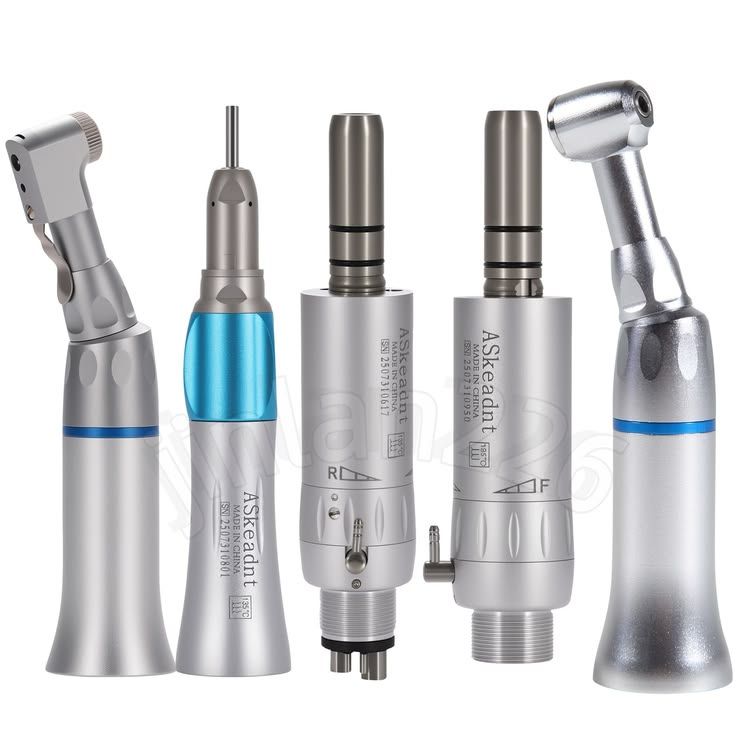
Handpiece count is the decision people get wrong. One high-speed handpiece means the practice stops between patients while it is reprocessed. Two high-speed and one low-speed is the working minimum for a single chair, and three high-speed is what a busy list needs.
The sterilisation bay and the clean-to-dirty flow
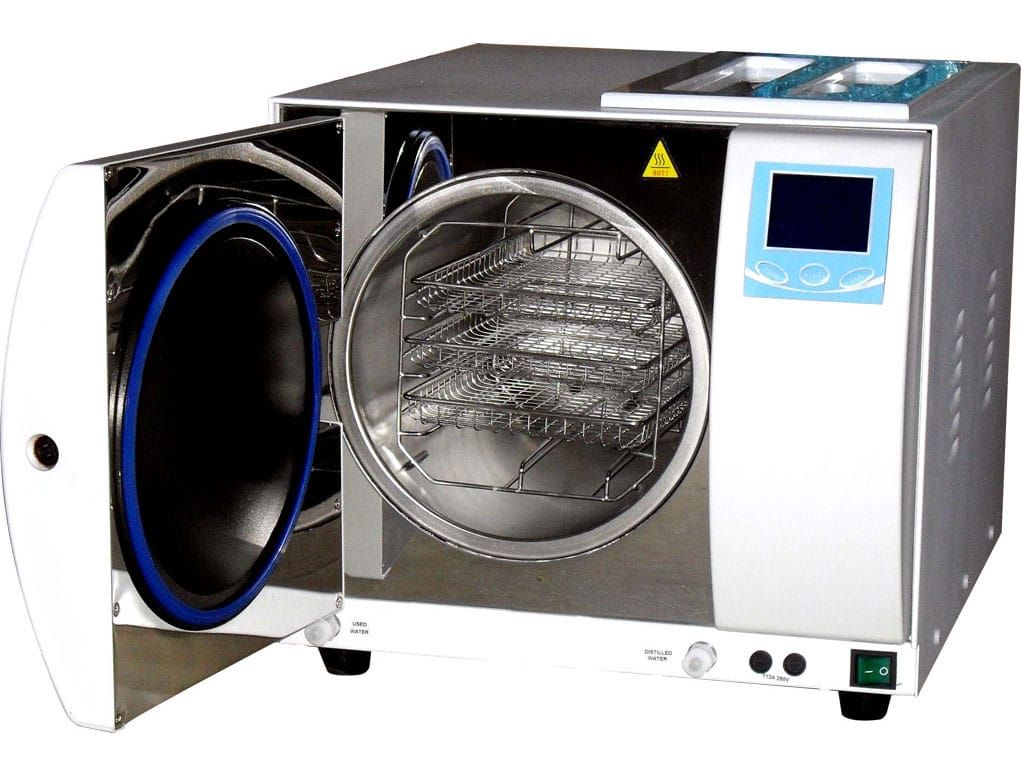
The bay is where inspections are passed or failed, and it is the zone most often designed last. No part of the equipment needed to start a dental clinic is scrutinised harder.
The principle is one-directional flow. Contaminated instruments come in at one end, move through cleaning, then inspection and packing, then the autoclave, and come out sterile at the other. Instruments should never travel backwards along that bench or cross a clean surface on the way. This is what the checklist means by a demarcated clean and sterile zone, and it is a joinery decision that costs almost nothing at fit-out and a great deal to retrofit.
Three points of specification worth getting right the first time:
- Class B rather than class N. Class N cannot reliably sterilise hollow instruments, which includes your handpieces. If the practice owns handpieces, it needs a class B autoclave.
- Treated water. Autoclaves fail on tap water, and the damage is cumulative rather than sudden. A distiller is cheaper than a descaling callout.
- Cycle records. Whether you use printed strips or a logging system, the ability to show which cycle sterilised the instruments used on a given patient is what turns a functional autoclave into a defensible one.
Imaging, and the radiographer nobody mentions
An intraoral X-ray unit is the smallest imaging purchase and the one with the longest tail of obligations. Buying it makes the surgery a radiation premises, which brings the Kenya Nuclear Regulatory Authority into your project alongside the KMPDC.
What that means in equipment terms is that the unit is never the only line. You also need image capture, either a sensor or a phosphor plate system, shielding and lead aprons, and monitoring badges for the people working near it.
Then there is the staffing point above. If your registration category pairs imaging services with a radiographer, an intraoral unit is not a KES 300,000 decision; it is a KES 300,000 decision plus a salary. Some practices reasonably decide to refer radiographs out for the first year and buy the unit once the volume justifies the post. Our companion guide compares intraoral x-ray vs panoramic vs CBCT on price, licensing and how long each takes to pay for itself.
How many of each do you need?
Quantity is where new practices under-order. When people list the equipment needed to start a dental clinic they give a single line per item, and the constraint is really the autoclave cycle rather than the budget.
An autoclave cycle takes roughly 30 to 45 minutes plus drying. If a set of instruments is in the machine, it is not on the bench. So the question is not what you need to treat one patient, it is what you need to keep treating while the last patient’s instruments are being reprocessed.
| Item | Single chair, working minimum | Comfortable |
|---|---|---|
| Examination and diagnostic sets | 6 to 8 | 12 |
| High-speed handpieces | 2 | 3 |
| Low-speed handpiece and motor | 1 | 2 |
| Extraction forceps sets | 1 full set | 2 of the common patterns |
| Scaler tips | 2 | 4 |
| Instrument cassettes or trays | 6 | 10 |
| Operator and assistant stools | 2 | 2 |
The pattern is simple enough to apply to anything not on the list: count how many you use in a session, then double it if the item goes through the autoclave.
Ask us to size your instrument sets on WhatsApp
What you can open without
Not everything sold as part of the equipment needed to start a dental clinic is a requirement, and a first-year practice that buys the full catalogue usually regrets it.
- An intraoral camera helps case acceptance and is genuinely useful. It is not a licensing requirement.
- An apex locator matters once you are doing endodontics regularly. Before then it sits in a drawer.
- An amalgam separator is only relevant if you place or remove amalgam. A composite-only practice does not need one, and should say so plainly if asked.
- Full surgery cabinetry can start as one properly built working bench and grow. It is the easiest thing to add once revenue exists.
What you cannot open without is anything on the sterilisation and waste lines. Those are the two areas where a shortfall stops a registration rather than slowing a workflow.
Send us the room, not a shopping list. Tell us the floor size, the power supply, whether you are doing radiography, and your case mix. We will come back with an itemised specification for that room, delivered, installed and handed over.
Get a specification on WhatsApp Or send the details in writing
The requirements that are not equipment
Three items appear on the checklist that no supplier will quote you for. They are not part of the equipment needed to start a dental clinic at all, and all three have caught practices out on inspection day.
Patient records. The checklist asks for a health information management system, with records kept for each patient carrying names and unique patient numbers, legible and signed. A paper system satisfies this if it is disciplined. An undisciplined digital one does not.
A named dentist. Where there is a dental unit, a dentist is mandatory. The facility is licensed against that person, so the recruitment timeline and the fit-out timeline need to finish together.
A waste disposal contract. The bins are equipment. The licensed contractor who collects from them is a service agreement, and it needs to exist before you are inspected, not after.
SHA empanelment. A practice that plans to see SHA-insured patients needs a separate empanelment application through the SHA provider portal once the KMPDC facility licence is in hand. The portal requires the facility licence and a valid waste disposal contract before it will process the application, so SHA is effectively the fourth registration step rather than a concurrent one. Processing takes two to four weeks. Start it the week the KMPDC licence arrives.
The order to buy in
Sequence saves more money than negotiation does, because a few items in the equipment needed to start a dental clinic become several times more expensive once the floor is finished.
- Anything inside a wall, floor or ceiling. Drainage for the cuspidor, the dedicated electrical circuit, compressed-air lines and X-ray shielding. All of it is cheap during fit-out and painful afterwards.
- The chair, compressor, suction and autoclave. Without these four there is no clinic, and they are the ones with import lead times.
- Instruments in quantity, and the sterilisation bay joinery. This is where the under-ordering happens.
- Imaging, if the volume and the staffing case are there on day one. Otherwise refer out and revisit.
- Cabinetry beyond the working bench, the intraoral camera, the second chair. All easier to justify once money is coming in.
Most of the equipment we are asked to fix was chosen well and specified badly. It fitted the brochure, not the room. That is why we would rather spend an afternoon measuring than send a catalogue.
Jodroc Limited, on how we quote
Get your room specified
Tell us the room. We will specify what fits it.
Send the floor dimensions, the power supply, whether you intend to offer radiography and the treatments you plan to do, and we will work out the equipment needed to start a dental clinic for your case rather than for an average one. You get back an itemised specification and quotation for that specific room, with delivery, installation and handover inside the figure rather than added afterwards. Our own engineers do the install, in Kenya, Tanzania and Uganda.
Send the details on WhatsApp Request a quote in writing
Working out the budget instead? Our companion guide prices all of this in the cost of setting up a dental clinic in Kenya. Planning a laboratory as well? See the cost of starting a medical laboratory in Kenya.
Frequently asked questions
What equipment is needed to start a dental clinic?
The equipment needed to start a dental clinic is a dental chair with delivery unit and operating light, an oil-free air compressor, a suction unit, a class B autoclave, an ultrasonic cleaner and pouch sealer, handpieces and a scaler, a curing light, hand instruments in multiple sets, operator and assistant stools, surgery cabinetry, and colour-coded waste bins with a sharps box. Radiography adds an intraoral X-ray unit, image capture, shielding and monitoring badges.
Do I need a class B autoclave for a dental clinic?
Yes, if the practice owns handpieces. Class N autoclaves cannot reliably sterilise hollow instruments, and handpieces are hollow. A class B autoclave is the specification that covers wrapped, hollow and porous loads.
What does KMPDC require in a dental clinic?
The KMPDC categorization checklist for a general medical and dental centre lists a waiting area, a consultation room, a dental chair and a separate sterilization unit. The sterilisation area is assessed on having a functional autoclave, a demarcated clean and sterile zone and labelled shelves. Waste requires colour-coded pedal bins with matching liners and a sharps safety box, and a dentist is mandatory where there is a dental unit.
How many handpieces does a single-chair clinic need?
Two high-speed handpieces and one low-speed handpiece with a motor is the working minimum for one chair. The constraint is the autoclave cycle, which takes 30 to 45 minutes plus drying, so a single handpiece means the practice stops between patients.
Do I need an X-ray machine to open a dental clinic?
No. A dental clinic can register and operate without offering radiography, and many refer radiographs out in the first year. If you do install an X-ray unit, the surgery becomes a radiation premises requiring a Kenya Nuclear Regulatory Authority licence, shielding, monitoring badges, and in some registration categories a radiographer on the staffing roster.
Do I need an amalgam separator?
Only if the practice places or removes amalgam. A composite-only practice does not need one. If you do any amalgam work, fit the separator, because the waste stream is regulated and the equipment is the only practical way to comply.
What equipment do inspectors check first in a dental clinic?
Sterilisation and waste. Those are the two areas where a shortfall stops a registration rather than slowing a workflow, and both are assessed on layout and labelling as much as on the machines themselves.
Can I start a dental clinic with second-hand equipment?
Partly. A used chair from a manufacturer still supported in Kenya can be sound, and used cabinetry is usually fine. A used autoclave with no documented service history is a false economy, because you cannot evidence its performance and sterilisation is where inspections concentrate.
How do I register a dental clinic in Kenya step by step?
The registration sequence is: complete the fit-out, obtain a county single business permit and public health certificate, submit a KMPDC Form XIII application for new facility registration with evidence of a registered dentist as the responsible person, pass the KMPDC facility inspection, and receive your annual facility licence. If the practice will operate an X-ray unit, the KNRA radiation licence application runs in parallel with the fit-out and should start before the walls are finished. SHA empanelment for insured patients follows KMPDC licensing and takes a further two to four weeks through the SHA provider portal.
What is KMPDC Form XIII?
KMPDC Form XIII is the application form for registration of a new health institution in Kenya. It covers the facility details, the responsible practitioner, services offered and the premises particulars. Completed forms are submitted to the KMPDC offices on Woodlands Road, Nairobi, or through the KMPDC online portal along with supporting documents and the annual licence fee.
Sources
- Kenya Medical Practitioners and Dentists Council, health facilities
- KMPDC, licensing of a health facility
- KMPDC, registration of a health facility
- Kenya Nuclear Regulatory Authority, licence guide for diagnostic radiology and dental practices
Reviewed August 2026. Facility requirements differ by registration level and category and are revised, so read the checklist matching your own category on the KMPDC site before finalising a specification. This article is general guidance, not legal advice.